 Bug FAQ
White-lined Leafroller Moth
Amorbia humerosana · Order: Lepidoptera · Family: Tortricidae
Also called: White-lined Leafroller
Source: Wikipedia
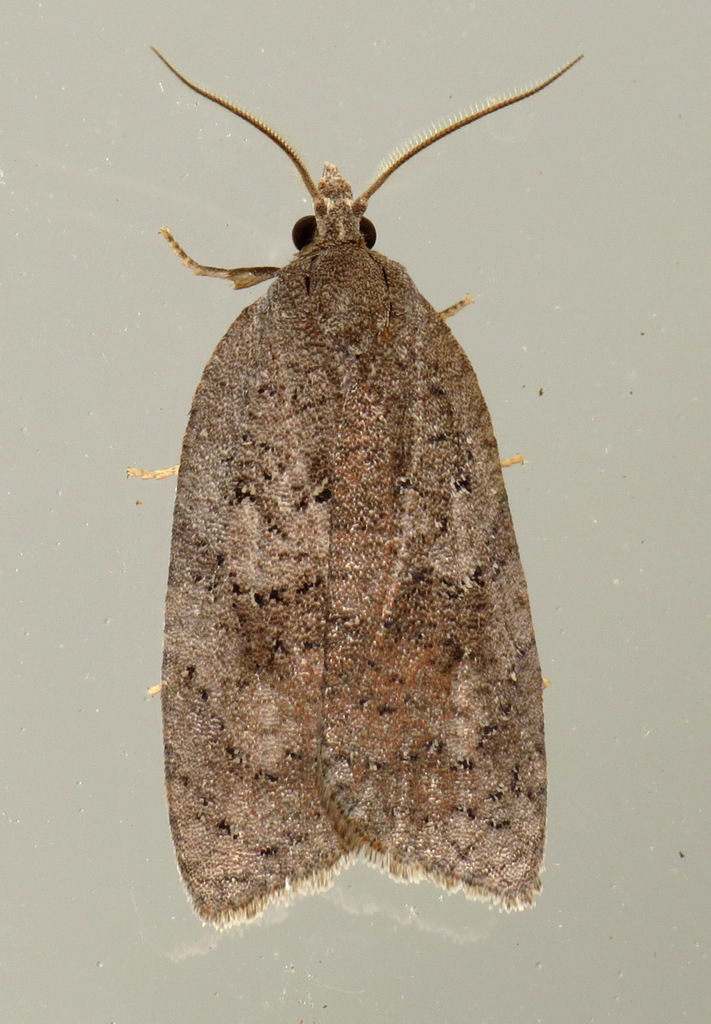
Adult white-lined leafrollers have forewings about 11 to 13 mm long in males and 12 to 13.5 mm in females. They belong to the tortricid moth family and are found from the Gulf states up through the northeastern United States and into southeastern Canada. The caterpillars eat the foliage of many conifers, hardwoods and garden plants such as spruce, pine, fir, birch, apple and willow.
Source: Wikipedia
How to recognize it
Amorbia humerosana, called the white-lined leafroller, is a tortricid moth.
Source: Wikipedia
Size
Male forewings measure 11 to 13 mm, while females are slightly larger at 12 to 13.5 mm.
Source: Wikipedia
Where it lives
It lives from the Gulf states across to the northeastern U.S. and into southeastern Canada.
Source: Wikipedia
What it eats
Larvae feed on many conifers (spruce, pine, fir, larch), as well as hardwoods and shrubs like birch, beech, alder, viburnum, sumac, aralia, goldenrod, asparagus, apple, and willow.
Source: Wikipedia
Life cycle
Adults are active from early spring through early fall, roughly March to September. Full-grown caterpillars reach about 25 mm in length before pupating.
Source: Wikipedia
When you see it
The moths can be seen flying between March and September.
Source: Wikipedia
Where it comes from
Its range includes the Gulf states, the northeastern United States and southeastern Canada.
Source: Wikipedia
Where it is found in the US
Recorded in 32 of 51 states and DC. Most records: Maryland, Pennsylvania, North Carolina, Mississippi, Virginia, Ohio, Alabama, West Virginia.
Darker = more records. Counts are museum and citizen-science records, not population size.
Source: GBIF
Status: native in North America; native in Canada; native in United States. Source: iNaturalist
Months it is reported in the US
Source: GBIF
More photos
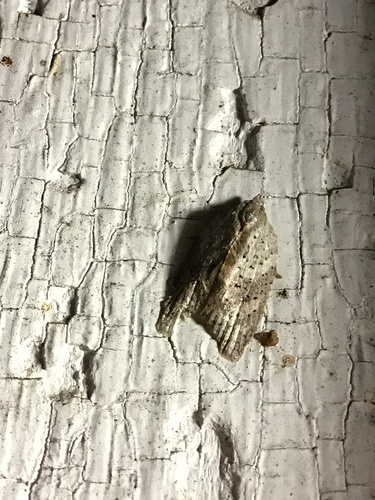
Questions people ask
When are adult white-lined leafrollers active?
Adults are on the wing from March through September.
Source: Wikipedia
What plants do the caterpillars eat?
The larvae feed on a variety of conifers, hardwoods and garden plants, including spruce, pine, fir, birch, apple and willow.
Source: Wikipedia
How large are these moths?
Forewing length is about 11 to 13 mm in males and 12 to 13.5 mm in females.
Source: Wikipedia
Where is the white-lined leafroller found?
It occurs from the Gulf states up to the northeastern United States and into southeastern Canada.
Source: Wikipedia
Same family (Tortricidae)
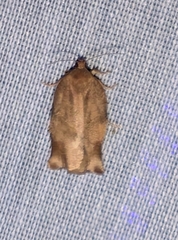 Oblique-banded Leafroller MothChoristoneura rosaceanaDamages trees, gardens or crops
 Garden TortrixClepsis peritanaDamages trees, gardens or crops
 Common MarbleSyricoris lacunanaDamages trees, gardens or crops
 Red-banded Leafroller MothArgyrotaenia velutinanaDamages trees, gardens or crops
 Light Brown Apple MothEpiphyas postvittanaDamages trees, gardens or crops
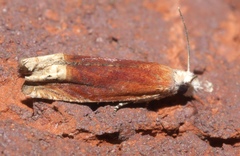 Aster and Reddish Eucosma Moths and AlliesEucosma parmatana
Sources
- Wikipedia: https://en.wikipedia.org/wiki/Amorbia_humerosana
Look it up elsewhere: GBIF · iNaturalist · BugGuide · Wikipedia
Text written 2026-10-24 from the sources above and checked sentence by sentence against them. Data fetched 2026-10-24.