 Bug FAQ
White-horned Horntail
Urocerus albicornis · Order: Hymenoptera · Family: Siricidae
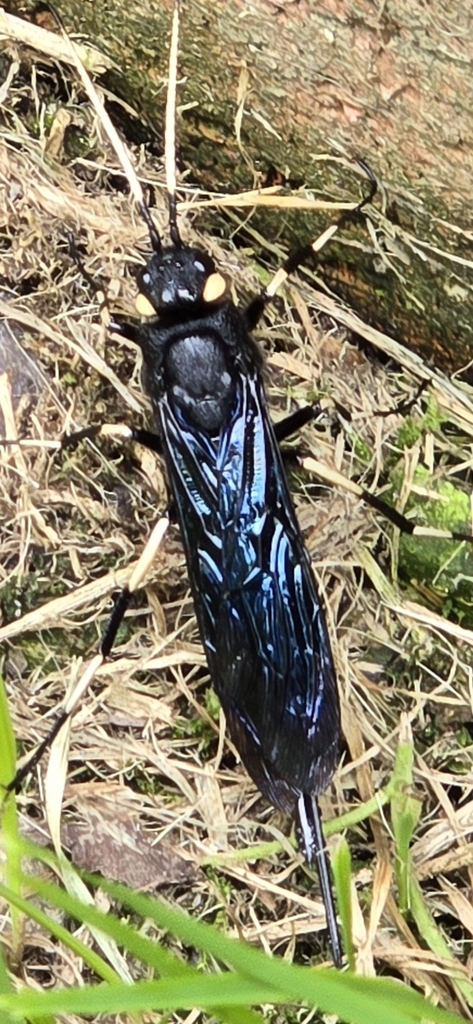
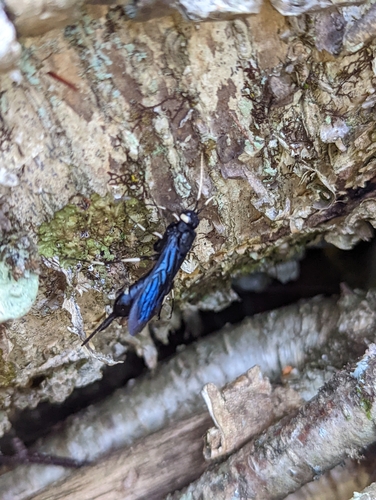
The white-horned horntail is a black insect with whitish antennae, head spots, and two bands on each leg. It lives near conifer trees and is native to North America. Occasionally it has been introduced to Europe and Japan.
Source: Wikipedia
Where it lives
It lives near conifer trees.
Source: Wikipedia
Where it comes from
It is native to North America.
Source: Wikipedia
Where it is found in the US
Recorded in 33 of 51 states and DC. Most records: Washington, Michigan, Oregon, Vermont, Idaho, New York, Maine, Minnesota.
Darker = more records. Counts are museum and citizen-science records, not population size.
Source: GBIF
Status: native in North America; native in United States; native in Canada. Source: iNaturalist
Months it is reported in the US
Source: GBIF
More photos
Questions people ask
What does the white-horned horntail look like?
It is black with whitish antennae, head spots, and two bands on each leg.
Source: Wikipedia
What is the native range of the white-horned horntail?
It is native to North America.
Source: Wikipedia
Same family (Siricidae)

Sources
- Wikipedia: https://en.wikipedia.org/wiki/Urocerus_albicornis
Look it up elsewhere: GBIF · iNaturalist · BugGuide · Wikipedia
Text written 2026-10-24 from the sources above and checked sentence by sentence against them. Data fetched 2026-10-24.