 Bug FAQ
Pigeon Horntail
Tremex columba · Order: Hymenoptera · Family: Siricidae
Also called: Pigeon Tremex Horntail, Pigeon Tremex, Trembling Woodwasp
Source: Wikipedia
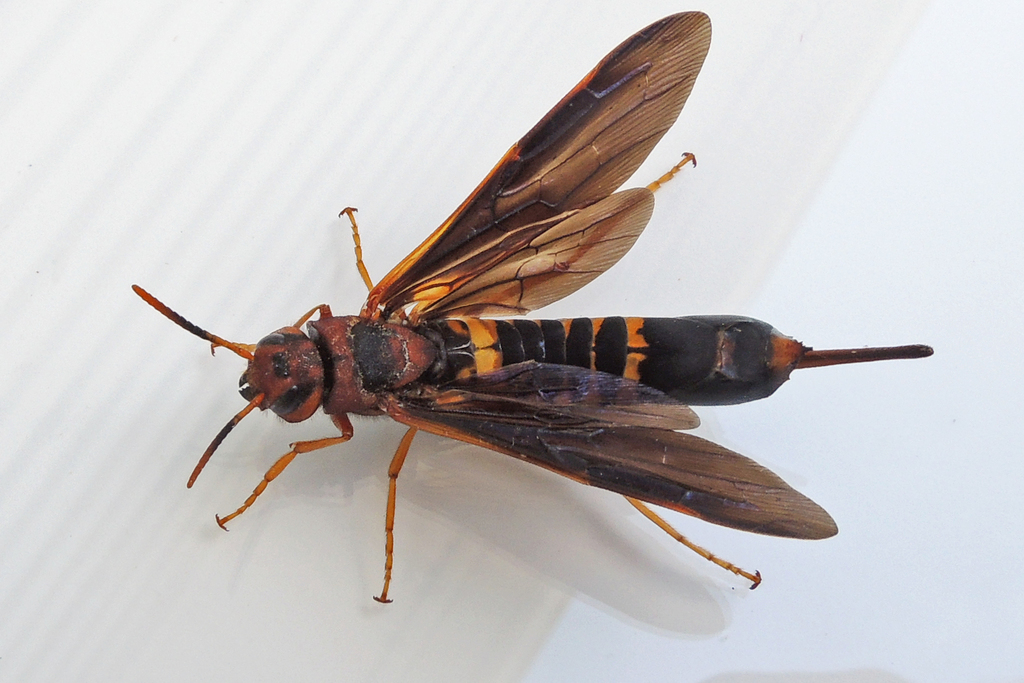
Females are 25-30 mm long and males 20-25 mm; both have long rear projections and striped abdomens. Females lay 2-7 eggs in dead or dying deciduous trees where the larvae burrow and feed, sometimes killing the host.
Source: Wikipedia
How to recognize it
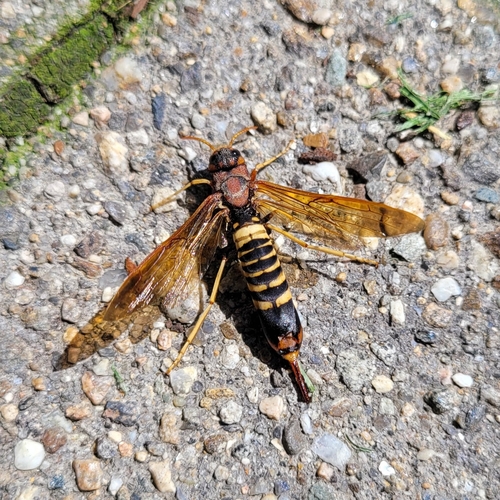
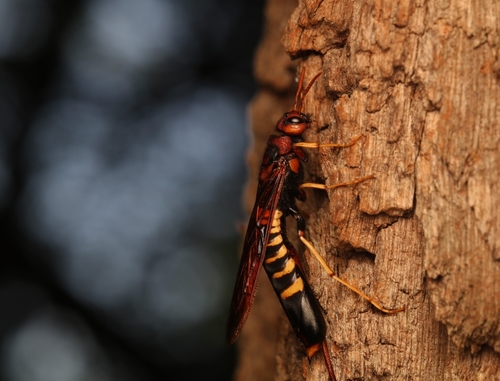
Body color ranges from light brown to dark reddish brown with yellow and black abdominal stripes. Both sexes have long rear projections; females also have an ovipositor.
Source: Wikipedia
Size
Females grow to 25-30 mm, males to about 20-25 mm.
Source: Wikipedia
Is it a pest in the house?
They rarely affect vegetation but can introduce a rot-causing fungus to trees.
Source: Wikipedia
Does it bite or sting?
They do not bite or sting people.
Source: Wikipedia
Where it lives
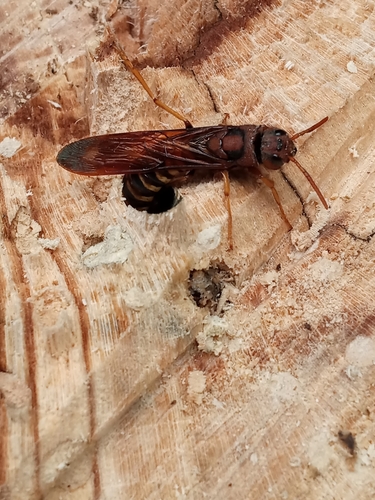
They prefer dead or decaying trees but will sometimes use healthy ones.
Source: Wikipedia
Life cycle
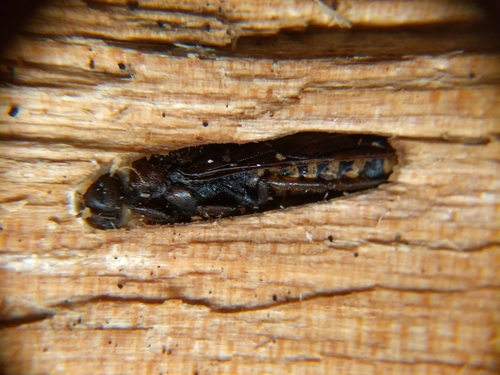
Females deposit 2-7 eggs into host trees, then die; their carcasses may be seen on bark.
Source: Wikipedia
Where it comes from
Native to eastern and western North America.
Source: Wikipedia
Where it is found in the US
Recorded in 49 of 51 states and DC. Most records: Michigan, New York, Ohio, Illinois, Colorado, Pennsylvania, Massachusetts, Utah.
Darker = more records. Counts are museum and citizen-science records, not population size.
Source: GBIF
Status: native in North America; native in Canada; native in United States. Source: iNaturalist
Months it is reported in the US
Source: GBIF
More photos
Questions people ask
Do they bite or sting?
No, they are not considered harmful to humans and do not bite or sting.
Source: Wikipedia
What trees do they affect?
They lay eggs in dead or dying deciduous trees like beech, elm, maple, and oak, and can sometimes use healthy trees.
Source: Wikipedia
Sources
- Wikipedia: https://en.wikipedia.org/wiki/Tremex_columba
Look it up elsewhere: GBIF · iNaturalist · BugGuide · ITIS · Wikipedia
Text written 2026-10-23 from the sources above and checked sentence by sentence against them. Data fetched 2026-10-22.