 Bug FAQ
Western Lynx Spider
Oxyopes scalaris · Order: Araneae · Family: Oxyopidae
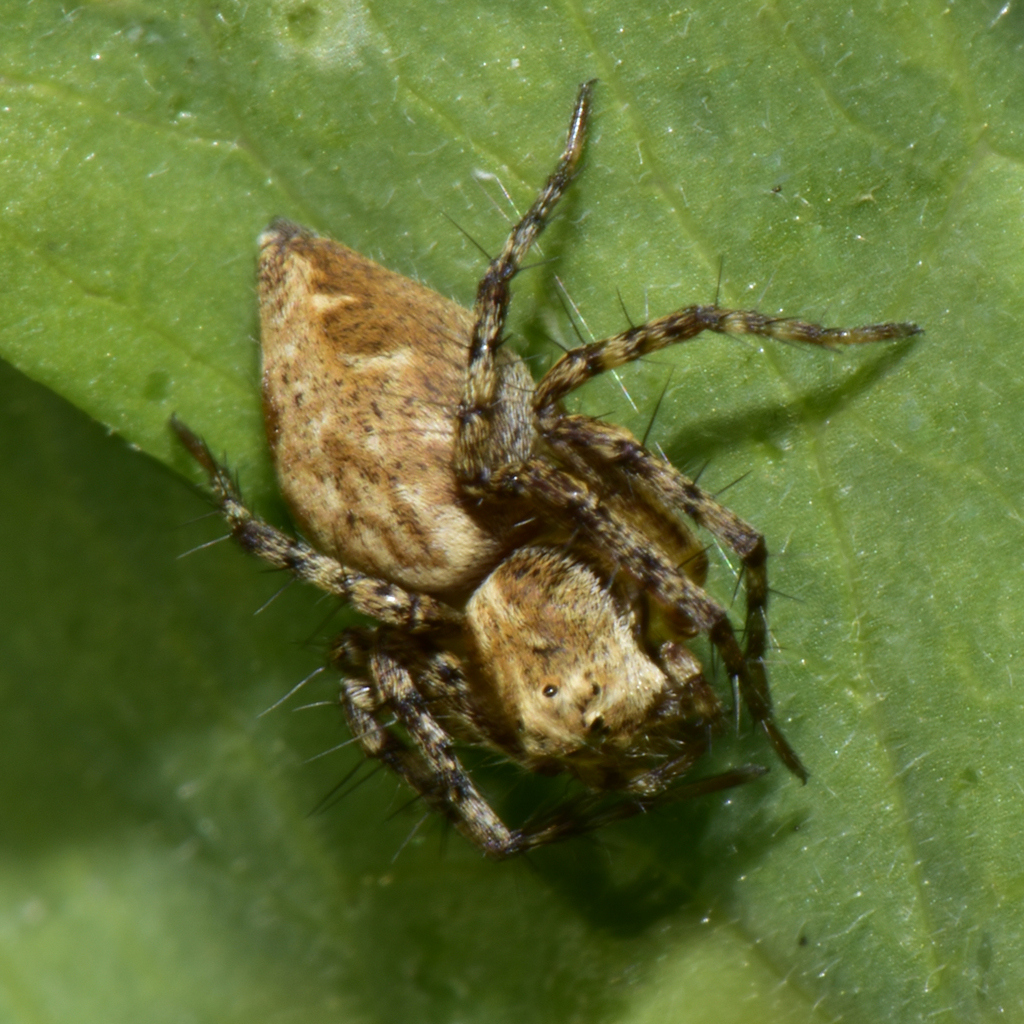
Western lynx spiders are active hunters that run and leap, using good eyesight to catch prey on plants and bushes. They do not spin webs, but use silk for safety lines and egg sacs, and they are considered beneficial in orchards. Adults are most active in spring and early summer in North America.
Source: Wikipedia
How to recognize it
They look like wolf spiders and jumping spiders, being fast runners and leapers with good vision.
Source: Wikipedia
Where it lives
They wait on plants, trees, and bushes to catch prey. They do not build webs, using silk only for safety lines and egg sacs.
Source: Wikipedia
What it eats
They hunt on vegetation rather than on the ground. They are beneficial predators in orchards.
Source: Wikipedia
Life cycle
They reach adulthood and are most active in spring and early summer.
Source: Wikipedia
When you see it
Their peak activity occurs in spring and early summer.
Source: Wikipedia
Where it comes from
They are found across North America.
Source: Wikipedia
Lookalikes
They resemble wolf spiders and jumping spiders in appearance and hunting style.
Source: Wikipedia
Where it is found in the US
Recorded in 48 of 51 states and DC. Most records: California, Oregon, Washington, Idaho, Utah, Ohio, Colorado, New Jersey.
Darker = more records. Counts are museum and citizen-science records, not population size.
Source: GBIF
Status: native in North America; native in United States; native in Canada. Source: iNaturalist
Months it is reported in the US
Source: GBIF
More photos


Questions people ask
Do western lynx spiders bite humans?
There is no source indicating they bite people.
Source: Wikipedia
Same family (Oxyopidae)


Sources
- Wikipedia: https://en.wikipedia.org/wiki/Oxyopes_scalaris
Look it up elsewhere: GBIF · iNaturalist · BugGuide · ITIS · Wikipedia
Text written 2026-10-22 from the sources above and checked sentence by sentence against them. Data fetched 2026-10-22.