 Bug FAQ
Striped Lynx Spider
Oxyopes salticus · Order: Araneae · Family: Oxyopidae
Also called: lynx spider, Lynx Spiders, Striped Lynx

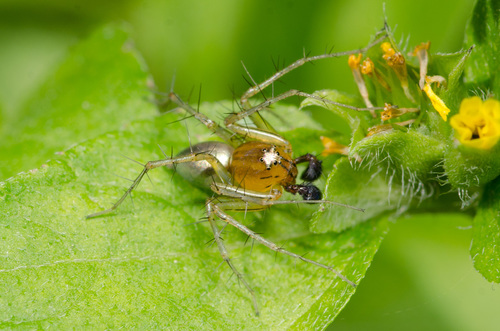
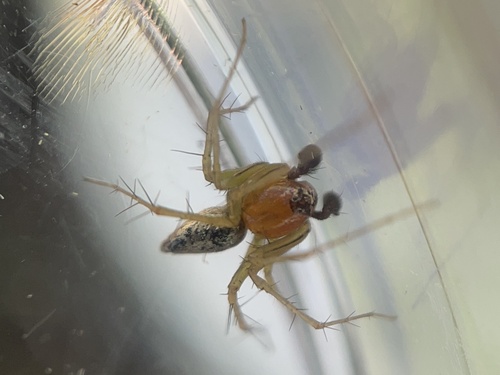
Adult females are about 5-6 mm long and males about 4-5 mm. They show orange, cream or brown colors, with females usually having stripes on the carapace and abdomen. They live in grassy or weedy vegetation and are found from the eastern United States through Central and South America.
Source: Wikipedia
How to recognize it
Adults can be orange, cream or brown, and females often have stripes on the carapace and abdomen, especially the abdomen.
Source: Wikipedia
Size
Females are roughly 5-6 mm long; males are about 4-5 mm.
Source: Wikipedia
Where it lives
They are found in grasses, leafy vegetation, weedy fields and row crops.
Source: Wikipedia
What it eats
They hunt agricultural pest insects, helping control crop pests. They also catch beneficial insects such as bees and other pollinators.
Source: Wikipedia
Where it comes from
Their range includes the eastern United States from Massachusetts and Iowa down to Florida and Texas, extends along the Mexican border and up the Pacific coast to Oregon. They also occur throughout much of South and Central America.
Source: Wikipedia
Where it is found in the US
Recorded in 43 of 51 states and DC. Most records: Texas, California, Oklahoma, Ohio, Kansas, Illinois, Maryland, Missouri.
Darker = more records. Counts are museum and citizen-science records, not population size.
Source: GBIF
Status: native in North America; native in United States; native in Canada. Source: iNaturalist
Months it is reported in the US
Source: GBIF
More photos


Same family (Oxyopidae)


Sources
- Wikipedia: https://en.wikipedia.org/wiki/Oxyopes_salticus
Look it up elsewhere: GBIF · iNaturalist · BugGuide · ITIS · Wikipedia
Text written 2026-10-22 from the sources above and checked sentence by sentence against them. Data fetched 2026-10-22.