 Bug FAQ
Western Grape Rootworm
Bromius obscurus · Order: Coleoptera · Family: Chrysomelidae
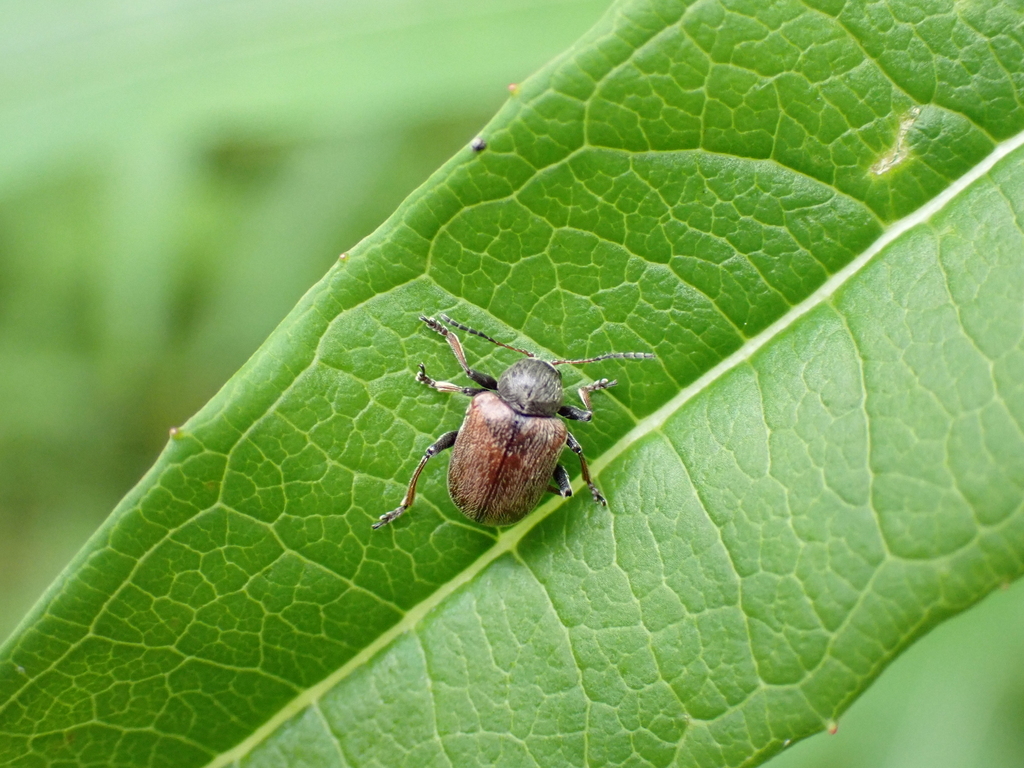
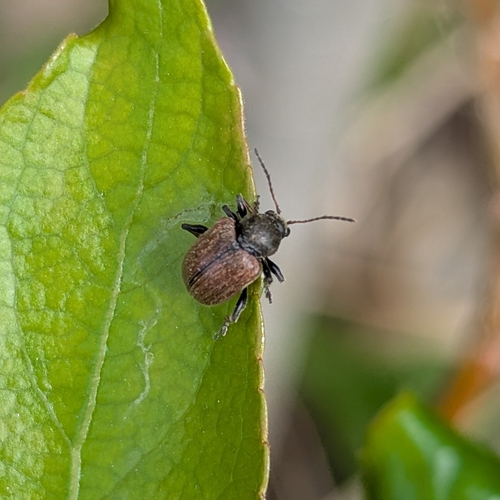
Western grape rootworm adults are about 5 to 6 mm long and are black with dull yellow-grey hairs; their antennae’s first four segments are orange-red and the elytra and tibiae may be black or reddish-brown. It is the only species in the genus Bromius and occurs across the Holarctic, from Canada down to North Carolina in the east and across to California in the west, as well as throughout Europe and Asia. North American populations reproduce sexually, while European ones are triploid and reproduce asexually.
Source: Wikipedia
How to recognize it
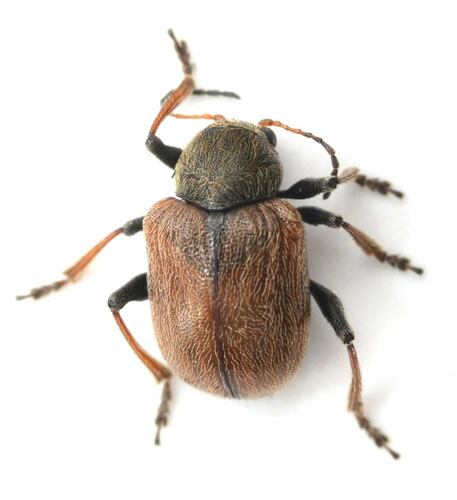
Adults are black with dull yellow-grey hairs; the elytra and tibiae can be black or reddish-brown, and the basal four antennal segments are orange-red.
Source: Wikipedia
Size
Body length ranges from 5.0 to 6.0 mm.
Source: Wikipedia
Where it lives
It is the sole member of its genus and is found throughout the Holarctic region.
Source: Wikipedia
Life cycle
North American populations reproduce sexually, whereas European populations are triploid and reproduce asexually.
Source: Wikipedia
Where it comes from
Its distribution includes North America, Europe and Asia; in North America it spans Canada to North Carolina in the east and to California in the west.
Source: Wikipedia
Lookalikes
The villosulus variation looks similar to Aoria rufotestacea from Korea, but most Korean specimens previously identified as Bromius obscurus were actually Aoria rufotestacea.
Source: Wikipedia
Where it is found in the US
Recorded in 21 of 51 states and DC. Most records: Alaska, Wisconsin, Washington, Montana, Colorado, Oregon, Minnesota, California.
Darker = more records. Counts are museum and citizen-science records, not population size.
Source: GBIF
Status: native in North America; native in United States; native in Canada. Source: iNaturalist
Months it is reported in the US
Source: GBIF
More photos
Questions people ask
How can I tell Western grape rootworm apart from similar beetles?
Look for a 5 to 6 mm black beetle covered in dull yellow-grey hairs, with orange-red coloration on the first four antennal segments and elytra/tibiae that may be black or reddish-brown.
Source: Wikipedia
Where is this beetle found?
It occurs across the Holarctic, from Canada down to North Carolina in the east and across to California in the west, and throughout Europe and Asia.
Source: Wikipedia
Does it reproduce differently in Europe?
Yes, European populations are triploid and reproduce asexually, while North American ones reproduce sexually.
Source: Wikipedia
Same family (Chrysomelidae)
 Spotted Cucumber BeetleDiabrotica undecimpunctataDamages trees, gardens or crops
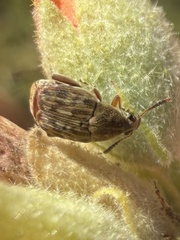 Bean WeevilAcanthoscelides obtectusDamages trees, gardens or crops
 Cowpea WeevilCallosobruchus maculatusDamages trees, gardens or crops
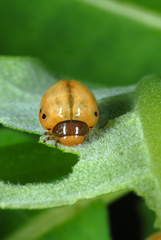 Swamp Milkweed Leaf BeetleLabidomera clivicollisDamages trees, gardens or crops
 Alder Leaf BeetleAgelastica alniDamages trees, gardens or crops
 Dogbane Leaf BeetleChrysochus auratus
Sources
- Wikipedia: https://en.wikipedia.org/wiki/Bromius_obscurus
Look it up elsewhere: GBIF · iNaturalist · BugGuide · ITIS · Wikipedia
Text written 2026-10-23 from the sources above and checked sentence by sentence against them. Data fetched 2026-10-22.