 Bug FAQ
Western Flower Thrips
Frankliniella occidentalis · Order: Thysanoptera · Family: Thripidae
Also called: Western Flower Thrip
Source: Wikipedia
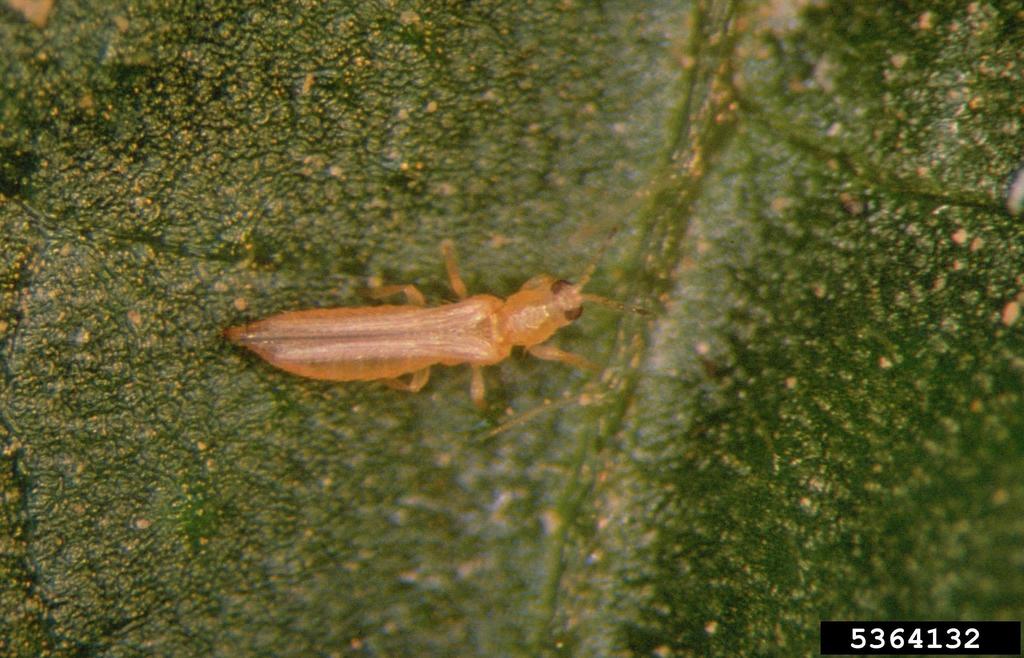
Adults are thin, elongated insects with two pairs of long wings; males are pale yellow and rare, while females vary from red to dark brown. They feed on over 500 plant species, especially new fruit and flowers, causing holes, silvery discoloration, and damage from egg-laying. Natural enemies include pirate bugs and the predatory mite Neoseiulus cucumeris, and barriers of non-host plants can help reduce infestations.
Source: Wikipedia
How to recognize it
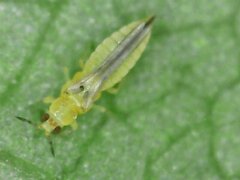
Males are pale yellow and uncommon, while females can be red, yellow, or dark brown depending on the season. Both sexes are slender with two long-wing pairs.
Source: Wikipedia
Size
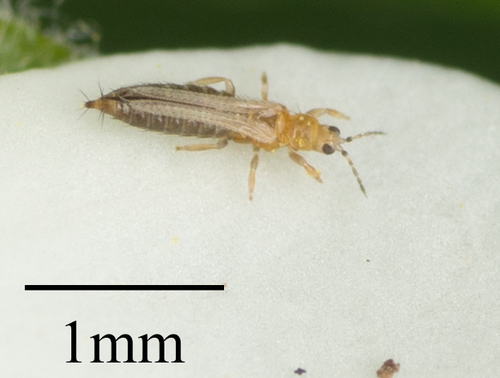
Males are about 1 mm long; females are slightly larger at around 1.4 mm. Eggs are tiny, white, and about 0.2 mm long.
Source: Wikipedia
Is it a pest in the house?
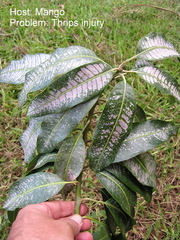
They damage plants by feeding, which creates holes and silvery patches, and by laying eggs inside plant tissue.
Source: Wikipedia
Does it bite or sting?
They may bite people wearing bright clothing, causing mild skin irritation but no disease transmission.
Source: Wikipedia
How to get rid of it
Planting non-host barrier species and removing favored weeds like jimson weed can reduce their numbers. Biological control agents such as pirate bugs (Orius spp.) and the predatory mite Neoseiulus cucumeris are commonly used in protected crops.
Source: Wikipedia
Where it lives
They thrive year-round but cause less damage when the weather is wet.
Source: Wikipedia
What it eats
They feed on more than 500 plant species, including many fruits, vegetables, and ornamentals such as broccoli. Nymphs especially target developing fruit that is just forming from the flower.
Source: Wikipedia
Life cycle
Adults live two to five weeks, while nymphs develop in five to twenty days, depending on temperature. Each female can lay from 40 up to over 100 eggs inside plant tissue, often in flowers, fruit, or leaves.
Source: Wikipedia
When you see it
They are present throughout the year but are less destructive in wet conditions. Bright white, blue, or yellow flowers attract them.
Source: Wikipedia
Where it comes from
They originate from the southwestern United States. They have spread to Europe, Australia, and South America via infested plant material.
Source: Wikipedia
Where it is found in the US
Recorded in 21 of 51 states and DC. Most records: California, Montana, Alaska, Utah, New Mexico, Hawaii, Kansas, Arizona.
Darker = more records. Counts are museum and citizen-science records, not population size.
Source: GBIF
Status: native in North America. Source: iNaturalist
Months it is reported in the US
Source: GBIF
More photos
Questions people ask
How can I control western flower thrips?
Use non-host barrier plants, eliminate weeds they favor, and consider biological controls like pirate bugs or predatory mites.
Source: Wikipedia
Do western flower thrips bite people?
They can bite humans wearing bright colors, causing mild skin irritation but no known disease transmission.
Source: Wikipedia
What damage do they cause to crops?
Feeding creates holes and silvery discoloration, and egg-laying in flowers, fruit, or leaves can further harm the plant.
Source: Wikipedia
Same family (Thripidae)

Sources
- Wikipedia: https://en.wikipedia.org/wiki/Western_flower_thrips
Look it up elsewhere: GBIF · iNaturalist · BugGuide · ITIS · Wikipedia
Text written 2026-10-23 from the sources above and checked sentence by sentence against them. Data fetched 2026-10-23.