 Bug FAQ
Greenhouse Thrips
Heliothrips haemorrhoidalis · Order: Thysanoptera · Family: Thripidae
Also called: Thrips
Source: Wikipedia
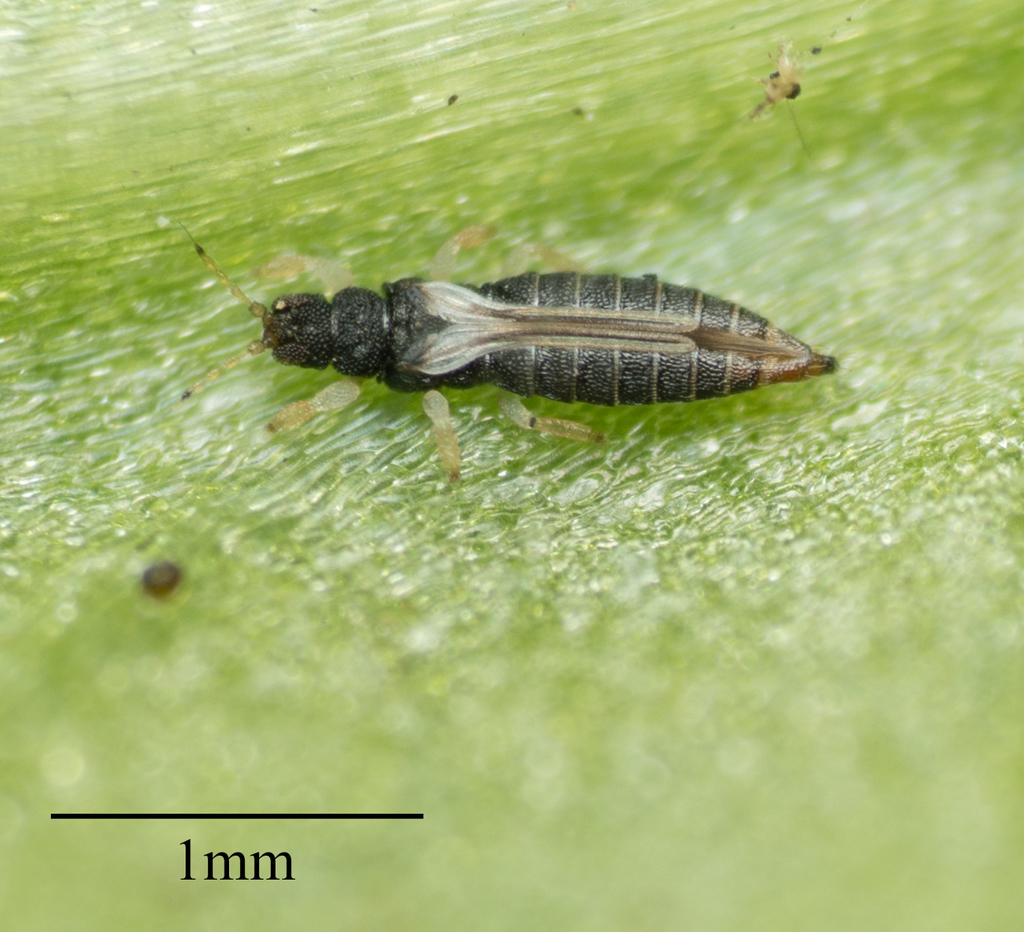
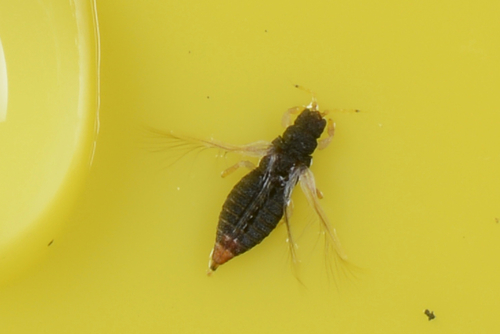
Adults are 1.2 to 1.8 mm long, with black thoraxes, orange-tipped abdomens and pale yellow, needle-like antennae. They live mainly in greenhouses and other warm, humid places and can produce many generations each year. Both larvae and adults feed by piercing leaves and fruit and sucking out the cell contents, harming crops such as avocado.
Source: Wikipedia
How to recognize it
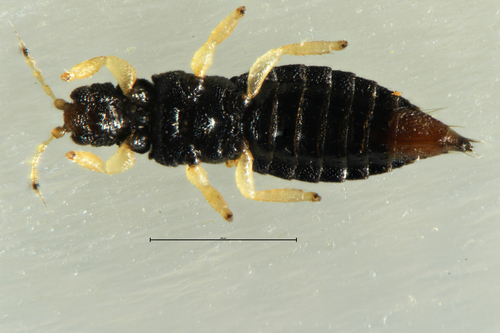
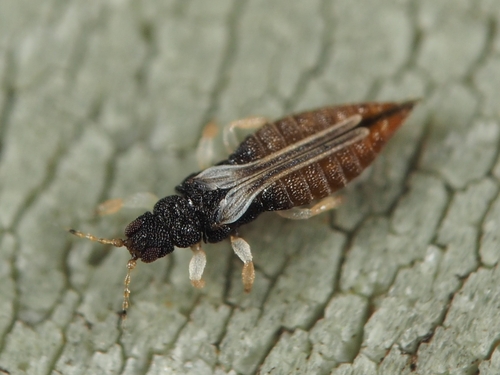
Adults have black thoraxes, yellow-to-dark brown abdomens with orange tips, and pale yellow eight-segment antennae that end in a needle-like segment.
Source: Wikipedia
Size
An adult measures between 1.2 and 1.8 mm in length.
Source: Wikipedia
Is it a pest in the house?
They are common greenhouse pests. They feed on many fruits and ornamental plants. They prefer mature foliage, and nitrogen levels influence their feeding choice.
Source: Wikipedia
How to get rid of it
Introducing the parasitoid Thripobius semiluteus has reduced its impact on avocados. A two-hour fumigation with 620 ppm phosphine is effective against it.
Source: Wikipedia
Where it lives
They are common pests in greenhouses. The species is widespread in tropical and subtropical regions.
Source: Wikipedia
What it eats
They feed on a wide variety of fruits and ornamental plants. Both larvae and adults pierce leaf and fruit epidermis and suck out cellular contents.
Source: Wikipedia
Life cycle
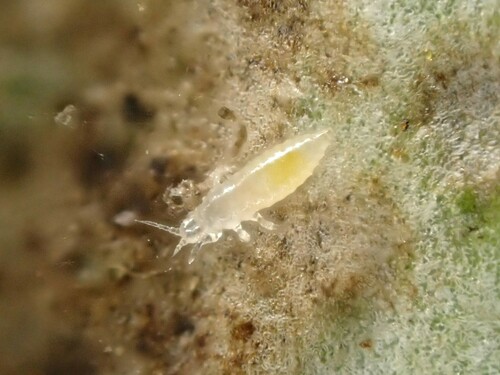
Their life cycle includes egg, two nymph stages, a non-feeding propupal stage and a pupal stage. In favorable conditions they can produce up to seven generations in temperate zones and more than twelve in tropical zones.
Source: Wikipedia
When you see it
They are a major pest of avocado farms. An individual lives about a month on average.
Source: Wikipedia
Where it comes from
It is thought to have originated in tropical areas and later spread worldwide.
Source: Wikipedia
Lookalikes
It has many synonyms such as H. adonidum, H. semiaureus, H. abdominalis, H. angustior, H. ceylonicus and Dinurothrips rufiventris.
Source: Wikipedia
Where it is found in the US
Recorded in 6 of 51 states and DC. Most records: California, Oregon, Washington, Georgia, Hawaii, Louisiana.
Darker = more records. Counts are museum and citizen-science records, not population size.
Source: GBIF
Months it is reported in the US
Source: GBIF
More photos
Questions people ask
How can I control greenhouse thrips?
Use the parasitoid Thripobius semiluteus for biological control, or apply a two-hour phosphine fumigation at 620 ppm.
Source: Wikipedia
What do greenhouse thrips look like?
Adults are 1.2 to 1.8 mm long, with black thoraxes, orange-tipped abdomens, and pale yellow eight-segment antennae that end in a needle-like tip.
Source: Wikipedia
How many generations can they produce?
In favorable temperate conditions they may have up to seven generations per year, and over twelve generations in tropical conditions.
Source: Wikipedia
Same family (Thripidae)

Sources
- Wikipedia: https://en.wikipedia.org/wiki/Heliothrips_haemorrhoidalis
Look it up elsewhere: GBIF · iNaturalist · BugGuide · ITIS · Wikipedia
Text written 2026-10-23 from the sources above and checked sentence by sentence against them. Data fetched 2026-10-23.