 Bug FAQ
Redbanded Thrips
Selenothrips rubrocinctus · Order: Thysanoptera · Family: Thripidae
Also called: Redbanded thrip
Source: Wikipedia
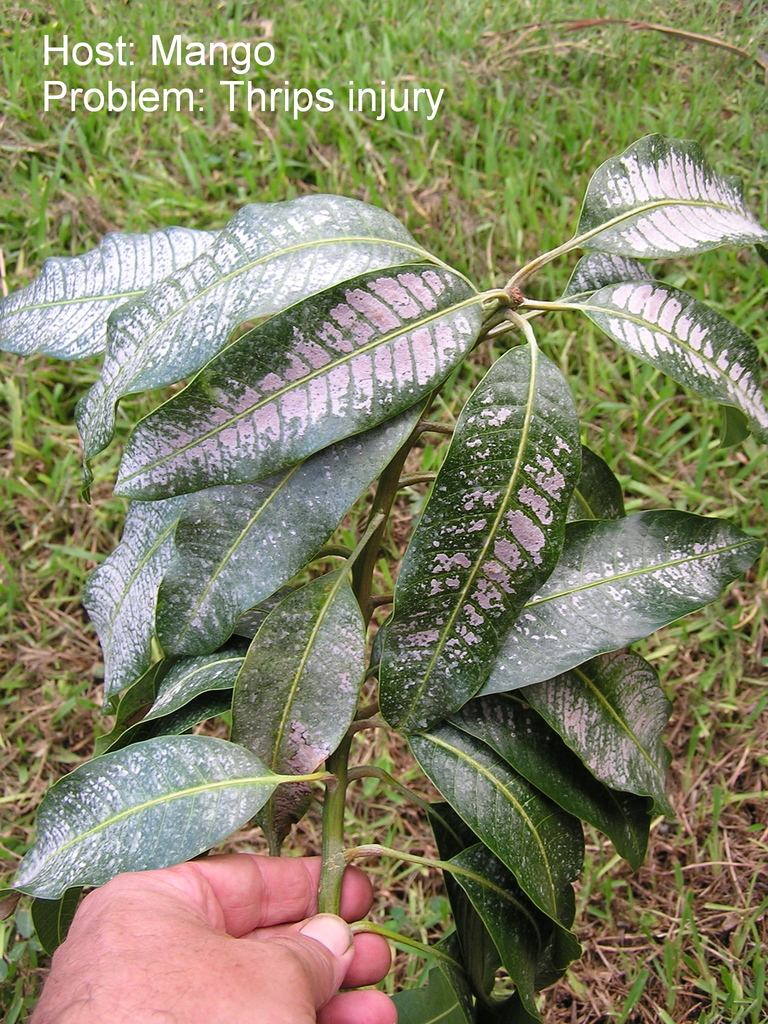
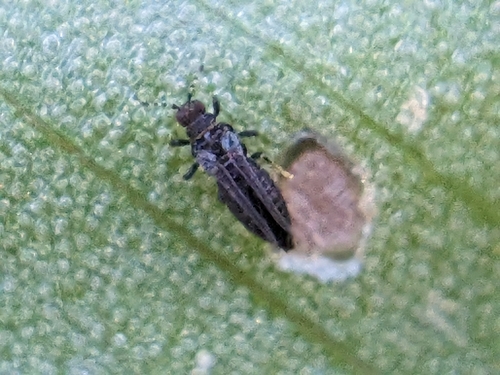
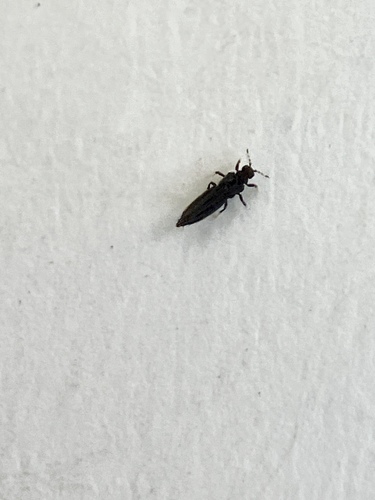
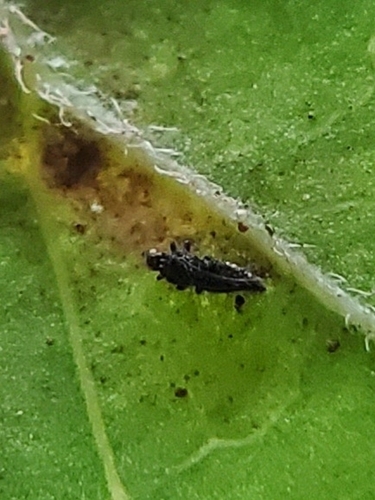
Adult females are about 1.2 mm long and dark with a reddish tint on the first three abdominal segments; males are slightly smaller. Nymphs and pupae are yellow-orange with vivid red on the front abdomen and tip. It occurs throughout the tropics, from the Americas to Africa, southern Asia and Australasia.
Source: Wikipedia
How to recognize it
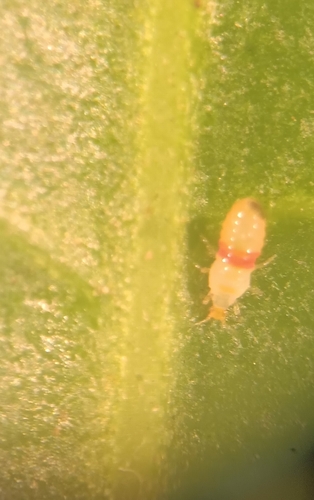
Nymphs and pupae are yellow or pale orange with vivid red on the first three abdominal segments and the abdomen tip.
Source: Wikipedia
What it eats
Adults and nymphs insert their mouthparts into young leaf epidermis, killing cells as they suck sap.
Source: Wikipedia
Where it is found in the US
Recorded in 5 of 51 states and DC. Most records: Florida, North Carolina, Hawaii, Louisiana, Texas.
Darker = more records. Counts are museum and citizen-science records, not population size.
Source: GBIF
Months it is reported in the US
Source: GBIF
More photos
Questions people ask
How can I recognize a redbanded thrip?
Adults are tiny (about 1.2 mm), dark brown with a reddish tint on the front abdomen, while nymphs are yellow-orange with red markings.
Source: Wikipedia
Where is the redbanded thrip found?
It occurs across the tropics, including the Americas, Africa, southern Asia and Australasia.
Source: Wikipedia
What does the redbanded thrip feed on?
Both adults and nymphs feed by sucking sap from the epidermis of young leaves, killing the leaf cells.
Source: Wikipedia
Is the redbanded thrip a problem for gardens or crops?
Yes, its feeding damages young leaves of garden and crop plants.
Source: Wikipedia
Same family (Thripidae)


Sources
- Wikipedia: https://en.wikipedia.org/wiki/Selenothrips_rubrocinctus
Look it up elsewhere: GBIF · iNaturalist · BugGuide · ITIS · Wikipedia
Text written 2026-10-23 from the sources above and checked sentence by sentence against them. Data fetched 2026-10-23.