 Bug FAQ
Western Demoiselle
Calopteryx xanthostoma · Order: Odonata · Family: Calopterygidae
Also called: Yellow-tailed Demoiselle
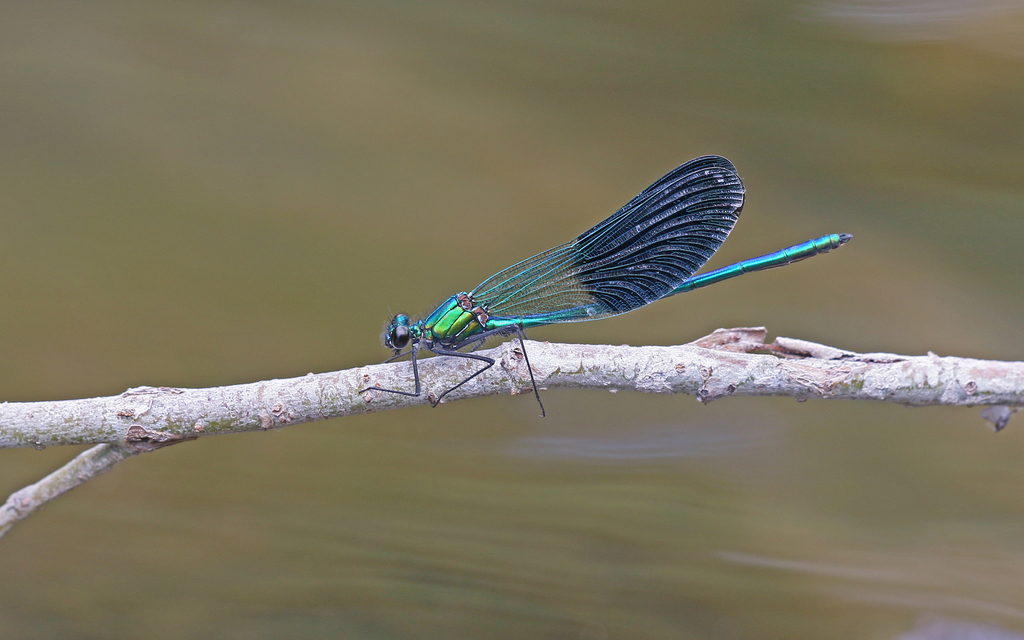
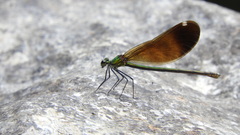
Male Western Demoiselle have wing colour that spreads to the tips, unlike the similar banded demoiselle. When they first emerge the males have clear wings and develop colour during the first week of adulthood. Females are metallic green with clear wings and look almost identical to female banded demoiselles, making them hard to separate even when held.
Source: Wikipedia
How to recognize it
Male Western Demoiselle wings become coloured all the way to the tips, more extensive than in C. splendens. Newly emerged males have clear wings and only gain colour during their first adult week.
Source: Wikipedia
Where it lives
They are found near flowing watercourses like streams and rivers, in open or partly shady areas.
Source: Wikipedia
Where it comes from
In southern France and the Iberian Peninsula they replace the banded demoiselle (C. splendens).
Source: Wikipedia
Questions people ask
How can I tell a male Western Demoiselle from a male banded demoiselle?
Look at the wing colour; Western Demoiselle males develop colour that reaches the wing tips, while banded demoiselle males have less extensive wing colour.
Source: Wikipedia
Do the females of Western Demoiselle look different from those of banded demoiselle?
No, the females are metallic green with clear wings and are almost indistinguishable from female banded demoiselles.
Source: Wikipedia
Same family (Calopterygidae)


Sources
- Wikipedia: https://en.wikipedia.org/wiki/Western_demoiselle
Look it up elsewhere: GBIF · iNaturalist · BugGuide · Wikipedia
Text written 2026-10-23 from the sources above and checked sentence by sentence against them. Data fetched 2026-10-22.