 Bug FAQ
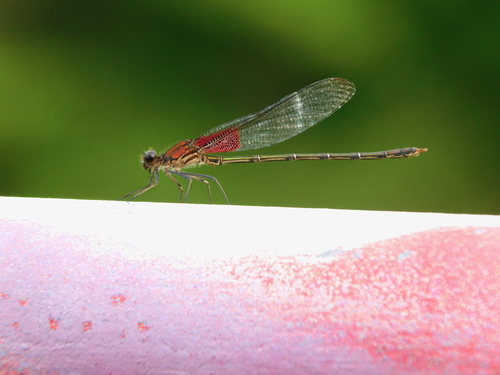
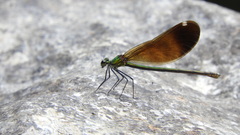
American Rubyspot
Hetaerina americana · Order: Odonata · Family: Calopterygidae
Also called: American ruby spot damselfly, Ruby Spot
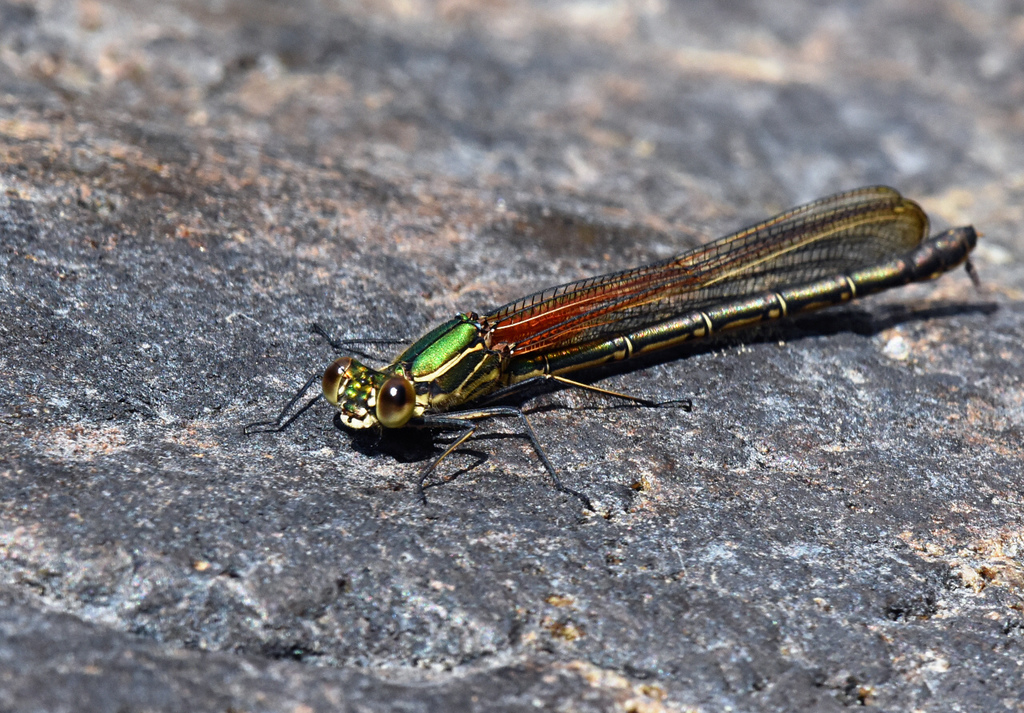
They stay close to running water for their entire adult lives, mating only at streams, and are found from northern Central America up to southeastern Canada, missing only Washington and Idaho in the U.S.
Source: Wikipedia
Where it lives
Adults remain within a few meters of suitable streams and all mating takes place at these running waters.
Source: Wikipedia
What it eats
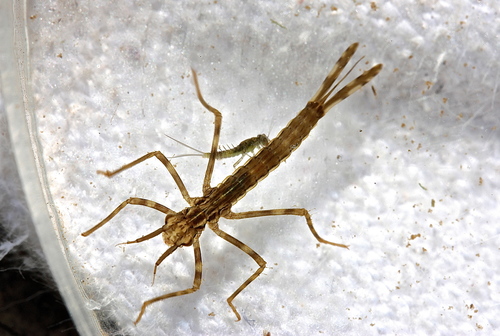
Larvae are aquatic predators that feed on brine shrimp (Artemia salina).
Source: Wikipedia
Life cycle
The life cycle starts in water as predatory larvae, then the final-instar larva emerges, hardens its exoskeleton in a short teneral stage, and builds fat and muscle for adult territorial competition.
Source: Wikipedia
When you see it
In California, adults are on the wing from April through November, with most activity in June and August.
Source: Wikipedia
Where it comes from
The species ranges from northern Central America to southeastern Canada and is recorded in every U.S. state except Washington and Idaho.
Source: Wikipedia
Where it is found in the US
Recorded in 47 of 51 states and DC. Most records: Texas, Ohio, California, Arizona, Michigan, Illinois, New Mexico, Virginia.
Darker = more records. Counts are museum and citizen-science records, not population size.
Source: GBIF
Status: native in North America; native in United States; native in Canada. Source: iNaturalist
Months it is reported in the US
Source: GBIF
More photos
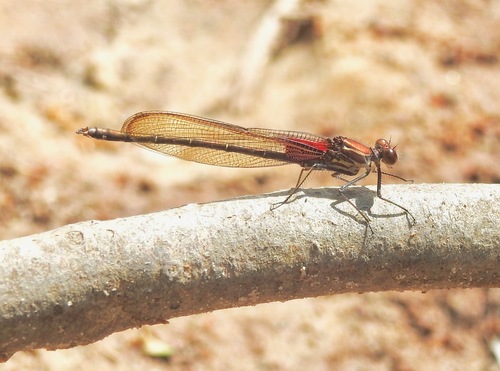
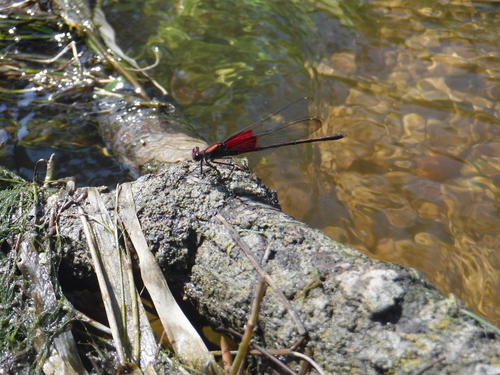
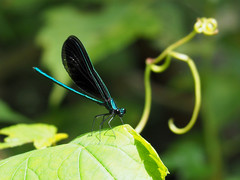
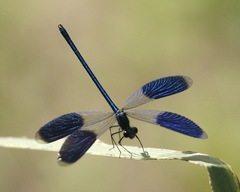
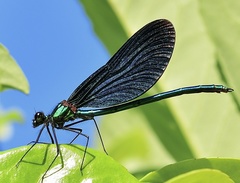
Same family (Calopterygidae)

Sources
- Wikipedia: https://en.wikipedia.org/wiki/American_rubyspot
Look it up elsewhere: GBIF · iNaturalist · BugGuide · ITIS · Wikipedia
Text written 2026-10-22 from the sources above and checked sentence by sentence against them. Data fetched 2026-10-22.