 Bug FAQ
Western Corsair Bug
Rasahus thoracicus · Order: Hemiptera · Family: Reduviidae
Also called: Western Corsair
Source: Wikipedia
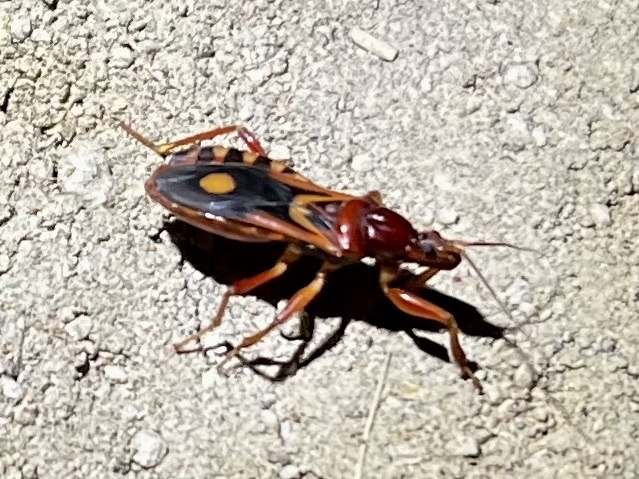
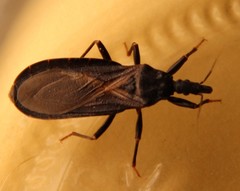
Western corsair adults are 18 to 23 mm long with a shiny black-amber thorax, orange-black bodies and a single orange spot on each wing. They are nocturnal hunters that chase other insects on the ground and are most often seen from July to October, especially near lights.
Source: Wikipedia
How to recognize it
The wings each have one large tan, orange, or red spot at the center. The abdomen’s side shows a black-yellow checkered pattern.
Source: Wikipedia
Size
Adults measure between 18 and 23 mm in body length.
Source: Wikipedia
Does it bite or sting?
A bite from a western corsair can be extremely painful.
Source: Wikipedia
Where it lives
They are voracious nocturnal ground hunters of other insects.
Source: Wikipedia
What it eats
They feed on smaller insects, using a sucking mouthpart to draw fluids from prey. Typical prey includes caterpillars, leaf-beetle and sawfly larvae, other true bugs, bees, lacewings and lady beetles.
Source: Wikipedia
Life cycle
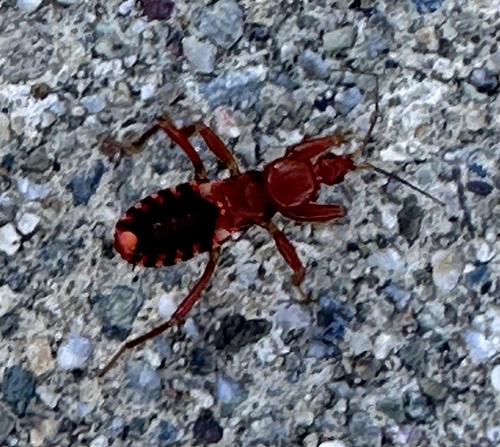
Western corsairs pass through three life stages and have one to two generations each year. The nymphal development consists of five stages that are completed within about a year, after which they emerge as winged adults without a pupal stage.
Source: Wikipedia
When you see it
They are most frequently encountered in the evenings from July through October.
Source: Wikipedia
Where it comes from
Their range includes the Pacific Northwest of the United States and most warm regions of California, from the Sierra foothills to the desert areas.
Source: Wikipedia
Where it is found in the US
Recorded in 8 of 51 states and DC. Most records: California, Arizona, Texas, New Mexico, Nevada, Utah, Illinois, Wyoming.
Darker = more records. Counts are museum and citizen-science records, not population size.
Source: GBIF
Status: native in North America; native in United States. Source: iNaturalist
Months it is reported in the US
Source: GBIF
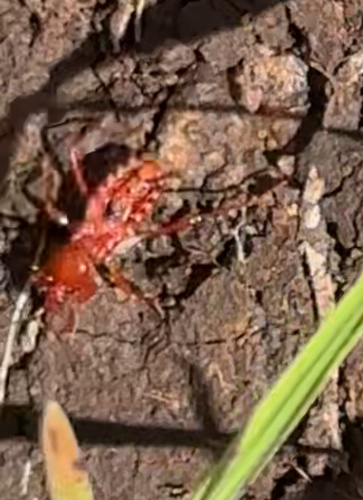
More photos
Questions people ask
When are they most likely to be seen?
They are most often encountered in the evenings between July and October, especially near bright lights.
Source: Wikipedia
What do they eat?
They hunt and suck fluids from a variety of insects such as caterpillars, beetle larvae, other true bugs, bees, lacewings and lady beetles.
Source: Wikipedia
Where are they found?
Their range includes the Pacific Northwest and most warm areas of California, from foothills to desert regions.
Source: Wikipedia
Same family (Reduviidae)
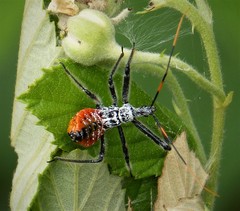 North American Wheel BugArilus cristatusCan bite
 Leafhopper Assassin BugZelus renardiiCan bite
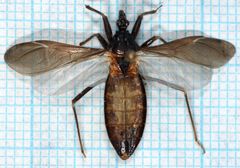 Masked HunterReduvius personatusCan bite
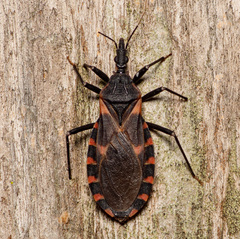 Eastern Bloodsucking ConenoseTriatoma sanguisugaCan spread germs or disease
 Western Bloodsucking ConenoseTriatoma protractaCan spread germs or disease
 Pale Green Assassin BugZelus luridusCan bite
Sources
- Wikipedia: https://en.wikipedia.org/wiki/Western_corsair
Look it up elsewhere: GBIF · iNaturalist · BugGuide · ITIS · Wikipedia
Text written 2026-10-24 from the sources above and checked sentence by sentence against them. Data fetched 2026-10-24.