 Bug FAQ
Leafhopper Assassin Bug
Zelus renardii · Order: Hemiptera · Family: Reduviidae
Also called: Assassin bug
Source: extension.msstate.edu

Leafhopper assassin bugs are daytime hunters found on wild, crop, urban and suburban plants. Both nymphs and adults are generalist predators that eat a wide range of insects, from tiny aphids to larger bugs up to about 2 cm. If handled, they may bite, injecting saliva that can feel as painful as a bee sting.
Source: Wikipedia, extension.msstate.edu
How to recognize it
Zelus renardii is closely related to Z. cervicalis, sharing two unique genital characters.
Source: Wikipedia
Is it a pest in the house?
Egg clusters are often found on vegetable crops. They are generalist predators and will eat any insect they catch, regardless of whether it is a pest. Because they are not abundant enough, they rarely make a noticeable impact on pest populations.
Source: Wikipedia, extension.msstate.edu
Does it bite or sting?
If they are mishandled or trapped against skin, they can bite and the bite can be quite painful. Their saliva can make the bite feel as painful as a bee or wasp sting.
Source: extension.msstate.edu
Where it lives
They are active during the day and live on both wild and cultivated plants. They also thrive in agricultural fields, gardens, and even city yards.
Source: Wikipedia
What it eats
Adults and nymphs are predators that eat many insect species. Nymphs prefer very small herbivores like aphids, weevils and thrips (0.5 to 4 mm), while adults take larger prey (1.5 to 19 mm).
Source: Wikipedia
Life cycle
Females glue egg masses to plant surfaces; the eggs hatch in about 8 to 12 days. First- and second-instar nymphs usually stay near where they hatched.
Source: Wikipedia
Where it comes from
Their native range covers many climate zones across mainland North and Central America, from near sea level up to 2000 m.
Source: Wikipedia
Lookalikes
It is sometimes called the “leafhopper assassin bug.” The sticky hairs on the front legs help nymphs catch tiny prey, though adults rely less on them.
Source: extension.msstate.edu
Where it is found in the US
Recorded in 25 of 51 states and DC. Most records: California, Texas, Arizona, Oregon, New Mexico, Oklahoma, Tennessee, Nevada.
Darker = more records. Counts are museum and citizen-science records, not population size.
Source: GBIF
Months it is reported in the US
Source: GBIF
More photos
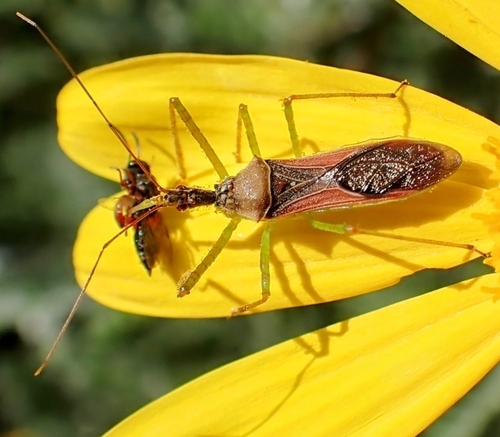
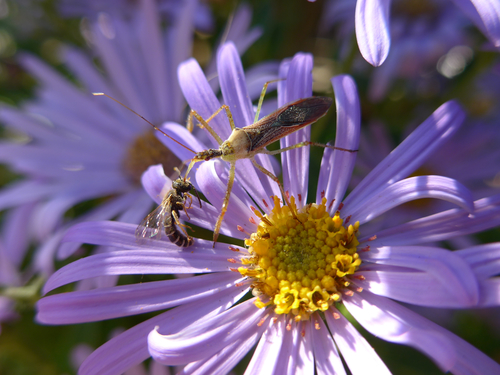
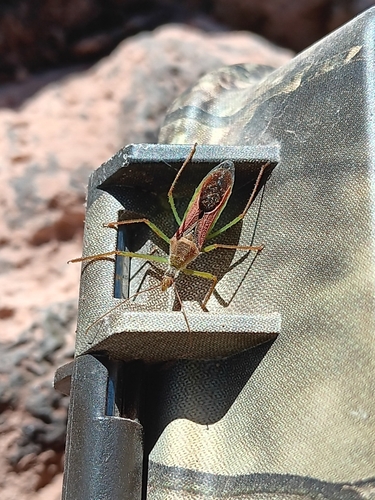
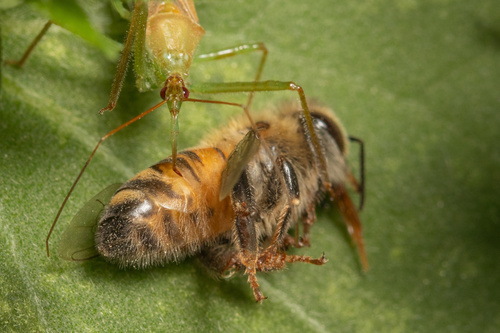
Questions people ask
Do they bite people?
Yes, if they are handled or trapped against skin they can bite, and the bite is painful like a bee sting.
Source: extension.msstate.edu
What do leafhopper assassin bugs eat?
Both nymphs and adults are predators that eat many insects, from tiny aphids and thrips to larger bugs up to about 2 cm.
Source: Wikipedia
Where are they commonly found?
They are active during the day on wild plants, crops, gardens, and even in urban and suburban areas.
Source: Wikipedia
How do they reproduce?
Females glue egg masses to plant surfaces; the eggs hatch in 8 to 12 days and the young nymphs stay near the hatching site.
Source: Wikipedia
Same family (Reduviidae)
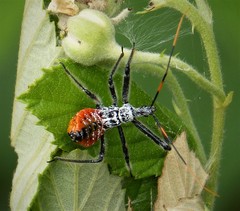 North American Wheel BugArilus cristatusCan bite
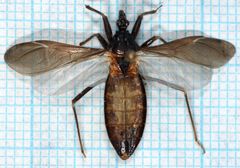 Masked HunterReduvius personatusCan bite
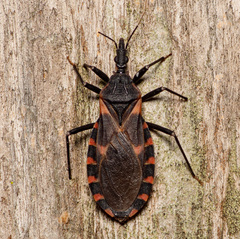 Eastern Bloodsucking ConenoseTriatoma sanguisugaCan spread germs or disease
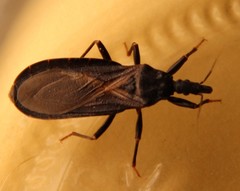 Western Bloodsucking ConenoseTriatoma protractaCan spread germs or disease
 Pale Green Assassin BugZelus luridusCan bite
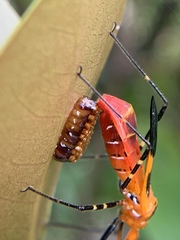 Milkweed Assassin BugZelus longipes
Sources
- extension.msstate.edu: https://extension.msstate.edu/taxonomy/term/4171/2015/assassin-bug-no-18
- Wikipedia: https://en.wikipedia.org/wiki/Zelus_renardii
Look it up elsewhere: GBIF · iNaturalist · BugGuide · ITIS · Wikipedia
Text written 2026-10-23 from the sources above and checked sentence by sentence against them. Data fetched 2026-10-23.