 Bug FAQ
Western Bloodsucking Conenose
Triatoma protracta · Order: Hemiptera · Family: Reduviidae
Also called: Western Conenose
Source: Wikipedia
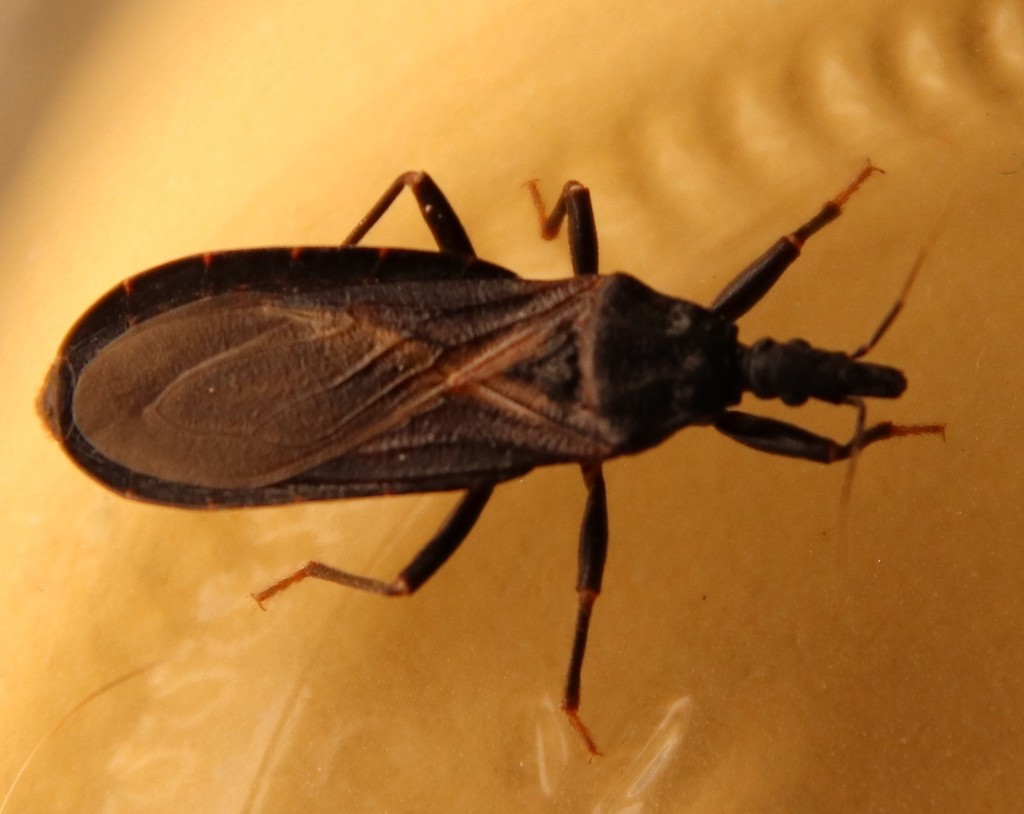
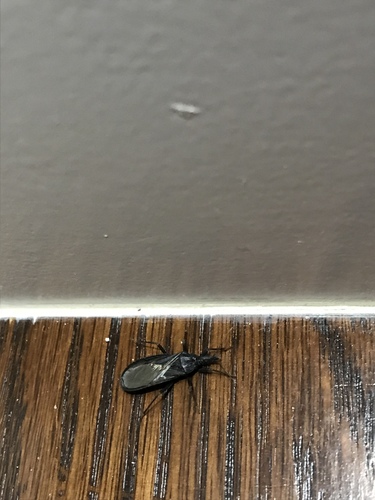
Western blood-sucking conenose bugs are 0.5 to 0.75 inches long, dark brown to black with a lighter edge on the abdomen, and a three-segment beak that folds under the head. They live in pack-rat nests in the western U.S. and Mexico, but will enter homes where they bite humans, causing skin irritation and can spread Trypanosoma cruzi, the cause of Chagas disease.
Source: Wikipedia
How to recognize it
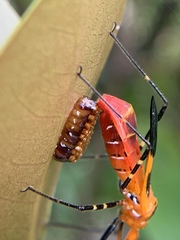
Adults are dark brown to black with a lighter margin on the abdomen.
Source: Wikipedia
Size
They measure between half and three-quarters of an inch long.
Source: Wikipedia
Is it a pest in the house?
In homes they are considered pests. Their bites can irritate skin and sometimes cause strong allergic reactions.
Source: Wikipedia
Does it bite or sting?
Bites may cause skin irritation and allergic responses. They can transmit the parasite Trypanosoma cruzi, which causes Chagas disease.
Source: Wikipedia
Where it lives
They are found in the nests of pack rats and similar animals. When they move into houses they become household pests.
Source: Wikipedia
Life cycle
Young bugs look like smaller adults and do not have wings.
Source: Wikipedia
Where it comes from
Their range includes the western United States and Mexico.
Source: Wikipedia
Lookalikes
Nymphs resemble adults but are smaller and wingless.
Source: Wikipedia
Where it is found in the US
Recorded in 10 of 51 states and DC. Most records: California, Arizona, New Mexico, Texas, Nevada, Utah, Colorado, Georgia.
Darker = more records. Counts are museum and citizen-science records, not population size.
Source: GBIF
Months it is reported in the US
Source: GBIF
More photos
Questions people ask
Do these bugs bite people?
Yes, they bite and can cause skin irritation and allergic reactions.
Source: Wikipedia
Can they spread disease?
They are known carriers of Trypanosoma cruzi, the parasite that causes Chagas disease.
Source: Wikipedia
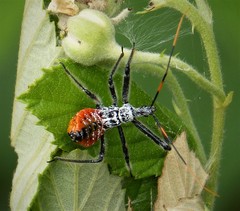
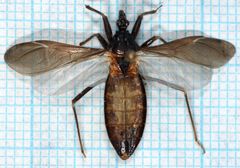
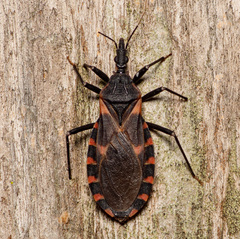
Same family (Reduviidae)


Sources
- Wikipedia: https://en.wikipedia.org/wiki/Triatoma_protracta
Look it up elsewhere: GBIF · iNaturalist · BugGuide · ITIS · Wikipedia
Text written 2026-10-22 from the sources above and checked sentence by sentence against them. Data fetched 2026-10-22.