 Bug FAQ
Virginia Creeper Sphinx
Darapsa myron · Order: Lepidoptera · Family: Sphingidae
Also called: Hog Sphinx, Virginia Creeper Sphinx Moth
Source: Wikipedia
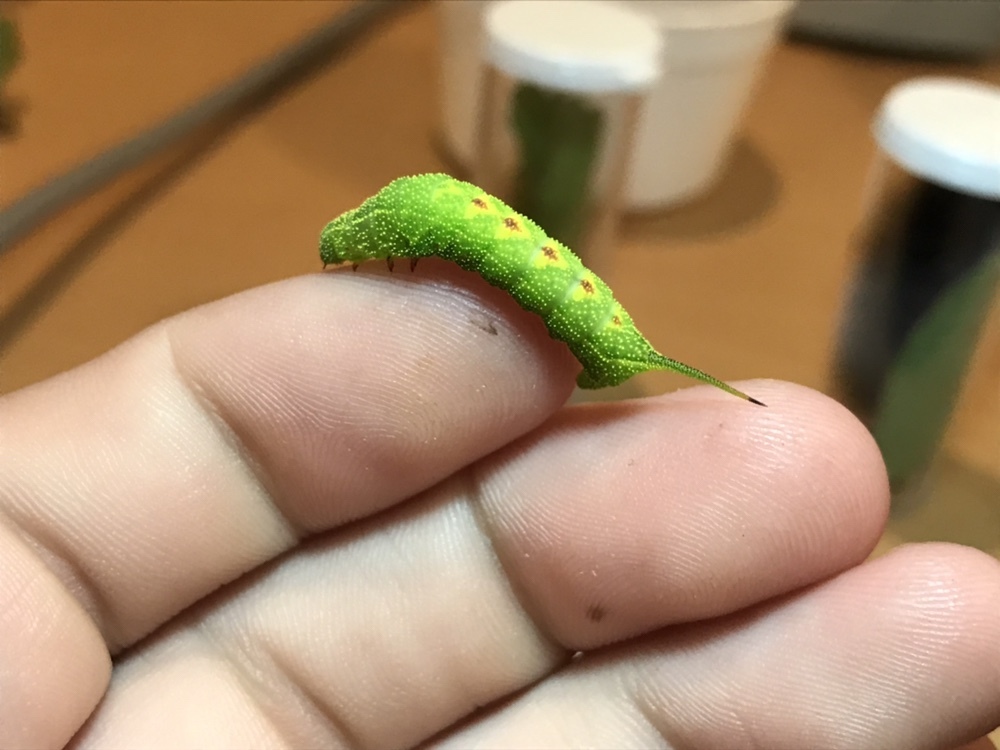
Virginia creeper sphinx moths have a wingspan of about 2-3 inches and a pointed abdomen. Adults are most active from June through July and are found in woodlands across eastern North America down to Florida and west to Texas.
Source: Wikipedia
How to recognize it
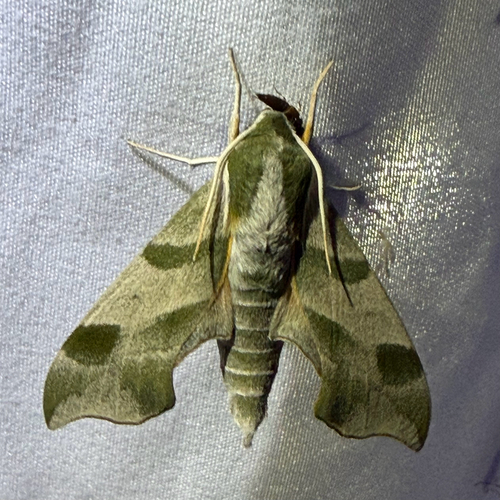
The forewing tops show green-brown stripes with a dark central dot. Adults are relatively large with long, pointed abdomens.
Source: Wikipedia
Size
Wingspan ranges from 2 to 3 inches.
Source: Wikipedia
Where it lives
They prefer woodland and brush areas.
Source: Wikipedia
What it eats
Adults sip nectar from flowers and fluids from rotting fruit, especially in spring.
Source: Wikipedia
Life cycle
There are five or more generations per year; larvae can mature in about three weeks. Egg incubation lasts roughly six days.
Source: Wikipedia
When you see it
Adults are on the wing from early May to early September, with peak numbers in June and July.
Source: Wikipedia
Where it comes from
In Canada they occur in southern Ontario and Quebec; in the U.S. they range from Maine to Florida and west to the central states, also reaching Mexico.
Source: Wikipedia
Where it is found in the US
Recorded in 41 of 51 states and DC. Most records: Texas, Ohio, North Carolina, Alabama, Florida, Tennessee, Virginia, Pennsylvania.
Darker = more records. Counts are museum and citizen-science records, not population size.
Source: GBIF
Status: native in North America; native in United States; native in Canada. Source: iNaturalist
Months it is reported in the US
Source: GBIF
More photos

Questions people ask
What plants do the larvae damage?
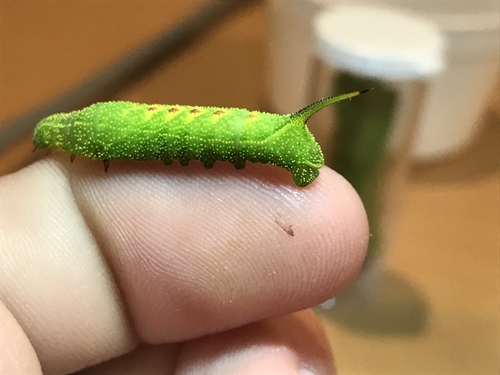
The caterpillars feed on Virginia creeper, grape vines, viburnums and related vines, which can harm garden plants and small crops.
Source: Wikipedia
When are these moths most common?
They are most abundant in June and July, though they can be seen from May through September.
Source: Wikipedia
Same family (Sphingidae)
 White-lined SphinxHyles lineataDamages trees, gardens or crops
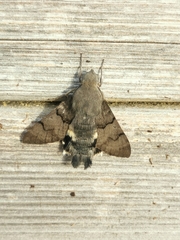 Eurasian Hummingbird HawkmothMacroglossum stellatarum
 Snowberry ClearwingHemaris diffinis
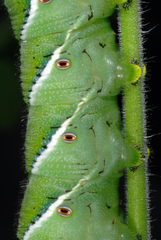 Carolina SphinxManduca sextaDamages trees, gardens or crops
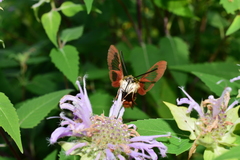 Hummingbird ClearwingHemaris thysbeDamages trees, gardens or crops
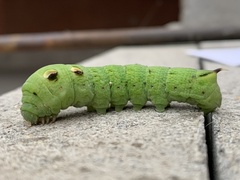 Elephant HawkmothDeilephila elpenor
Sources
- Wikipedia: https://en.wikipedia.org/wiki/Darapsa_myron
Look it up elsewhere: GBIF · iNaturalist · BugGuide · ITIS · Wikipedia
Text written 2026-10-22 from the sources above and checked sentence by sentence against them. Data fetched 2026-10-22.