 Bug FAQ
Eurasian Hummingbird Hawkmoth
Macroglossum stellatarum · Order: Lepidoptera · Family: Sphingidae
Also called: Hummingbird Hawkmoth, Humming-Bird Hawk-Moth, hummingbird hawk-moth
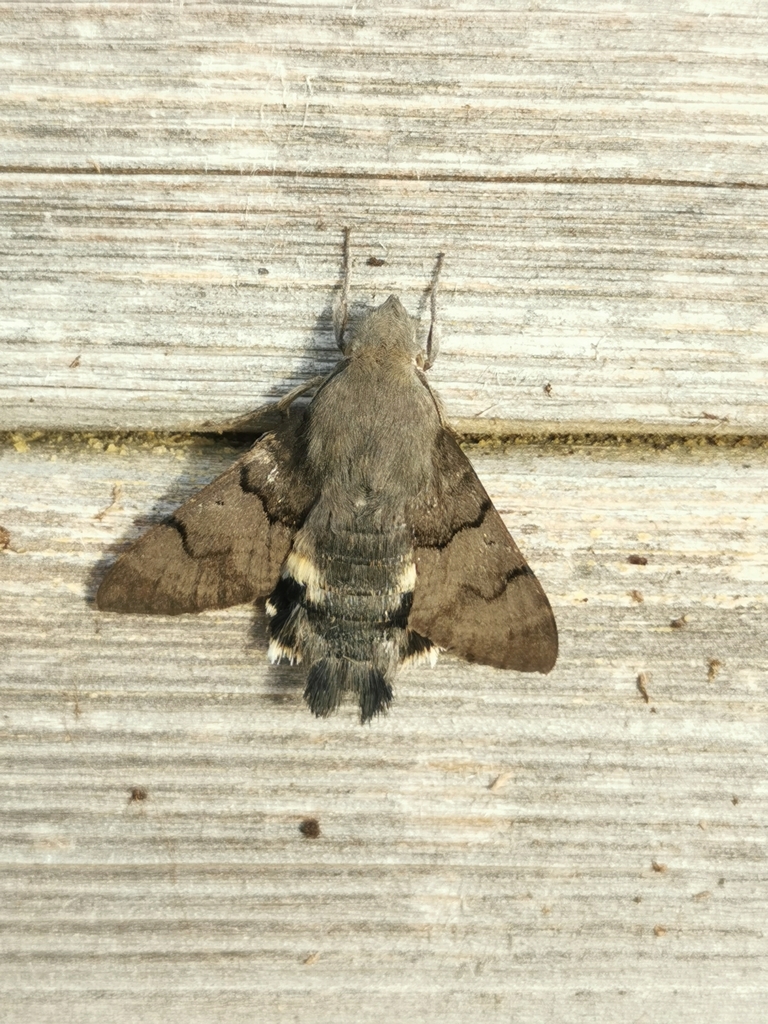
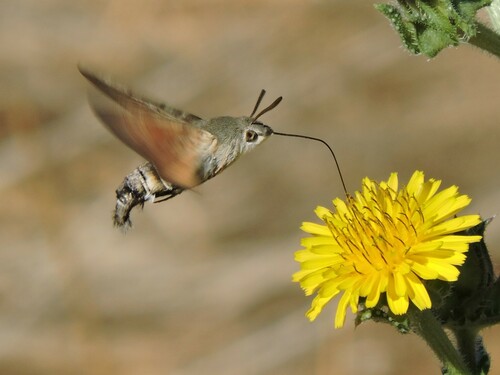
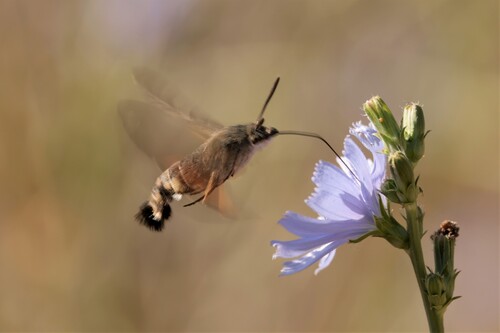
The Eurasian hummingbird hawk-moth has a wingspan of about 1.6 to 1.8 inches (40 to 45 mm). Adults hover at flowers during daylight and can also be seen at dawn, dusk, or even in rain.
Source: Wikipedia
How to recognize it
Its front wings are brown with wavy black lines, while the rear wings are orange edged in black. The abdomen is relatively wide and ends in a fan-shaped tuft of hairs.
Source: Wikipedia
Size
Wingspan ranges from 40 to 45 mm (1.6 to 1.8 in).
Source: Wikipedia
Where it lives
You’ll find it in gardens, parks, meadows, shrubbery and at the edges of woods where its food plants grow. In winter the adult hides in crevices among rocks, trees or buildings.
Source: Wikipedia
What it eats
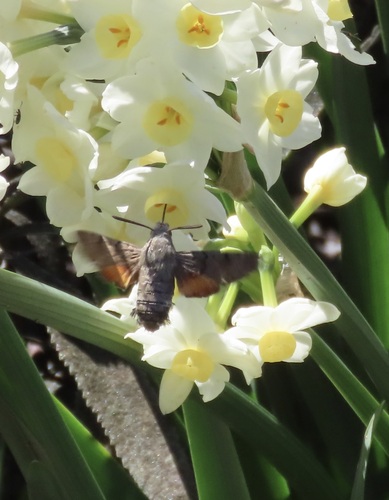
Adults feed on nectar from flowers that have long, narrow tubes. Caterpillars eat bedstraws, madders (Rubia) and occasionally other members of the Rubiaceae family as well as some Centranthus, Stellaria and Epilobium species.
Source: Wikipedia
Life cycle
The species can produce two or more generations each year. Adults survive the winter by sheltering in crevices among rocks, trees or buildings.
Source: Wikipedia
When you see it
Adults may be seen any time of year, especially in the southern part of the range where several broods occur. They are active in bright sunshine but will also fly at dawn, dusk and in light rain.
Source: Wikipedia
Where it comes from
It occurs across the northern Old World from Portugal eastward to Japan, preferring warmer parts of that range.
Source: Wikipedia
Lookalikes
European species of the genus Hemaris look similar and are also called hummingbird or bee moths. Do not mix this moth with the North American Hemaris hummingbird moths, which are different species but look alike.
Source: Wikipedia
Where it is found in the US
Recorded in 7 of 51 states and DC. Most records: California, Oregon, Nevada, Washington, Massachusetts, Connecticut, District of Columbia.
Darker = more records. Counts are museum and citizen-science records, not population size.
Source: GBIF
Status: introduced in United States. Source: iNaturalist
Months it is reported in the US
Source: GBIF
More photos

Questions people ask
When can I see them?
They can appear year-round, especially in warm areas, and are most active in bright daylight.
Source: Wikipedia
How can I tell this moth apart from similar ones?
Look for brown forewings with wavy black lines, orange hindwings with a black edge, and a broad abdomen ending in a fan-shaped hair tuft.
Source: Wikipedia
Same family (Sphingidae)
 White-lined SphinxHyles lineataDamages trees, gardens or crops
 Snowberry ClearwingHemaris diffinis
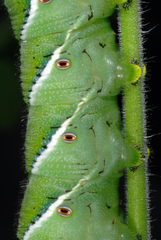 Carolina SphinxManduca sextaDamages trees, gardens or crops
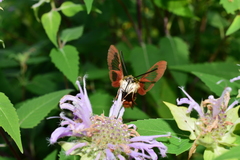 Hummingbird ClearwingHemaris thysbeDamages trees, gardens or crops
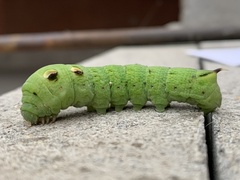 Elephant HawkmothDeilephila elpenor
 Convolvulus HawkmothAgrius convolvuliDamages trees, gardens or crops
Sources
- Wikipedia: https://en.wikipedia.org/wiki/Hummingbird_hawk-moth
Look it up elsewhere: GBIF · iNaturalist · BugGuide · Wikipedia
Text written 2026-10-22 from the sources above and checked sentence by sentence against them. Data fetched 2026-10-22.