 Bug FAQ
Viereck's Sweat Bee
Lasioglossum vierecki · Order: Hymenoptera · Family: Halictidae
Also called: Viereck's Metallic-Sweat Bee, Viereck's Dialictus
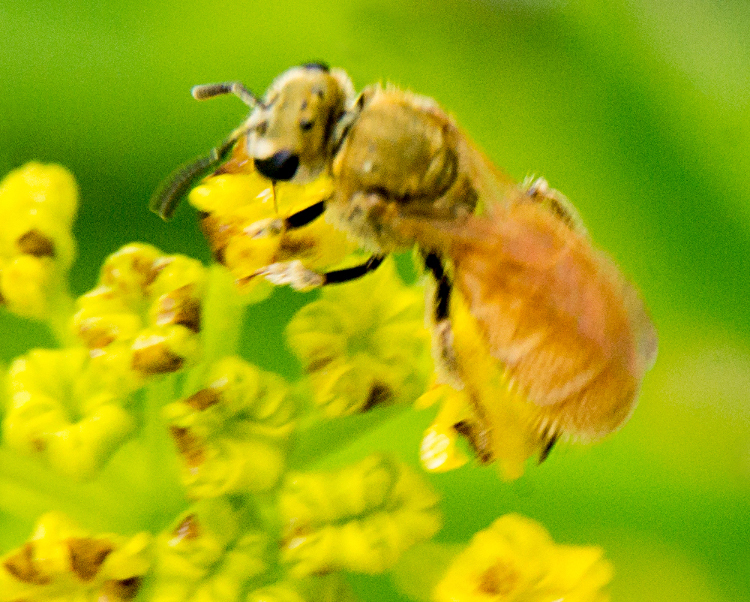
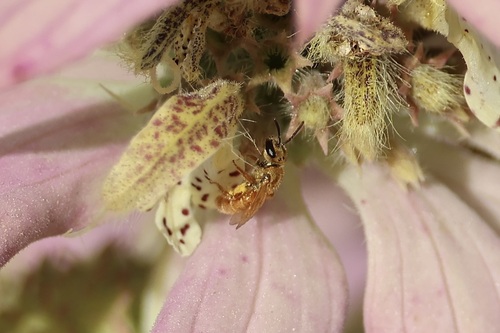
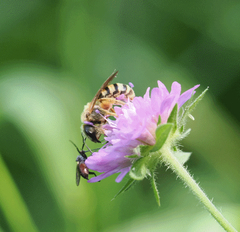
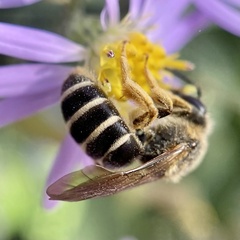
Female Viereck's sweat bees have very yellow legs, a brown-tinged clypeus, pale yellow-brown abdomen and dense yellow hairs on the body; males are smaller and have many punctures on the middle thorax segment. They are sand-specialist solitary bees that pollinate flowers such as goldenrod and rattlesnake master and are active from April through September in the eastern United States and Canada.
Source: Wikipedia
How to recognize it
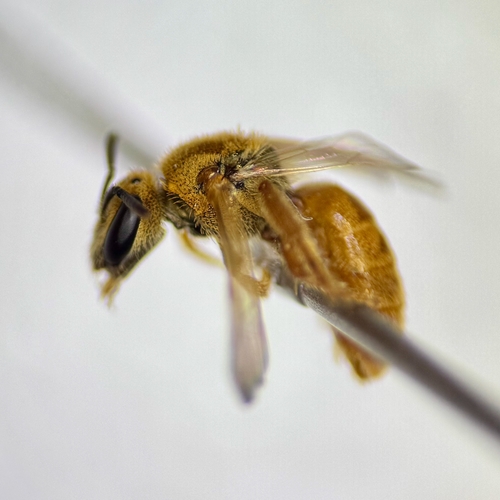
The abdomen is orange-yellow and very hairy with golden hairs on the scutellum, and the scutellum has pits touching it; the antennae are darker on the lower half and the metathorax has narrowly spaced punctures.
Source: Wikipedia
Size
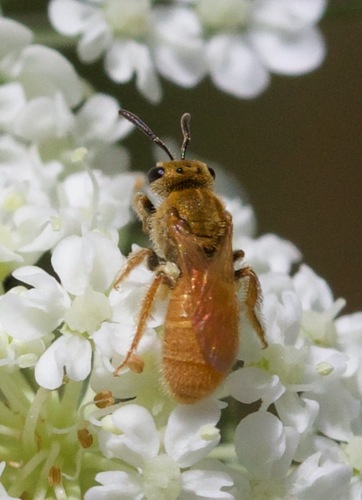
Females are recognized by extensive yellow legs, a brown-tinged clypeus, pale yellow-brown metasoma and dense yellow hairs on the body. Males are smaller and have many punctures on the scutum of the middle thoracic segment.
Source: Wikipedia
Where it lives
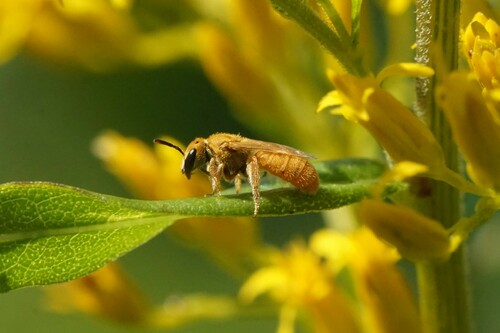
They are sand specialists that nest only in sandy soils and visit plants that grow in sand. Commonly found in sandy areas, they pollinate flowers such as grass-leaved goldenrod and rattlesnake master.
Source: Wikipedia
What it eats
Adults pollinate a variety of flowers throughout eastern North America.
Source: Wikipedia
Life cycle
It is a solitary bee; each female builds and provisions her own nest and raises the brood alone.
Source: Wikipedia
When you see it
Active from April through September.
Source: Wikipedia
Where it comes from
Lives in the eastern United States from Minnesota to New England and south to Georgia and Louisiana, and also in eastern Canada (Manitoba and Ontario).
Source: Wikipedia
Lookalikes
Other bees with similar colored abdomens differ in several details, such as the first abdominal segment being bluer and more punctured.
Source: Wikipedia
Where it is found in the US
Recorded in 33 of 51 states and DC. Most records: New York, Texas, Maryland, Michigan, Massachusetts, Vermont, Illinois, South Carolina.
Darker = more records. Counts are museum and citizen-science records, not population size.
Source: GBIF
Status: native in North America; native in Canada; native in United States. Source: iNaturalist
Months it is reported in the US
Source: GBIF
More photos
Questions people ask
What flowers does Viereck's sweat bee visit?
It pollinates grass-leaved goldenrod, rattlesnake master and other flowers found in sandy habitats.
Source: Wikipedia
When can I expect to see these bees?
They are active from early spring to early fall, roughly April to September.
Source: Wikipedia
Same family (Halictidae)

Sources
- Wikipedia: https://en.wikipedia.org/wiki/Lasioglossum_vierecki
Look it up elsewhere: GBIF · iNaturalist · BugGuide · ITIS · Wikipedia
Text written 2026-10-23 from the sources above and checked sentence by sentence against them. Data fetched 2026-10-23.