 Bug FAQ
Upland Green Bush-cricket
Tettigonia cantans · Order: Orthoptera · Family: Tettigoniidae
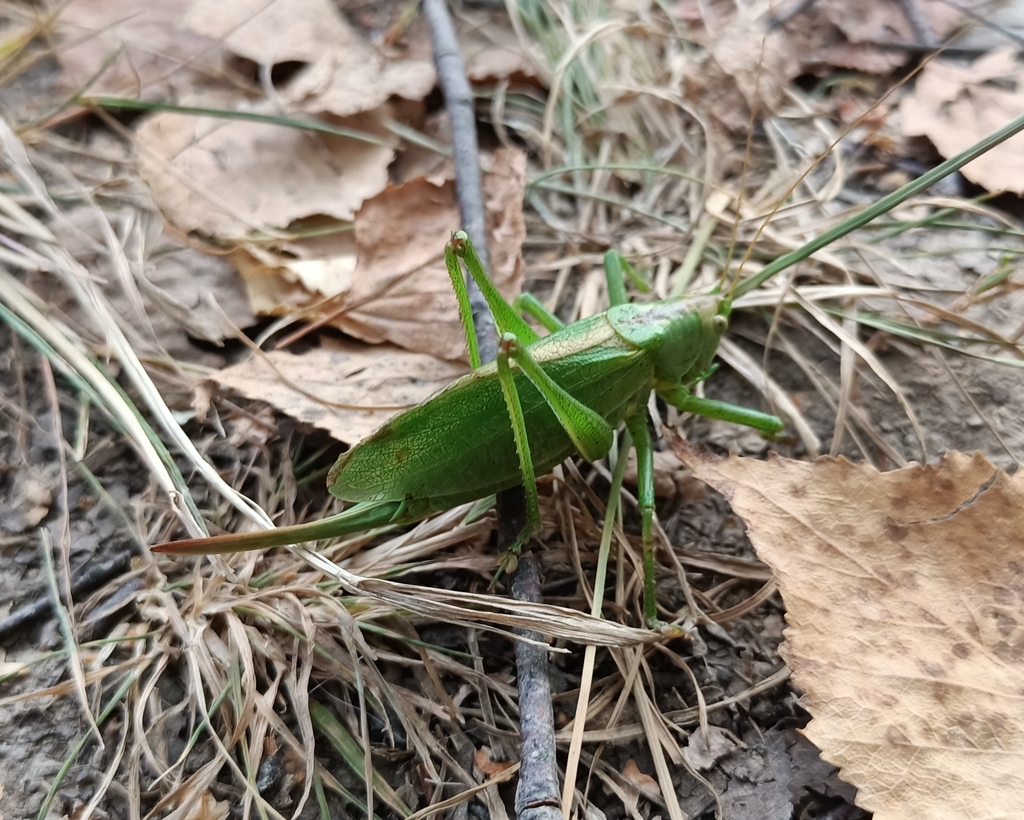
Adult males are 20 to 30 mm long and females 29 to 35 mm. They live in moist to moderately dry cool places like fens, marshes, mountain meadows, clear-cuts, woodland edges, potato fields and dry limestone grasslands.
Source: Wikipedia
How to recognize it
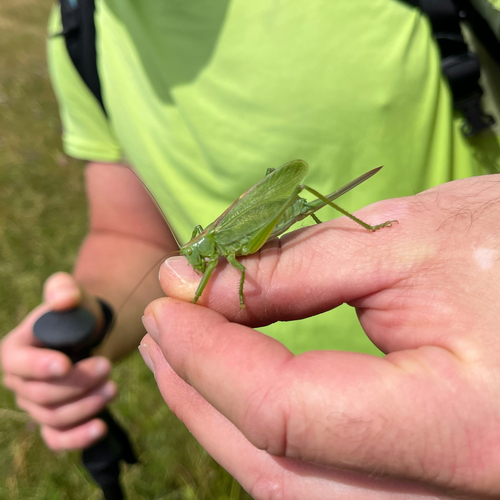
Wings are short and wide, covering only the end of the abdomen.
Source: Wikipedia
Size
Males grow to 20 to 30 mm and females to 29 to 35 mm in length.
Source: Wikipedia
Where it lives
Also occurs in potato fields and on nutrient-poor dry limestone grasslands with taller vegetation.
Source: Wikipedia
What it eats
Feeds mainly on other insects but also eats plant material.
Source: Wikipedia
Life cycle
Eggs overwinter in the soil, at least for two years.
Source: Wikipedia
When you see it
Adults are present from mid-June through October and are active from noon until night, with males singing.
Source: Wikipedia
Where it comes from
Present across most of Europe, the eastern Palearctic, the Near East and North Africa. Its range extends from the Pyrenees to China.
Source: Wikipedia
More photos
Same family (Tettigoniidae)
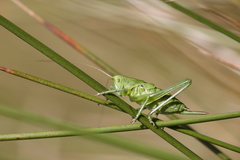 Great Green Bush-cricketTettigonia viridissimaCan bite
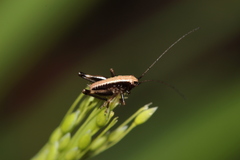 Dark Bush-cricketPholidoptera griseoaptera
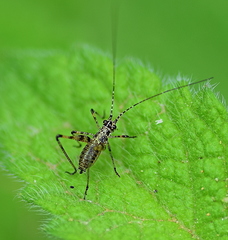 Mediterranean KatydidPhaneroptera nanaDamages trees, gardens or crops
 Fork-tailed Bush KatydidScudderia furcataDamages trees, gardens or crops
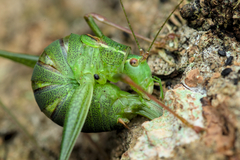 Speckled Bush-cricketLeptophyes punctatissima
 Roesel's Bush-cricketRoeseliana roeselii
Sources
- Wikipedia: https://en.wikipedia.org/wiki/Tettigonia_cantans
Look it up elsewhere: GBIF · iNaturalist · BugGuide · Wikipedia
Text written 2026-10-22 from the sources above and checked sentence by sentence against them. Data fetched 2026-10-22.