 Bug FAQ
Speckled Bush-cricket
Leptophyes punctatissima · Order: Orthoptera · Family: Tettigoniidae
Also called: Common Speckled Bush-cricket
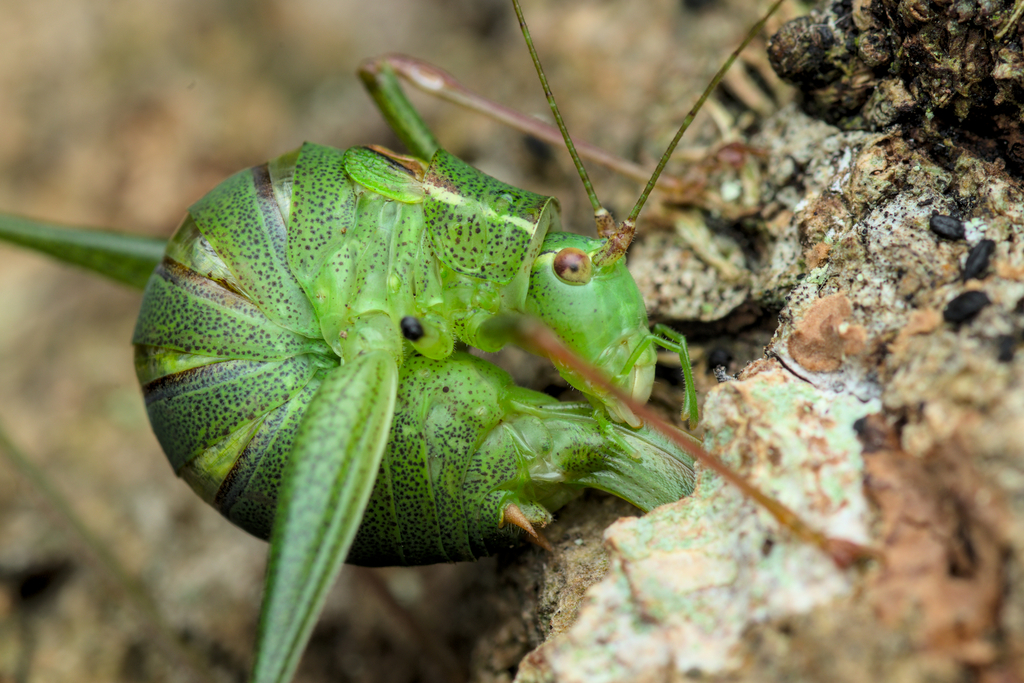
The speckled bush-cricket is a small green insect about 10 to 15 mm long. It lives in dry shrubby areas, open woods, hedgerows and gardens, with nymphs low in vegetation and adults higher in trees. It is common across most of Europe, from the British Isles to Russia and from Scandinavia down to Italy and Greece.
Source: Wikipedia
How to recognize it
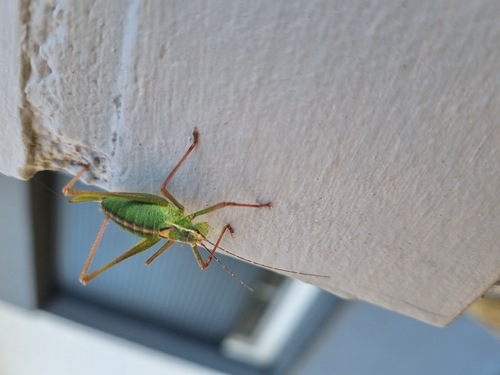
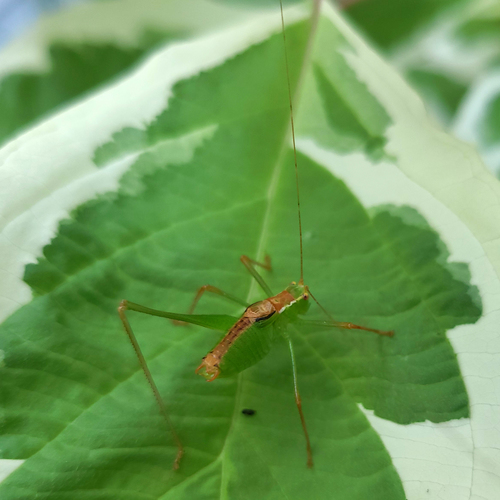
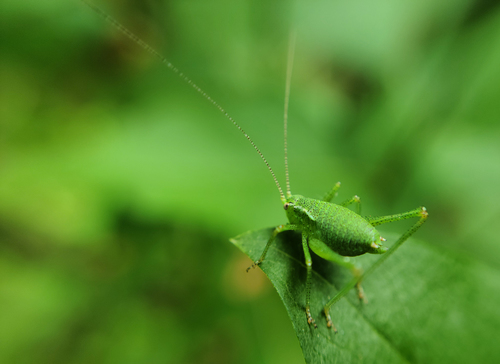
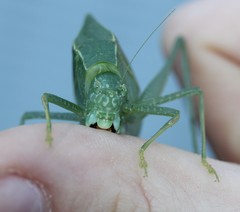
The body is green with many tiny black spots. The abdomen has an orange-brown stripe that is clearer on males.
Source: Wikipedia
Size
Adults measure about 10 to 15 mm in length.
Source: Wikipedia
Where it lives
Found in dry shrubby habitats, open woodland, scrub, hedgerows and gardens with birch, bramble and gorse. Nymphs stay low in vegetation while adults are usually higher up in trees.
Source: Wikipedia
Life cycle
Nymphs appear in May and molt six times, reaching sexual maturity by August. Females lay eggs in late summer on bark or plant stems; the eggs overwinter and hatch the following spring.
Source: Wikipedia
When you see it
Nymphs emerge in May. Eggs are laid in late summer.
Source: Wikipedia
Where it comes from
Widespread across much of Europe.
Source: Wikipedia
Where it is found in the US
Recorded in 2 of 51 states and DC. Most records: New York, Rhode Island.
Darker = more records. Counts are museum and citizen-science records, not population size.
Source: GBIF
Status: introduced in United States; introduced in Canada. Source: iNaturalist
Months it is reported in the US
Source: GBIF
More photos
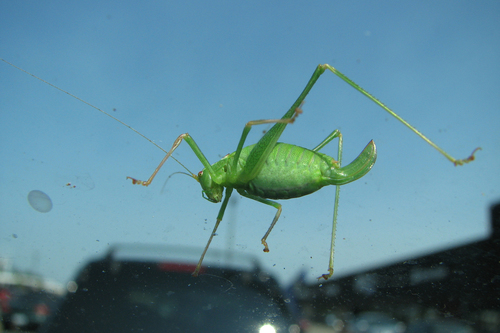
Same family (Tettigoniidae)
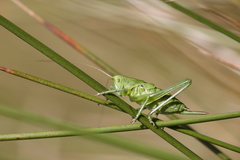 Great Green Bush-cricketTettigonia viridissimaCan bite
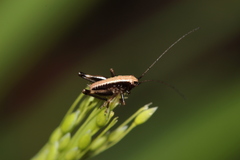 Dark Bush-cricketPholidoptera griseoaptera
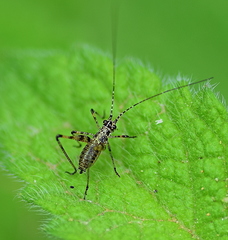 Mediterranean KatydidPhaneroptera nanaDamages trees, gardens or crops
 Fork-tailed Bush KatydidScudderia furcataDamages trees, gardens or crops
 Roesel's Bush-cricketRoeseliana roeselii
 Greater AnglewingMicrocentrum rhombifoliumDamages trees, gardens or crops
Sources
- Wikipedia: https://en.wikipedia.org/wiki/Speckled_bush-cricket
Look it up elsewhere: GBIF · iNaturalist · BugGuide · Wikipedia
Text written 2026-10-22 from the sources above and checked sentence by sentence against them. Data fetched 2026-10-22.