 Bug FAQ
Mediterranean Katydid
Phaneroptera nana · Order: Orthoptera · Family: Tettigoniidae
Also called: Southern Sickle Bush-cricket, Southern Sickle-bearing Bush-cricket
Source: Wikipedia
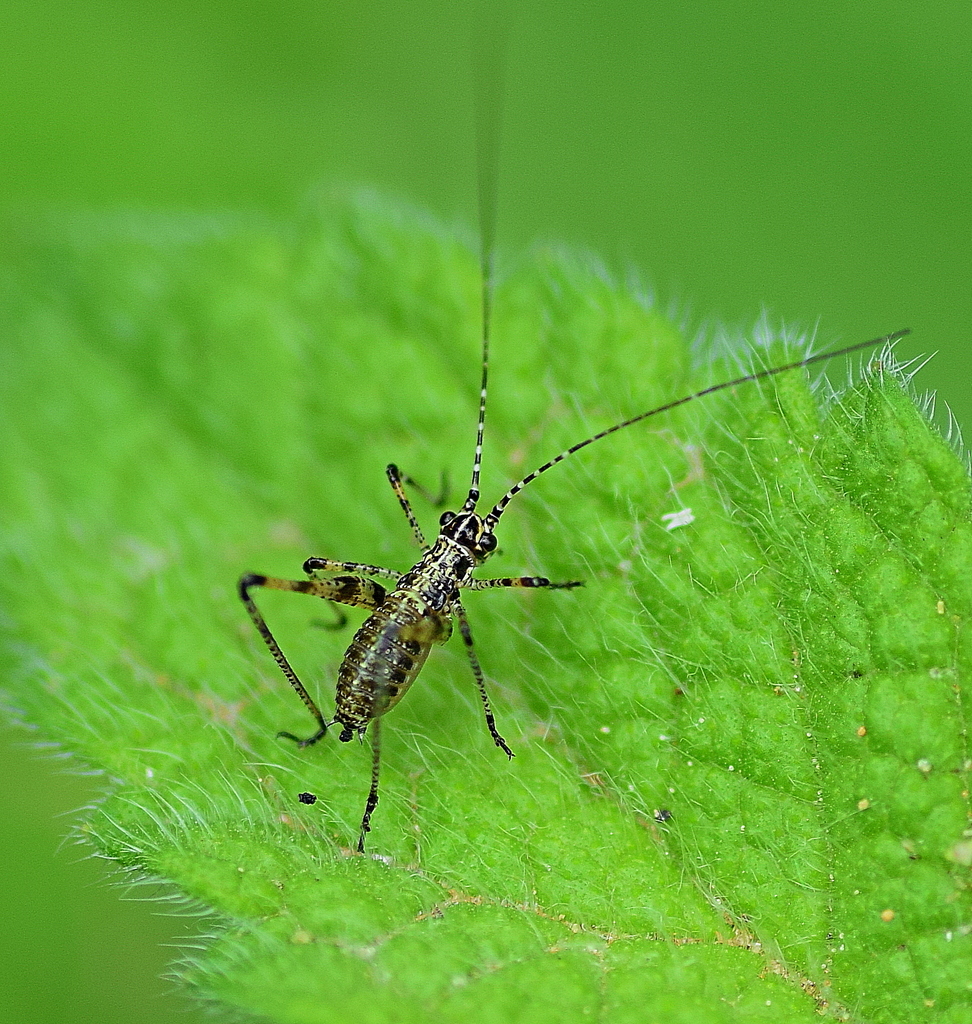
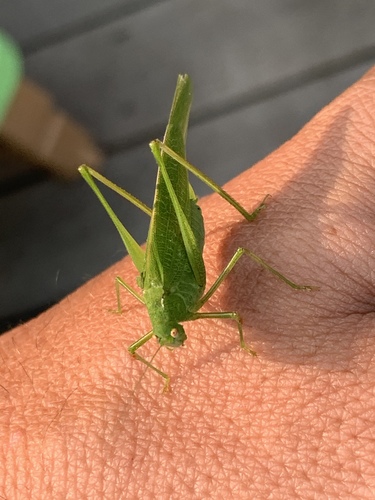
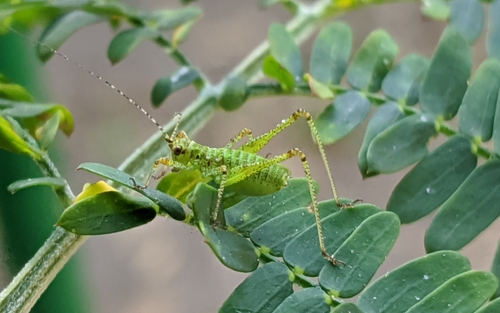
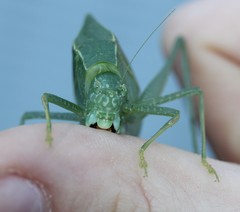
The Mediterranean katydid is a small, light-green bush cricket with orange eyes and black spots. Females lay about 3 mm eggs that hatch in summer; the insects may damage pear crops and also eat pest pupae.
Source: Wikipedia
How to recognize it
Body is light green with many tiny black spots; eyes are bright orange.
Source: Wikipedia
Size
Males reach 13 to 15 mm, females 15 to 18 mm in length.
Source: Wikipedia
What it eats
Feeds on unripe pears, causing damage in orchards. Also recorded eating the pupae of the grapevine pest Lobesia botrana.
Source: Wikipedia
Life cycle
Females lay eggs about 3 mm long. Eggs usually hatch in summer, though timing can vary.
Source: Wikipedia
When you see it
Adults are most easily encountered during summer and fall.
Source: Wikipedia
Lookalikes
Can be confused with Phaneroptera falcata where their ranges overlap.
Source: Wikipedia
Where it is found in the US
Recorded in 10 of 51 states and DC. Most records: California, Oregon, New York, Massachusetts, New Jersey, Washington, Connecticut, Rhode Island.
Darker = more records. Counts are museum and citizen-science records, not population size.
Source: GBIF
Status: introduced in United States. Source: iNaturalist
Months it is reported in the US
Source: GBIF
More photos
Questions people ask
When are they most common?
You will most often see them in the summer and fall months.
Source: Wikipedia
How can I tell them apart from similar species?
They look like Phaneroptera falcata, so careful identification is needed where both occur.
Source: Wikipedia
Same family (Tettigoniidae)
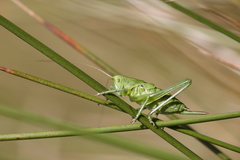 Great Green Bush-cricketTettigonia viridissimaCan bite
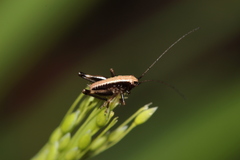 Dark Bush-cricketPholidoptera griseoaptera
 Fork-tailed Bush KatydidScudderia furcataDamages trees, gardens or crops
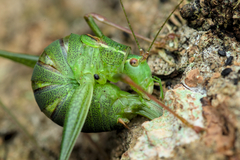 Speckled Bush-cricketLeptophyes punctatissima
 Roesel's Bush-cricketRoeseliana roeselii
 Greater AnglewingMicrocentrum rhombifoliumDamages trees, gardens or crops
Sources
- Wikipedia: https://en.wikipedia.org/wiki/Phaneroptera_nana
Look it up elsewhere: GBIF · iNaturalist · BugGuide · ITIS · Wikipedia
Text written 2026-10-22 from the sources above and checked sentence by sentence against them. Data fetched 2026-10-22.