 Bug FAQ
Ugly-nest Caterpillar Moth
Archips cerasivorana · Order: Lepidoptera · Family: Tortricidae
Also called: Uglynest caterpillar
Source: Wikipedia
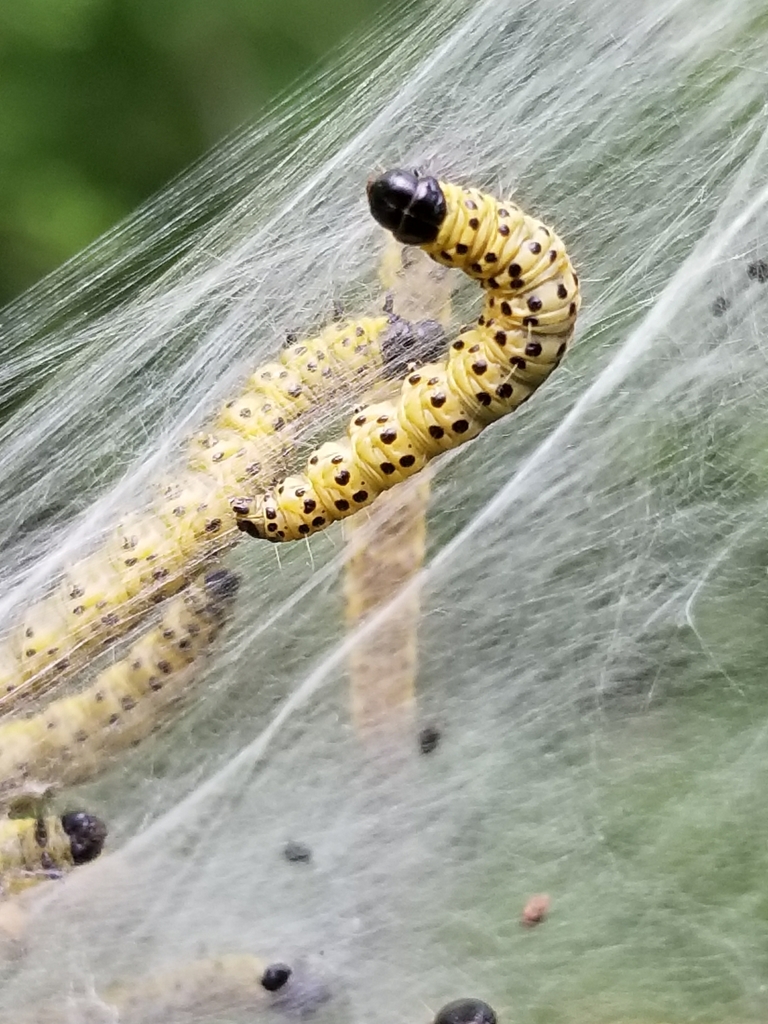
Adults are bright orange to yellow with many silvery bars on the forewings, sometimes showing faint purplish marks. The larvae feed on a wide range of hardwood leaves and can skeletonize early-stage foliage before eating whole leaves.
Source: Wikipedia
How to recognize it
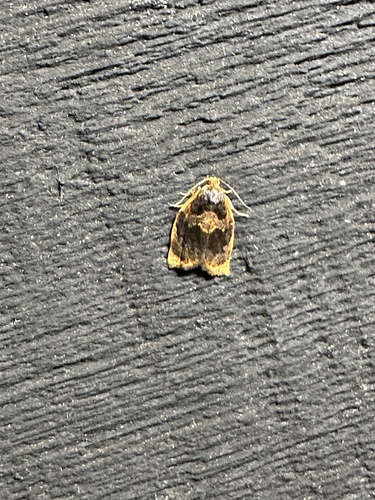
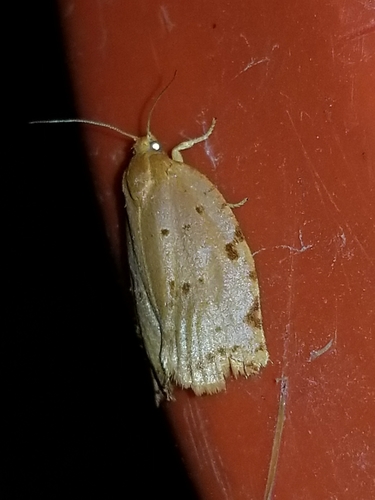
Adults have orange forewings marked with many silvery bars. Forewing color ranges from bright orange to yellow and may show faint purplish markings.
Source: Wikipedia
Size
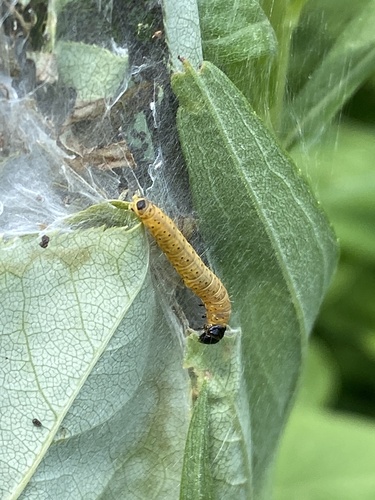
The adult wingspan is about 20 to 25 mm. Last-instar larvae measure 19 to 26 mm long and have a yellow to dark yellow-green abdomen.
Source: Wikipedia
Is it a pest in the house?
Caterpillars may build unsightly nests in orchards and gardens. They cause little permanent damage beyond occasional branch deformity.
Source: Wikipedia
How to get rid of it
Chemical pesticides can be used to remove the caterpillars. Biorational options include insecticidal soap, pyrethrins, spinosad and tebufenozide.
Source: Wikipedia
Where it lives
Nests are most often found on chokecherry but also occur on other hardwoods and shrubs. Caterpillars sometimes build unsightly nests in orchards and gardens.
Source: Wikipedia
What it eats
Larvae feed on leaves of chokecherry, black cherry, hawthorn, rose, apple, cotoneaster, birch and poplar species. Early instars skeletonize leaves, while later instars consume whole leaves.
Source: Wikipedia
Life cycle
There is one generation each year. Eggs overwinter and hatch into first-instar larvae in May.
Source: Wikipedia
When you see it
Adults are on the wing from early July through mid-September.
Source: Wikipedia
Where it comes from
It is native throughout North America, from Alaska down to North Carolina. It is also present across Canada and the United States.
Source: Wikipedia
Lookalikes
Larvae look similar to those of Archips rileyana. They can be distinguished by their coloration.
Source: Wikipedia
Where it is found in the US
Recorded in 27 of 51 states and DC. Most records: Vermont, Minnesota, Michigan, Massachusetts, New York, Montana, Connecticut, New Hampshire.
Darker = more records. Counts are museum and citizen-science records, not population size.
Source: GBIF
Months it is reported in the US
Source: GBIF
More photos
Questions people ask
How can I control these caterpillars?
Use chemical pesticides or biorational products such as insecticidal soap, pyrethrins, spinosad or tebufenozide.
Source: Wikipedia
What do the larvae look like?
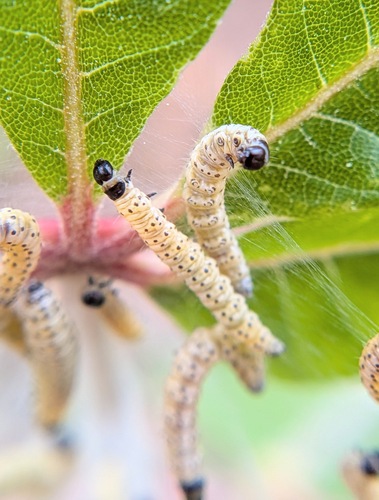
Full-grown larvae are 19 to 26 mm long, yellow to dark yellow-green on the abdomen.
Source: Wikipedia
What plants do they damage?
The larvae feed on leaves of chokecherry, black cherry, hawthorn, rose, apple, cotoneaster, birch and poplar, often stripping foliage.
Source: Wikipedia
Same family (Tortricidae)
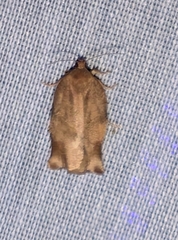 Oblique-banded Leafroller MothChoristoneura rosaceanaDamages trees, gardens or crops
 Garden TortrixClepsis peritanaDamages trees, gardens or crops
 Common MarbleSyricoris lacunanaDamages trees, gardens or crops
 Red-banded Leafroller MothArgyrotaenia velutinanaDamages trees, gardens or crops
 Light Brown Apple MothEpiphyas postvittanaDamages trees, gardens or crops
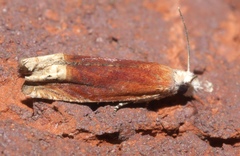 Aster and Reddish Eucosma Moths and AlliesEucosma parmatana
Sources
- Wikipedia: https://en.wikipedia.org/wiki/Archips_cerasivorana
Look it up elsewhere: GBIF · iNaturalist · BugGuide · ITIS · Wikipedia
Text written 2026-10-24 from the sources above and checked sentence by sentence against them. Data fetched 2026-10-24.