 Bug FAQ
Typhon Sphinx
Eumorpha typhon · Order: Lepidoptera · Family: Sphingidae
Also called: Typhon Sphinx Moth
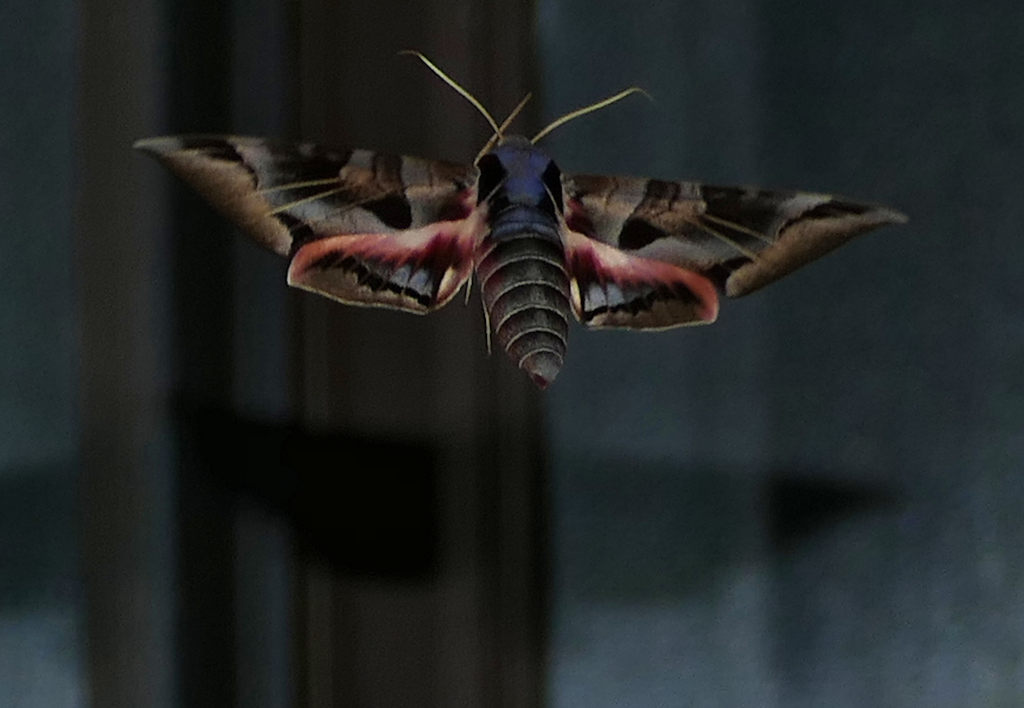
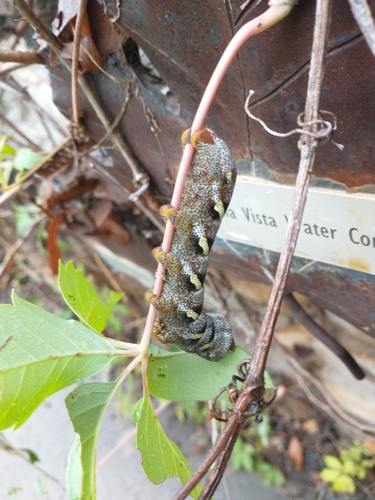
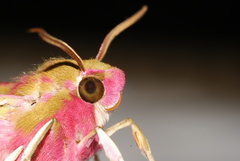
The Typhon Sphinx moth has a wingspan of about 57 to 64 mm and its upper wings are deep red-brown with pale brown bands, while each hindwing shows a pink costal patch and a triangular white spot near the inner margin. It lives from Honduras through Mexico into southern Arizona, where adults fly from June to August, feeding on flower nectar, and the caterpillars eat various grape species, pupating in shallow soil.
Source: Wikipedia
Size
The wingspan ranges from 57 to 64 mm.
Source: Wikipedia
What it eats
Larvae feed on various grape species.
Source: Wikipedia
Life cycle
Pupation takes place in shallow soil.
Source: Wikipedia
Where it comes from
It is native to areas from Honduras through Mexico into southern Arizona, USA.
Source: Wikipedia
Where it is found in the US
Recorded in 5 of 51 states and DC. Most records: Arizona, New Mexico, Kansas, Pennsylvania, Colorado.
Darker = more records. Counts are museum and citizen-science records, not population size.
Source: GBIF
Months it is reported in the US
Source: GBIF
More photos
Questions people ask
What do adult Typhon Sphinx moths eat?
Adults feed on nectar from a variety of flowers.
Source: Wikipedia
What do the caterpillars of Typhon Sphinx feed on?
The larvae eat several species of grape vines.
Source: Wikipedia
When are Typhon Sphinx moths active?
In the northern part of their range, adults are active from June through August.
Source: Wikipedia
Where can I find Typhon Sphinx moths?
They occur from Honduras through Mexico up to southern Arizona.
Source: Wikipedia
Same family (Sphingidae)


Sources
- Wikipedia: https://en.wikipedia.org/wiki/Eumorpha_typhon
Look it up elsewhere: GBIF · iNaturalist · BugGuide · ITIS · Wikipedia
Text written 2026-10-25 from the sources above and checked sentence by sentence against them. Data fetched 2026-10-25.