 Bug FAQ
Twin-spotted Sphinx
Smerinthus jamaicensis · Order: Lepidoptera · Family: Sphingidae
Also called: Twinspot Sphinx, Twin-spotted Sphinx Moth
Source: Wikipedia
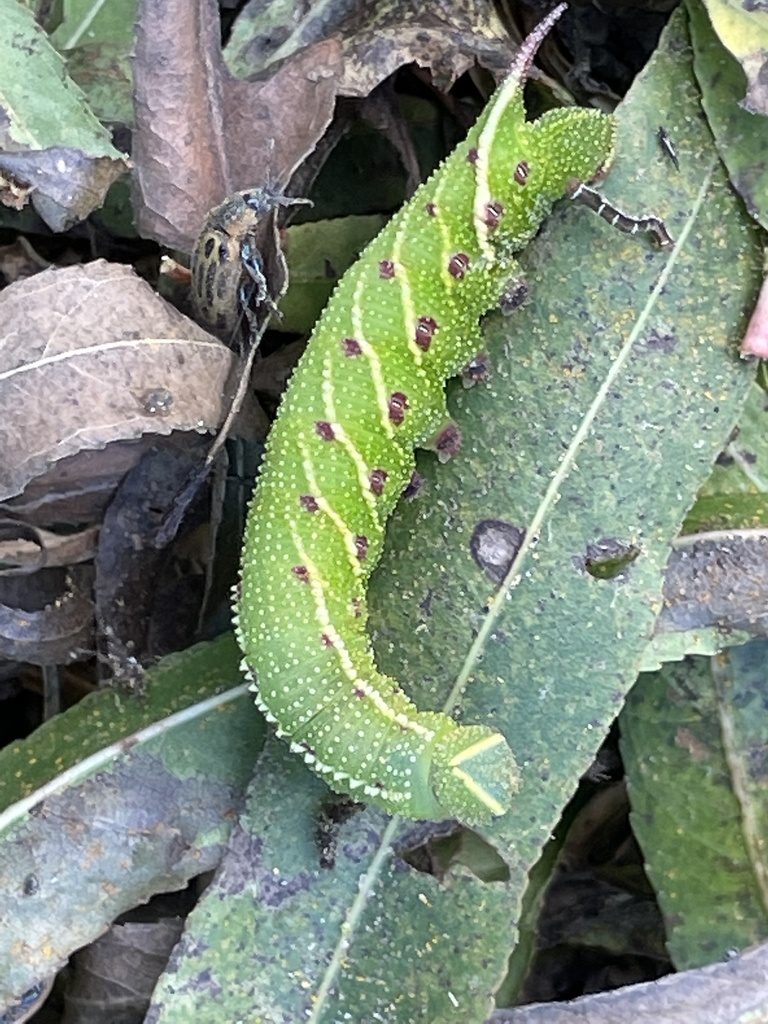
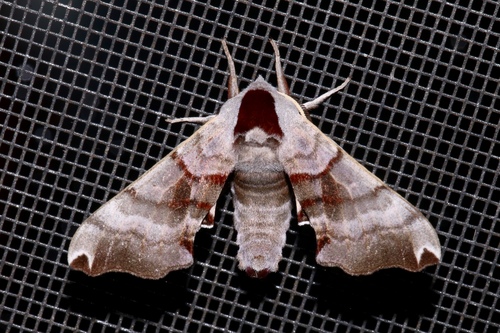
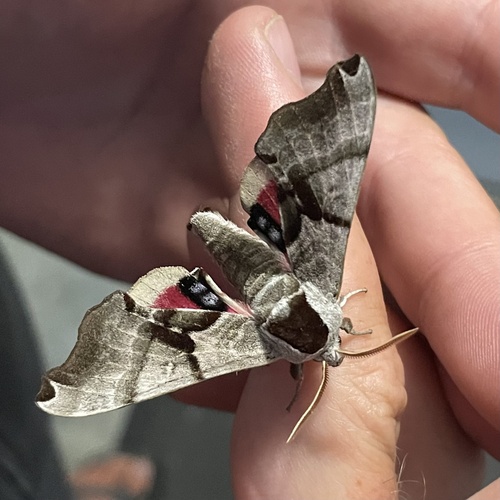
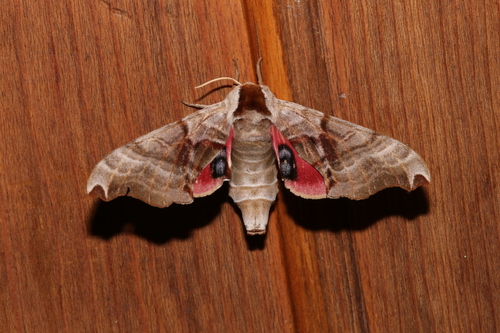
The adult moth has a wingspan of about 4.5 to 8.3 cm. Males are gray with black and white markings, females are yellow-brown with dark brown and white markings, and both sexes show red hindwings with a pale yellow border that may have one to three eyespot-like patches. Adults are active at night and do not feed.
Source: Wikipedia
How to recognize it
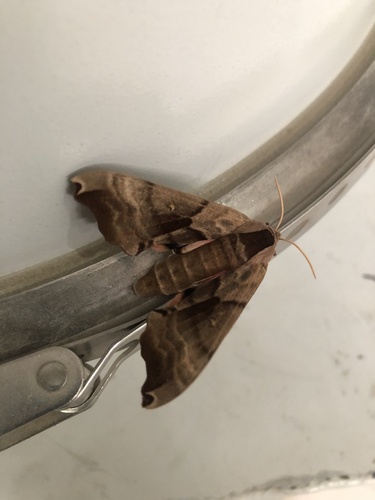
Males have gray forewings with black and white markings; females are yellow-brown with dark brown and white markings. Both sexes have red hindwings edged with pale yellow, sometimes showing a blue eyespot or several eyespots divided by black bands.
Source: Wikipedia
Size
Wingspan ranges from 1 ¾ to 3 ¼ inches (4.5 to 8.3 cm).
Source: Wikipedia
What it eats
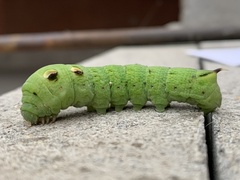
Caterpillars eat many kinds of plants, including willow, poplar, birch, ash, elm, apple and plum.
Source: Wikipedia
Life cycle
Adults are nocturnal and do not feed.
Source: Wikipedia
Where it is found in the US
Recorded in 42 of 51 states and DC. Most records: Minnesota, Michigan, Vermont, Massachusetts, New York, Colorado, Texas, Ohio.
Darker = more records. Counts are museum and citizen-science records, not population size.
Source: GBIF
Status: native in North America; native in United States; native in Canada. Source: iNaturalist
Months it is reported in the US
Source: GBIF
More photos
Same family (Sphingidae)
 White-lined SphinxHyles lineataDamages trees, gardens or crops
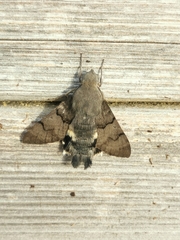 Eurasian Hummingbird HawkmothMacroglossum stellatarum
 Snowberry ClearwingHemaris diffinis
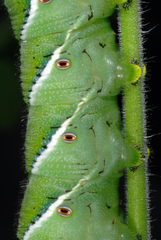 Carolina SphinxManduca sextaDamages trees, gardens or crops
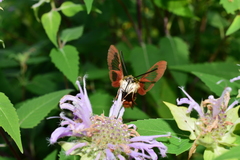 Hummingbird ClearwingHemaris thysbeDamages trees, gardens or crops
 Elephant HawkmothDeilephila elpenor
Sources
- Wikipedia: https://en.wikipedia.org/wiki/Smerinthus_jamaicensis
Look it up elsewhere: GBIF · iNaturalist · BugGuide · ITIS · Wikipedia
Text written 2026-10-22 from the sources above and checked sentence by sentence against them. Data fetched 2026-10-22.