 Bug FAQ
Tuatara tick
Archaeocroton sphenodonti · Order: Ixodida · Family: Ixodidae
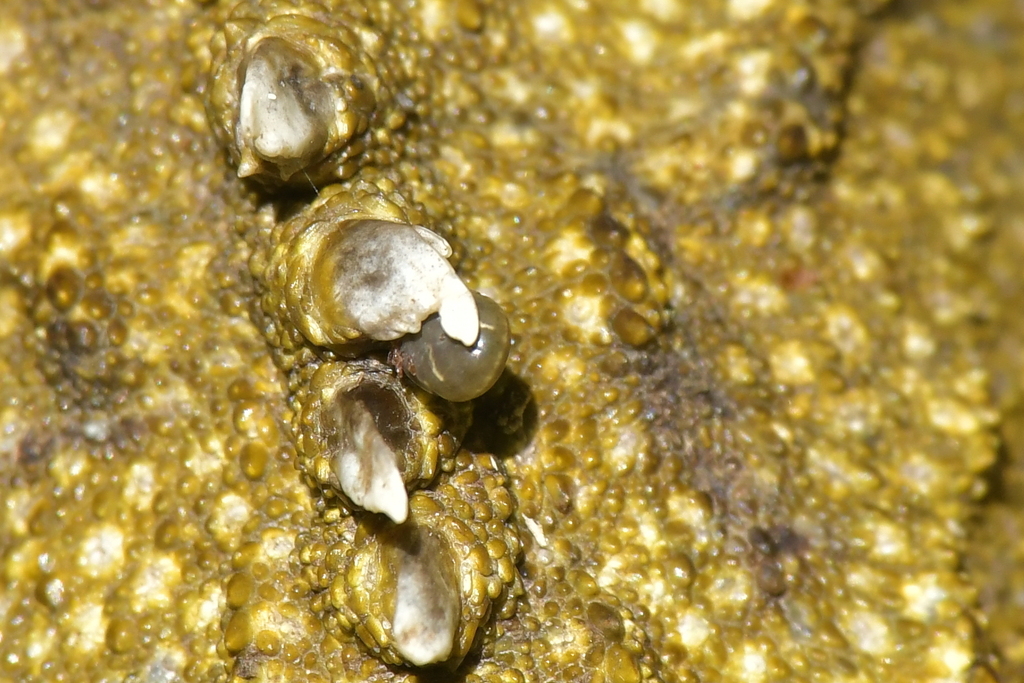
Adult tuatara ticks are almost round, light brown and about 2 mm long. All life stages feed only on the blood of tuatara and the whole life cycle can take two to three years. They are most active at night, matching the nocturnal habits of their host.
Source: Wikipedia
How to recognize it
Adults are nearly circular, light brown and measure roughly 2 mm in length.
Source: Wikipedia
Size
The tick’s body is about 2 mm (0.079 in) long.
Source: Wikipedia
Where it lives
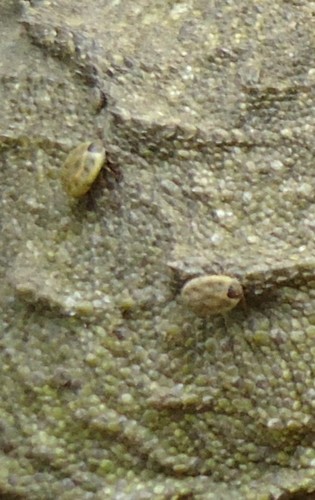
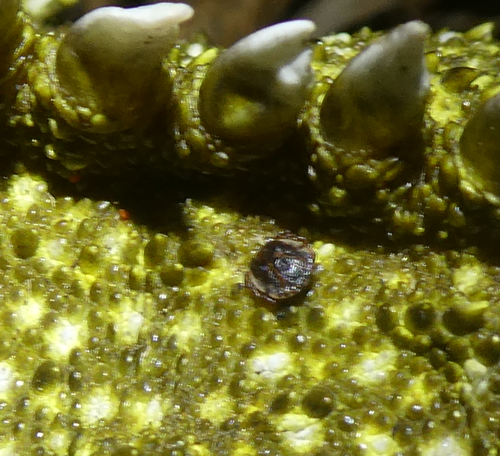
They tend to attach on the host’s back, in skin folds of the rear legs, or along the sides of the body.
Source: Wikipedia
What it eats
Larvae, nymphs and adults all drink the blood of tuatara.
Source: Wikipedia
Life cycle
The tick has three stages, each of which parasitises tuatara. Completing the cycle may require two to three years.
Source: Wikipedia
When you see it
Ticks are more mobile at night, which aligns with the nocturnal activity of their host.
Source: Wikipedia
Lookalikes
It is the sole living member of the genus Archaeocroton.
Source: Wikipedia
More photos
Questions people ask
What do adult tuatara ticks look like?
They are almost round, light brown and about 2 mm long.
Source: Wikipedia
Where are tuatara ticks found?
Only on four island groups off New Zealand: Mercury and Aldermen Islands, Stephens Island and the Trios.
Source: Wikipedia
Same family (Ixodidae)
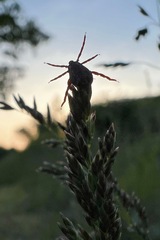 American Dog TickDermacentor variabilisCan spread germs or disease
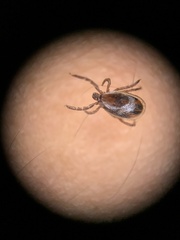 Eastern Black-legged TickIxodes scapularisCan spread germs or disease
 Lone Star TickAmblyomma americanumCan spread germs or disease
 Gulf Coast TickAmblyomma maculatumCan spread germs or disease
 Western Black-legged TickIxodes pacificusCan spread germs or disease
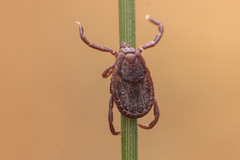 Brown Dog TickRhipicephalus sanguineusCan spread germs or disease
Sources
- Wikipedia: https://en.wikipedia.org/wiki/Archaeocroton
Look it up elsewhere: GBIF · iNaturalist · BugGuide · ITIS · Wikipedia
Text written 2026-10-23 from the sources above and checked sentence by sentence against them. Data fetched 2026-10-23.