 Bug FAQ
Trypanisma prudens
Trypanisma prudens · Order: Lepidoptera · Family: Gelechiidae
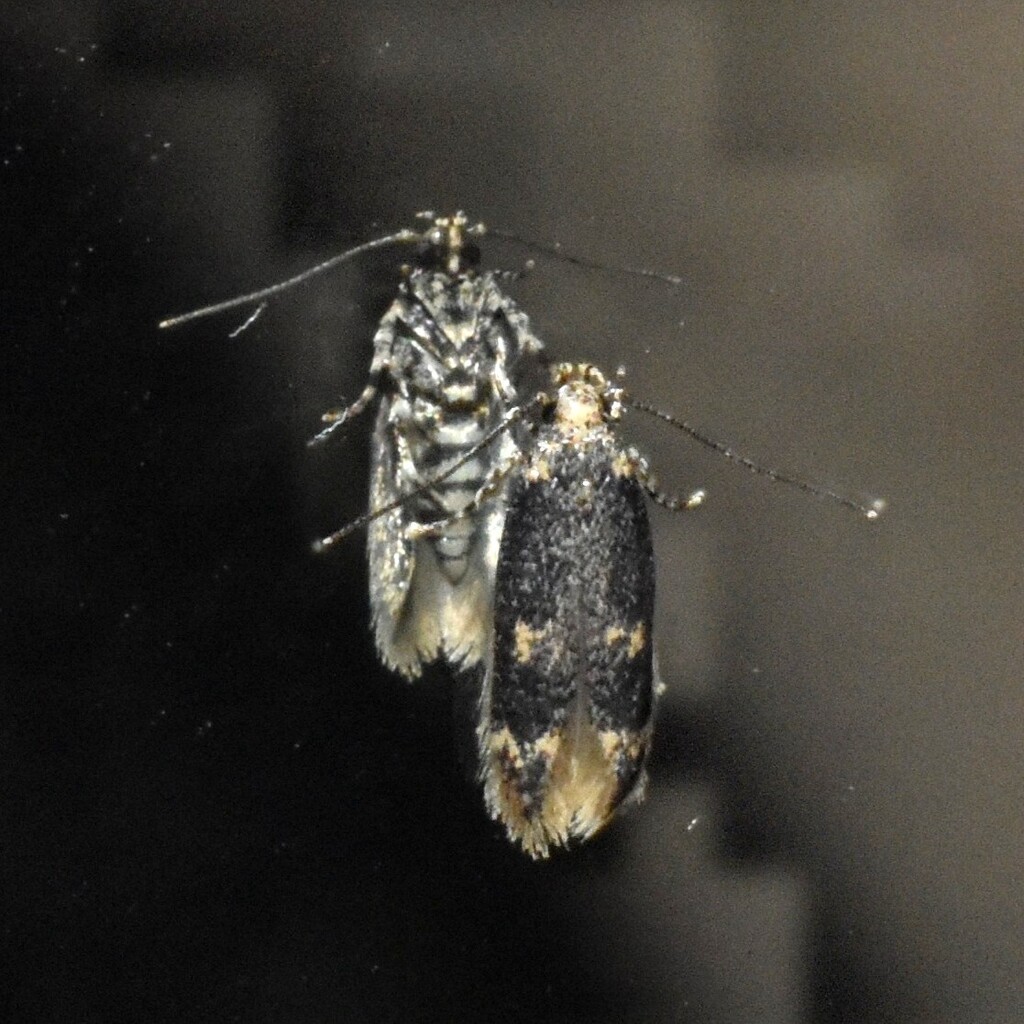
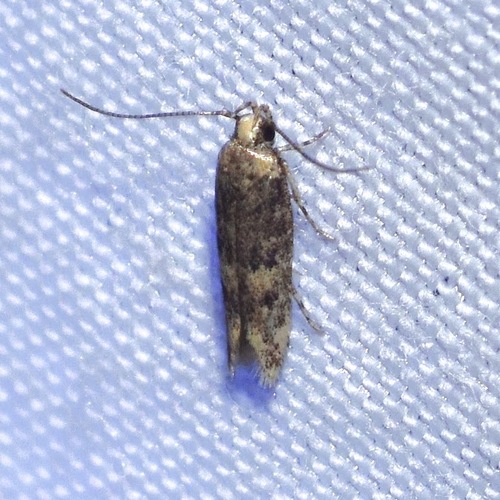
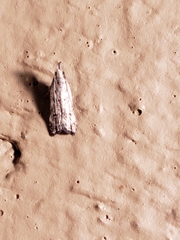
The moth has a wingspan of about 9 mm and its forewings appear light gray, with a dense black spot in the middle of the cell followed by a yellow patch. It lives in many eastern and central U.S. states and its larvae feed on oak (Quercus) and beech (Fagus) trees.
Source: Wikipedia
How to recognize it
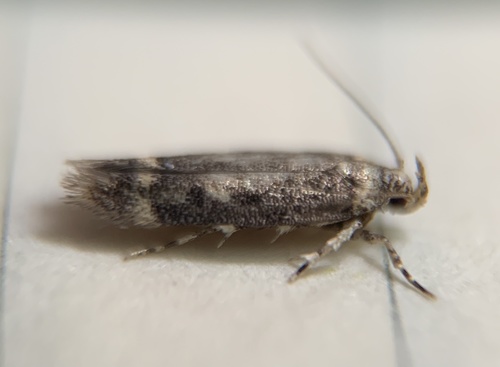
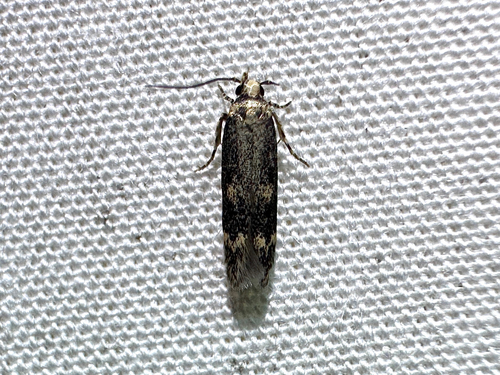
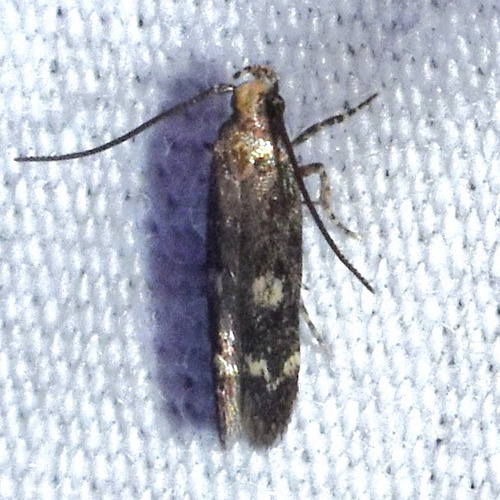
The forewings are yellowish-white but are heavily covered with black and gray scales, giving them a light gray appearance.
Source: Wikipedia
Size
The adult’s wingspan is about 9 mm.
Source: Wikipedia
What it eats
The larvae feed on oak (Quercus) and beech (Fagus) species.
Source: Wikipedia
Where it comes from
Its range is in North America, specifically the states listed for its habitat.
Source: Wikipedia
Where it is found in the US
Recorded in 23 of 51 states and DC. Most records: Florida, Maryland, New Jersey, Ohio, Mississippi, Arkansas, Massachusetts, Tennessee.
Darker = more records. Counts are museum and citizen-science records, not population size.
Source: GBIF
Status: native in North America; native in Canada. Source: iNaturalist
Months it is reported in the US
Source: GBIF
More photos
Questions people ask
Where is Trypanisma prudens found?
It has been recorded in a number of eastern and central U.S. states, including Alabama, Florida, Illinois and others.
Source: Wikipedia
What do the wings look like?
The forewings appear light gray because they are thickly covered with black and gray scales, and they have a distinctive black spot and yellow patch in the middle of the cell.
Source: Wikipedia
Same family (Gelechiidae)
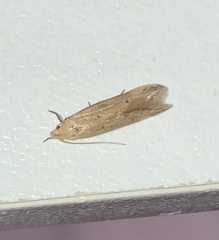 Angoumois Grain MothSitotroga cerealellaDamages trees, gardens or crops
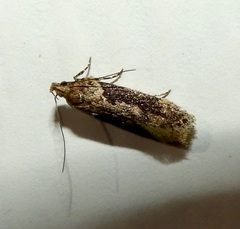 Boxelder Leafworm MothChionodes obscurusella
 Hairy, Toothed, and Shining Dichomeris Moths and AlliesDichomeris setosella
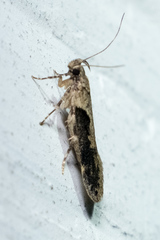 Black-smudged Chionodes Moth and AlliesChionodes occidentellaBlack-smudged Chionodes MothChionodes mediofuscella
 Inverse and Kimball's Dichomeris MothsDichomeris inversella
Sources
- Wikipedia: https://en.wikipedia.org/wiki/Trypanisma_prudens
Look it up elsewhere: GBIF · iNaturalist · BugGuide · Wikipedia
Text written 2026-10-28 from the sources above and checked sentence by sentence against them. Data fetched 2026-10-28.