 Bug FAQ
Angoumois Grain Moth
Sitotroga cerealella · Order: Lepidoptera · Family: Gelechiidae
Also called: French Grain-moth
Source: Wikipedia
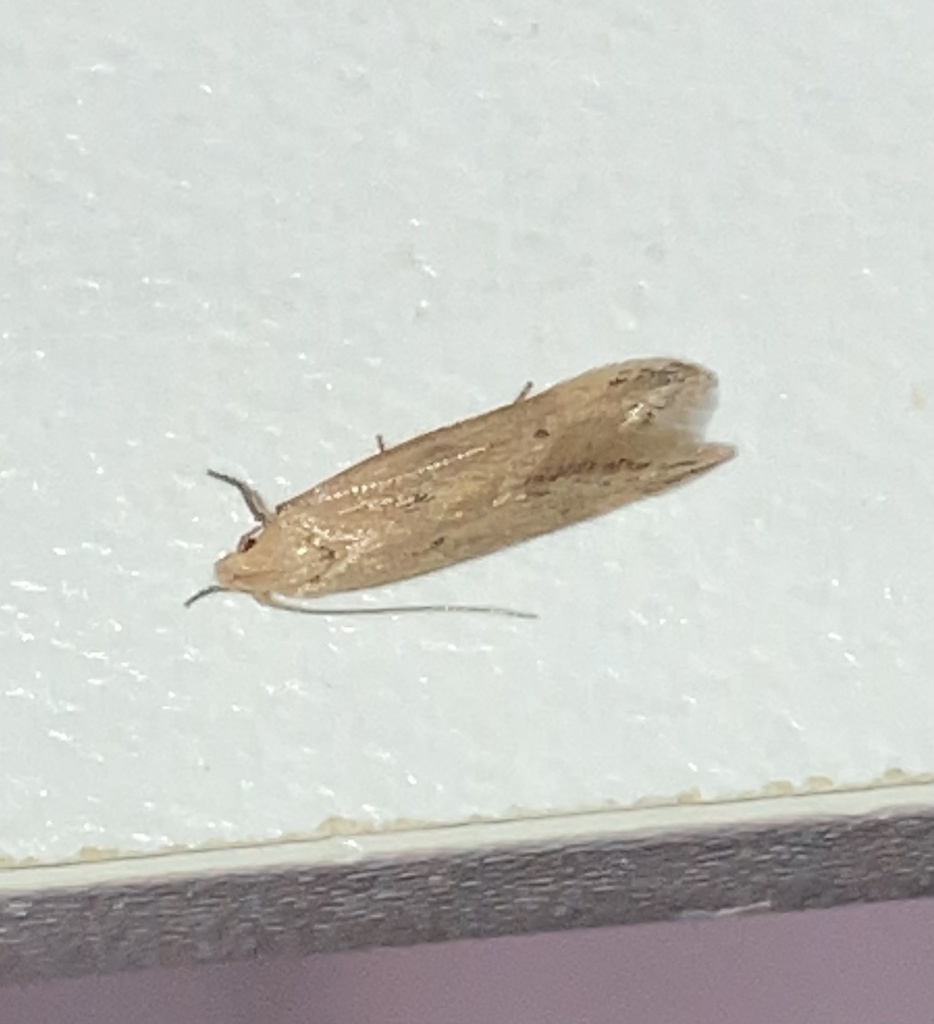
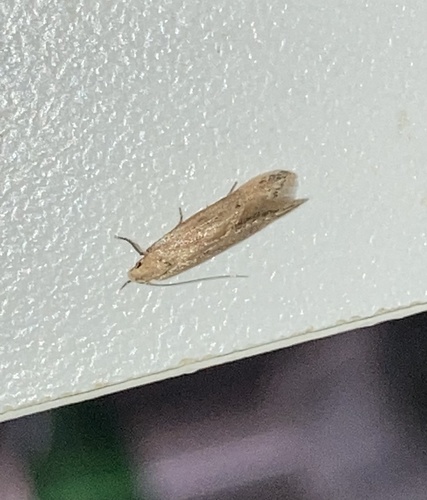
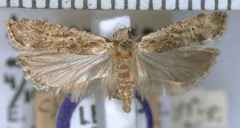
The Angoumois grain moth is a small brownish-grey moth about 10 to 15 mm wide, with dark spots on its forewings and curved hind wings edged with hairs. Its larvae live inside individual grains, feeding on the seed material and causing loss of stored food.
Source: Wikipedia
How to recognize it
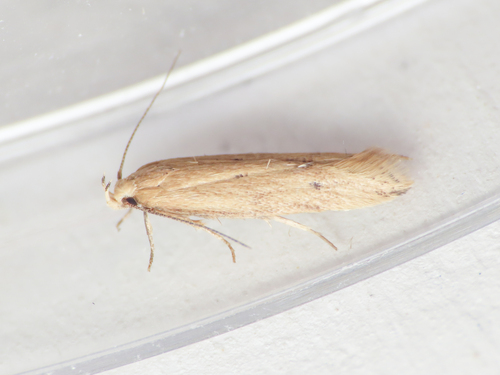
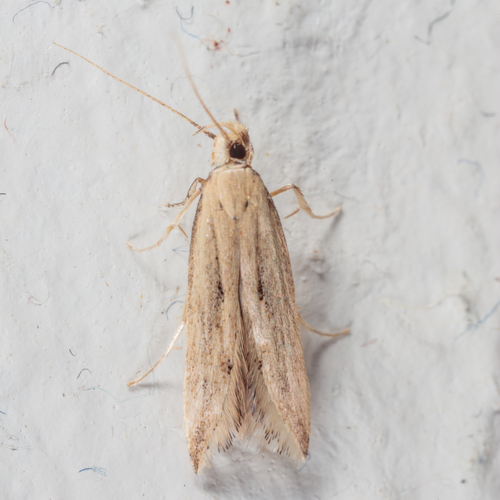
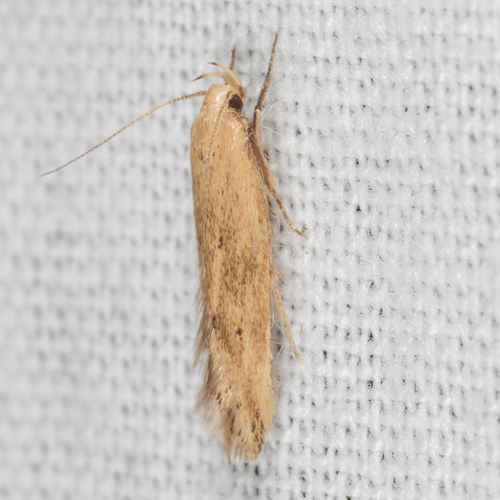
Adults have four wings, six legs, and are brownish-grey with dark spots on the forewings and curved, hairy hind wings.
Source: Wikipedia
Size
Adults have a wingspan of 10 to 15 mm and a body length of 5 to 10 mm. Larvae are yellowish-white, 10 to 15 mm long, with a small yellowish-brown head.
Source: Wikipedia
Is it a pest in the house?
They infest field and stored cereal grains, burrowing inside kernels and making the grain unusable. Eggs are laid between grains and hatch later, allowing transport during processing, shipping or storage.
Source: Wikipedia
How to get rid of it
Continuous protection of grain is needed up to the point of consumption. Natural enemies include various pathogens, parasites and predators such as birds, bats and insects.
Source: Wikipedia
Where it lives
They are mainly found in agricultural areas and agro-ecosystems. The species prefers warmer climates but can also occur in colder regions such as Russia.
Source: Wikipedia
Life cycle
Adults live about 15 days, up to 30 days under optimal temperatures. Eggs are ovoid, about 2 mm long, white when laid and later turn reddish.
Source: Wikipedia
When you see it
Moths are more active at low temperatures, feeding more in winter months. Optimal survival temperature is around 30 °C with about 75 % humidity for hatching.
Source: Wikipedia
Lookalikes
Males have a thin, pointed black abdomen, while females have a bulkier, longer, colourless abdomen.
Source: Wikipedia
Where it is found in the US
Recorded in 17 of 51 states and DC. Most records: Michigan, South Carolina, Minnesota, Mississippi, Kansas, Georgia, Texas, Florida.
Darker = more records. Counts are museum and citizen-science records, not population size.
Source: GBIF
Status: native in North America; native in Canada; native in United States. Source: iNaturalist
Months it is reported in the US
Source: GBIF
More photos
Questions people ask
How do I control Angoumois grain moths?
Keep grain protected until use and encourage natural predators like birds, bats and insects.
Source: Wikipedia
What do the adult moths look like?
They are small brownish-grey moths with dark spots on the forewings and curved, hairy hind wings.
Source: Wikipedia
What crops do they damage?
They feed on and damage stored cereals such as wheat, barley, rice, rye, sorghum, triticale and maize.
Source: Wikipedia
Same family (Gelechiidae)

Sources
- Wikipedia: https://en.wikipedia.org/wiki/Angoumois_grain_moth
Look it up elsewhere: GBIF · iNaturalist · BugGuide · Wikipedia
Text written 2026-10-23 from the sources above and checked sentence by sentence against them. Data fetched 2026-10-22.