 Bug FAQ
Black-smudged Chionodes Moth and Allies
Chionodes occidentella · Order: Lepidoptera · Family: Gelechiidae
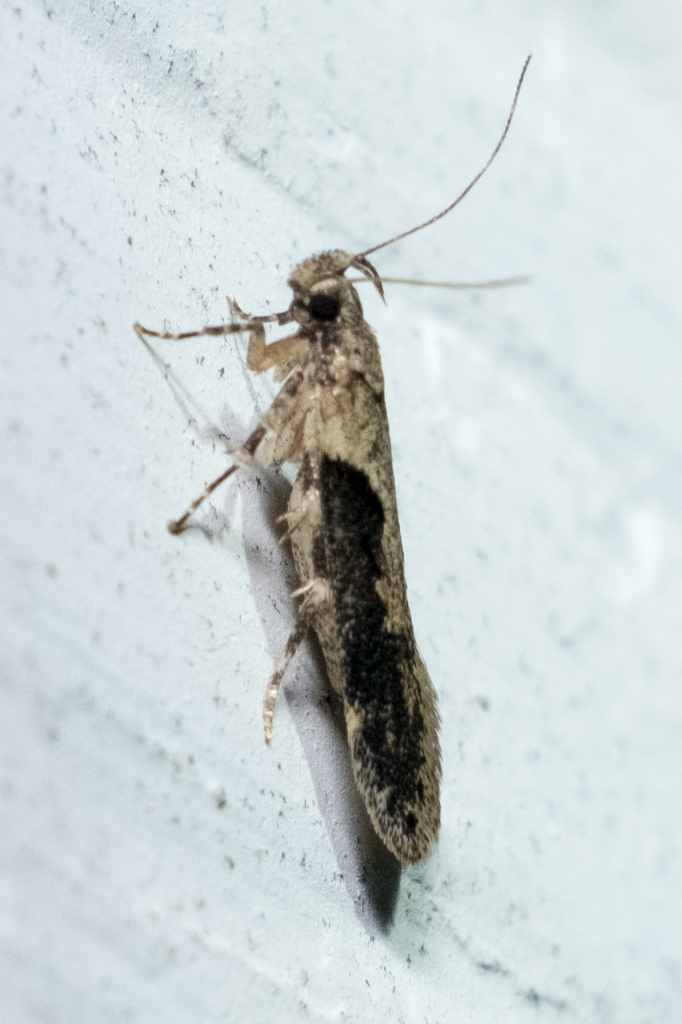
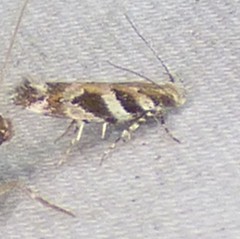
The Black-smudged Chionodes moth has a wingspan of about 18 to 19.5 mm. Its forewings are a mix of brown and ochreous with distinct dark-brown and pale-brown markings and two small velvety-brown streaks on the disc. It lives in western North America from British Columbia down through California to Arizona and its caterpillars feed on several oak, ceanothus, manzanita and related shrubs.
Source: Wikipedia
How to recognize it
The forewings are covered equally with brown and ochreous scales.
Source: Wikipedia
Size
Adults measure 18 to 19.5 mm across the wings.
Source: Wikipedia
Where it lives
It has been recorded from British Columbia through California to Arizona in North America.
Source: Wikipedia
What it eats
Larvae feed on oak species (Quercus agrifolia, Q. douglasii), Ceanothus thyrsiflorus, C. sorediatus, Cercocarpus betuloides and Arctostaphylos patula.
Source: Wikipedia
Where it comes from
Its range is in North America, from British Columbia to California and Arizona.
Source: Wikipedia
Where it is found in the US
Recorded in 2 of 51 states and DC. Most records: California, Colorado.
Darker = more records. Counts are museum and citizen-science records, not population size.
Source: GBIF
Months it is reported in the US
Source: GBIF
More photos
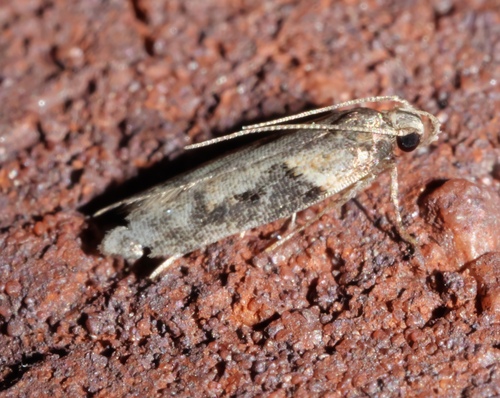
Same family (Gelechiidae)
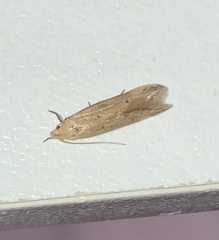 Angoumois Grain MothSitotroga cerealellaDamages trees, gardens or crops
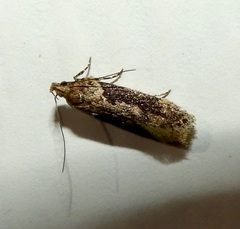 Boxelder Leafworm MothChionodes obscurusella
 Hairy, Toothed, and Shining Dichomeris Moths and AlliesDichomeris setosellaBlack-smudged Chionodes MothChionodes mediofuscella
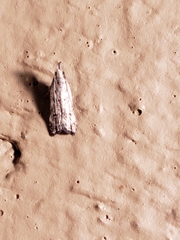 Inverse and Kimball's Dichomeris MothsDichomeris inversella
 Pink-washed Aristotelia MothAristotelia roseosuffusella
Sources
- Wikipedia: https://en.wikipedia.org/wiki/Chionodes_occidentella
Look it up elsewhere: GBIF · iNaturalist · BugGuide · Wikipedia
Text written 2026-10-27 from the sources above and checked sentence by sentence against them. Data fetched 2026-10-27.