 Bug FAQ
Triangle weaver
Hyptiotes cavatus · Order: Araneae · Family: Uloboridae
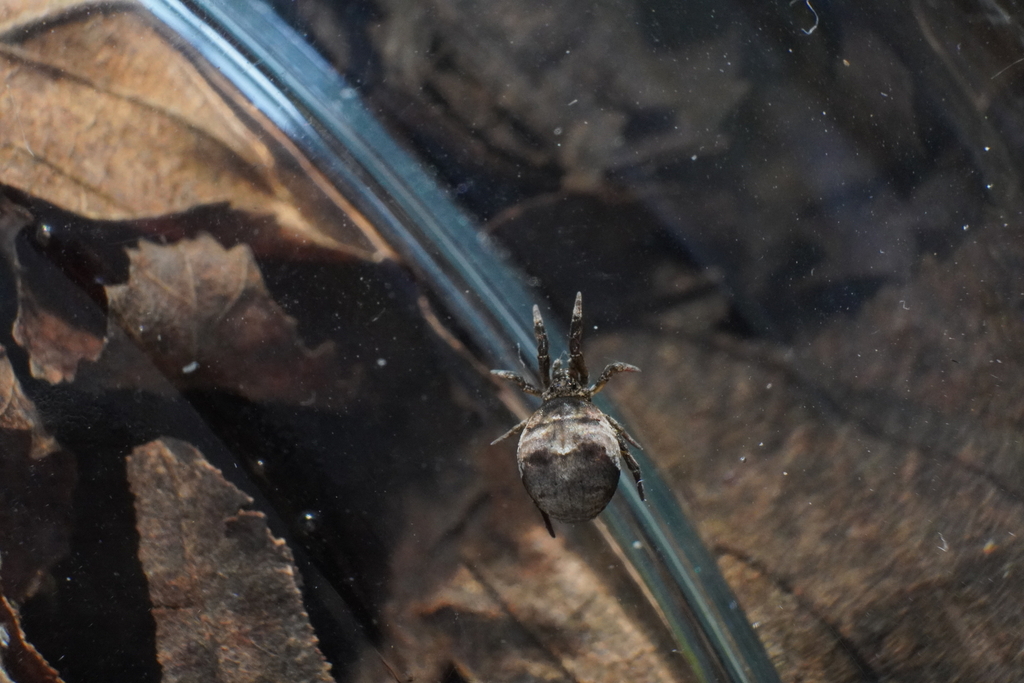
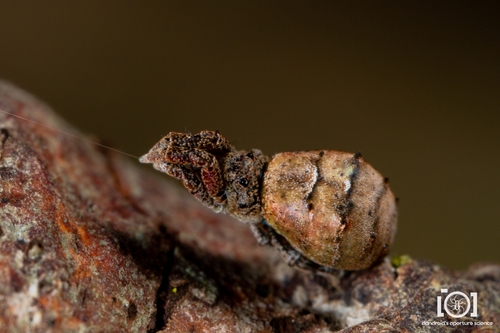
The triangle weaver has only six functional eyes, and its front-side lateral eyes are tiny, vestigial, and lack retinas. It lives in the eastern United States and Canada and captures prey by releasing stored elastic energy, much like a slingshot or bow and arrow.
Source: Wikipedia
How to recognize it
Hyptiotes cavatus has six working eyes, while its anterior lateral eyes are extremely small, vestigial, and have no retinas.
Source: Wikipedia
What it eats
It captures prey by using stored elastic potential, similar to how a slingshot or bow and arrow works.
Source: Wikipedia
Where it comes from
Its native range includes the eastern United States and Canada.
Source: Wikipedia
Where it is found in the US
Recorded in 29 of 51 states and DC. Most records: Ohio, Connecticut, Massachusetts, Minnesota, Pennsylvania, Florida, Georgia, Virginia.
Darker = more records. Counts are museum and citizen-science records, not population size.
Source: GBIF
Status: native in North America; native in Canada. Source: iNaturalist
Months it is reported in the US
Source: GBIF
More photos
Questions people ask
Where does the triangle weaver live?
It lives in the eastern United States and Canada.
Source: Wikipedia
Same family (Uloboridae)

Sources
- Wikipedia: https://en.wikipedia.org/wiki/Hyptiotes_cavatus
Look it up elsewhere: GBIF · iNaturalist · BugGuide · ITIS · Wikipedia
Text written 2026-10-27 from the sources above and checked sentence by sentence against them. Data fetched 2026-10-27.