 Bug FAQ
Social House Spider
Philoponella congregabilis · Order: Araneae · Family: Uloboridae
Also called: Little humped spider
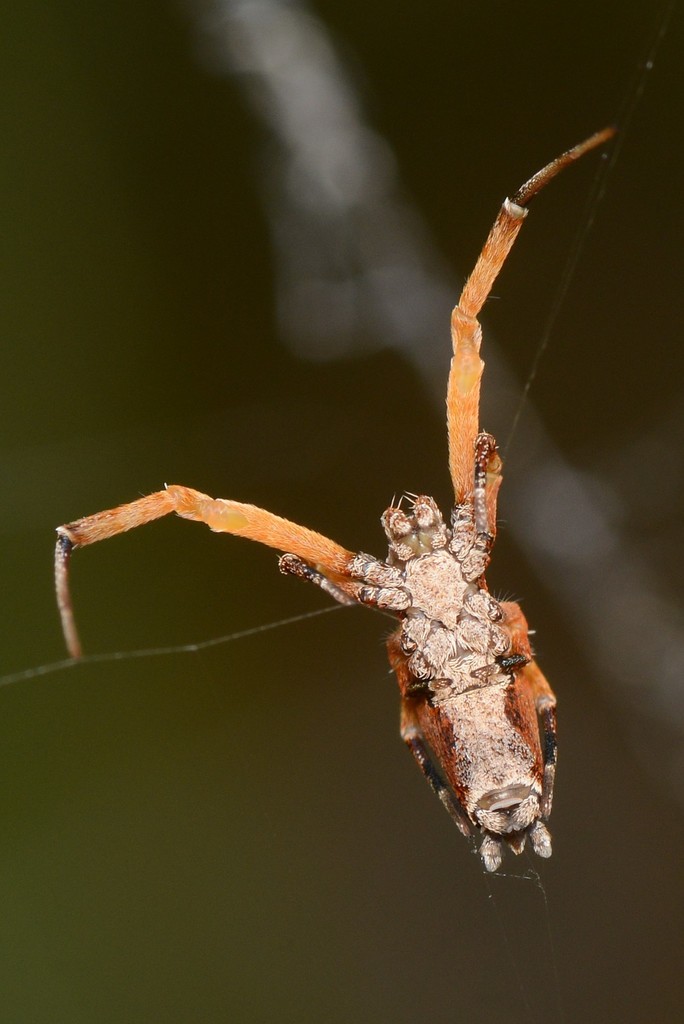
Males grow to about 3.5 mm and females to about 6 mm in length. Their color ranges from pale cream to orange or brown, and the abdomen has a noticeable hump. They are commonly found on eaves, window sills, in garages or sheds, and in shady low shrubbery outdoors. They eat small arthropods, mainly insects. Native to New South Wales, they have become established in New Zealand.
Source: Wikipedia
How to recognize it
The spider’s body color varies from pale cream to darker orange or brown, and the abdomen shows a prominent hump.
Source: Wikipedia
Size
Males reach up to 3.5 mm, while females grow to about 6 mm long.
Source: Wikipedia
Is it a pest in the house?
They commonly inhabit eaves, window sills, garages or sheds.
Source: Wikipedia
Where it lives
They are often found on eaves, window sills, in garages or sheds, and in natural shady low shrubbery.
Source: Wikipedia
What it eats
Their diet consists of small arthropods, primarily insects.
Source: Wikipedia
Where it comes from
Originally from New South Wales, they are now one of the spider species established in New Zealand.
Source: Wikipedia
More photos
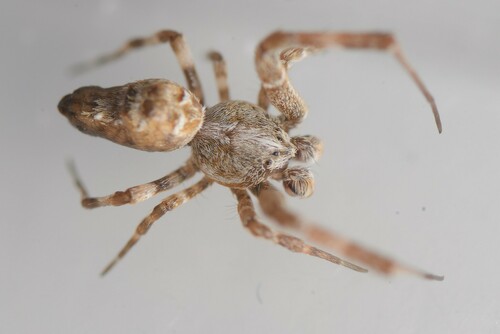
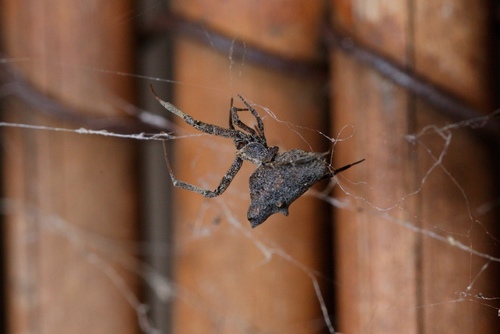
Same family (Uloboridae)

Sources
- Wikipedia: https://en.wikipedia.org/wiki/Philoponella_congregabilis
Look it up elsewhere: GBIF · iNaturalist · BugGuide · ITIS · Wikipedia
Text written 2026-10-23 from the sources above and checked sentence by sentence against them. Data fetched 2026-10-22.