 Bug FAQ
Toyon Fruit Gall Midge
Asphondylia photiniae · Order: Diptera · Family: Cecidomyiidae
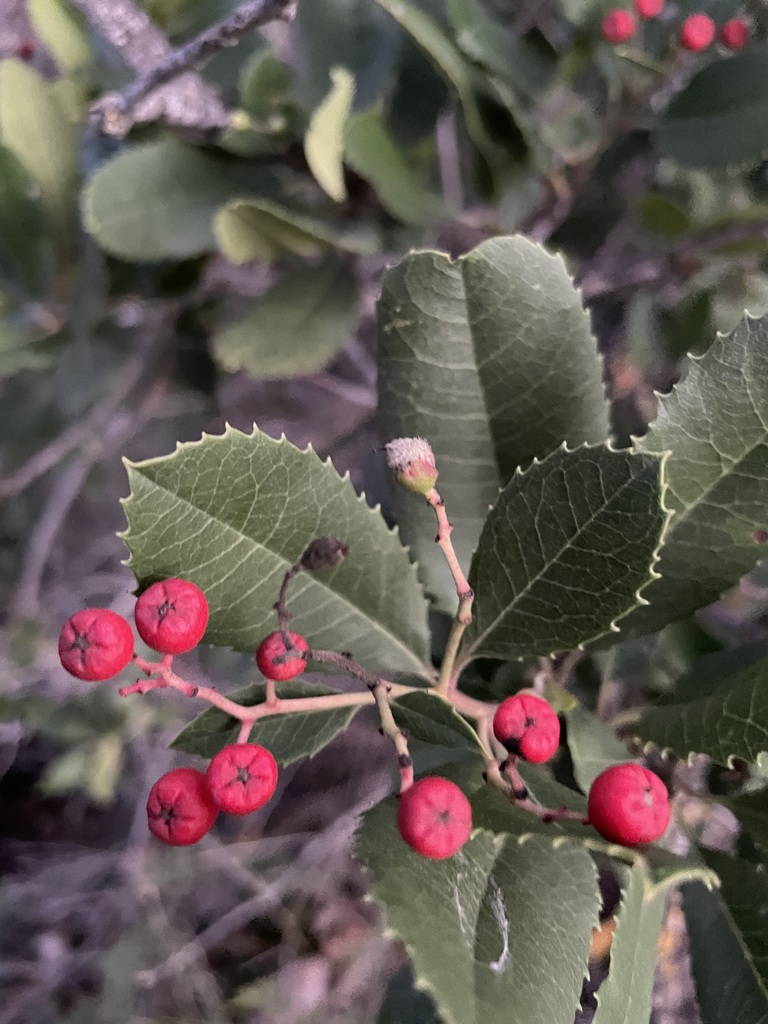
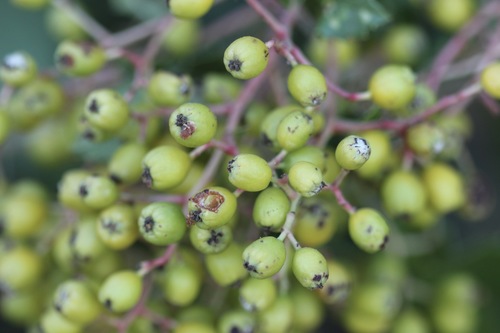
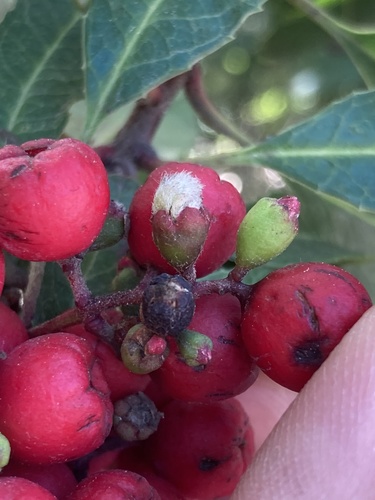
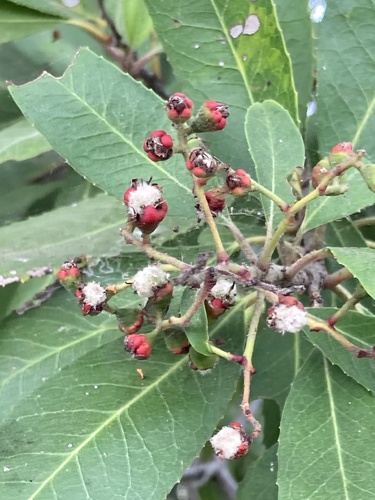
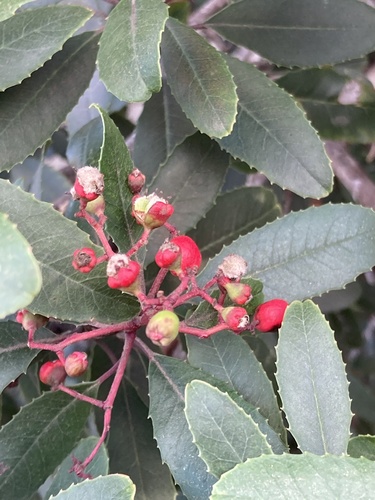
Galls on toyon berries stay green and look warped while other berries turn red or gold. Each gall holds a single larva that leaves the berry in spring. The midge is found in the Californias where native toyon (Heteromeles arbutifolia) grows.
Source: Wikipedia
How to recognize it
Galled berries remain green and appear slightly warped compared with ripe fruit.
Source: Wikipedia
Is it a pest in the house?
Asphondylia photiniae, the toyon fruit gall midge, creates galls on toyon berries in North America.
Source: Wikipedia
Where it lives
It lives in the Californias where the native toyon shrub is common.
Source: Wikipedia
Life cycle
The larva matures inside the gall and emerges in spring.
Source: Wikipedia
Where it comes from
The species is known from the Californias in North America.
Source: Wikipedia
Where it is found in the US
Recorded in 1 of 51 states and DC. Most records: California.
Darker = more records. Counts are museum and citizen-science records, not population size.
Source: GBIF
Months it is reported in the US
Source: GBIF
More photos
Questions people ask
What do the galls look like?
The galled berries stay green and look a bit warped while other berries turn red or gold.
Source: Wikipedia
Where is the toyon fruit gall midge found?
It is known from the Californias where native toyon grows.
Source: Wikipedia
Same family (Cecidomyiidae)


Sources
- Wikipedia: https://en.wikipedia.org/wiki/Asphondylia_photiniae
Look it up elsewhere: GBIF · iNaturalist · BugGuide · ITIS · Wikipedia
Text written 2026-10-27 from the sources above and checked sentence by sentence against them. Data fetched 2026-10-27.