 Bug FAQ
Tomato Stemborer
Symmetrischema tangolias · Order: Lepidoptera · Family: Gelechiidae
Source: Wikipedia
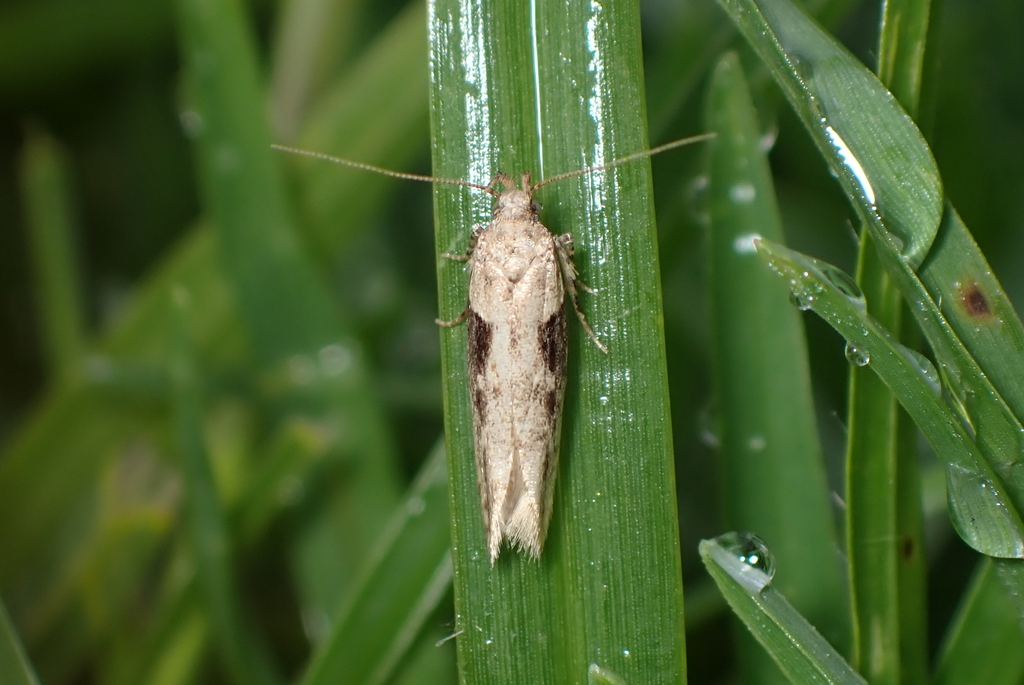
Adult moths are small, about 6 to 9 mm long, with a wingspan near 18 mm and distinctive black triangle patches on the forewings. Larvae feed on leaves, stems and tubers of tomato, potato and other solanaceous plants, causing wilting, stem breakage and loss of stored produce.
Source: Wikipedia
How to recognize it
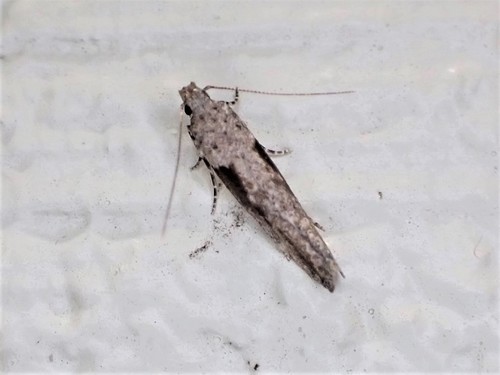
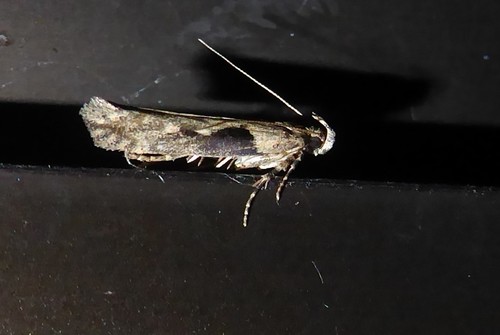
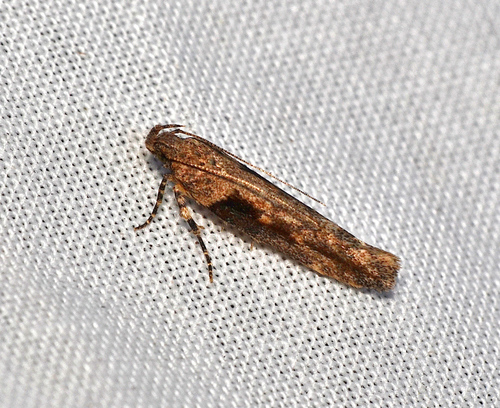
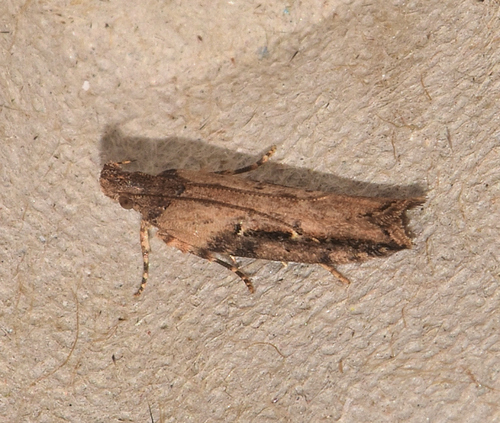
The moth shows black triangular markings along the edges of its forewings, giving it a silver-gray look. Its hindwings are narrower, shorter and edged with pale scales.
Source: Wikipedia
Size
Body length ranges from 6 to 9 mm, extending to about 9 to 12 mm when at rest. Wingspan is roughly 18 to 19 mm.
Source: Wikipedia
Is it a pest in the house?
Stored solanaceous produce can be lost within three to four months if not protected. Severe stem damage may cause plants to wilt or break off.
Source: Wikipedia
How to get rid of it
The main sex pheromone is (3E,7Z)-tetradecadienyl acetate, used in traps for male moths. Import bans from heavily infested countries are recommended to limit spread.
Source: Wikipedia
Where it lives
Larvae live inside leaves, petioles, stems and tubers of tomato and potato plants. The species prefers sub-temperate climates with optimal temperatures for survival.
Source: Wikipedia
What it eats
Larvae feed on tuber stems and other parts of solanaceous plants. Overall, the species shows a strong preference for solanaceous hosts.
Source: Wikipedia
Life cycle
Females lay about 140 to 185 eggs in the leaf axils of host plants.
Source: Wikipedia
When you see it
Eggs are laid at night by adult moths. After emerging, a female lives for 3 to 4 nights.
Source: Wikipedia
Where it comes from
It is native to the Andean region of South America, especially Peru and Bolivia. It also occurs in northern South America, including Ecuador and Colombia.
Source: Wikipedia
Where it is found in the US
Recorded in 4 of 51 states and DC. Most records: California, Texas, Louisiana, Mississippi.
Darker = more records. Counts are museum and citizen-science records, not population size.
Source: GBIF
Months it is reported in the US
Source: GBIF
More photos
Questions people ask
How can I identify the tomato stemborer moth?
Look for a small moth (6 to 9 mm body) with a 18 mm wingspan, black triangular patches on the forewing edges and pale-scaled hindwings.
Source: Wikipedia
What crops does the tomato stemborer damage?
Its larvae feed on tomato, potato and other solanaceous plants, damaging leaves, stems and tubers.
Source: Wikipedia
How many eggs does a female lay?
A female deposits roughly 140 to 185 eggs in the leaf axils of the host plant.
Source: Wikipedia
What control methods are effective?
Pheromone traps using (3E,7Z)-tetradecadienyl acetate and restricting imports from infested regions help manage populations.
Source: Wikipedia
Same family (Gelechiidae)
Sources
- Wikipedia: https://en.wikipedia.org/wiki/Symmetrischema_tangolias
Look it up elsewhere: GBIF · iNaturalist · BugGuide · Wikipedia
Text written 2026-10-23 from the sources above and checked sentence by sentence against them. Data fetched 2026-10-23.