 Bug FAQ
Thick-legged Flower Beetle
Oedemera nobilis · Order: Coleoptera · Family: Oedemeridae
Also called: False Oil Beetle, Swollen-Thighed Beetle
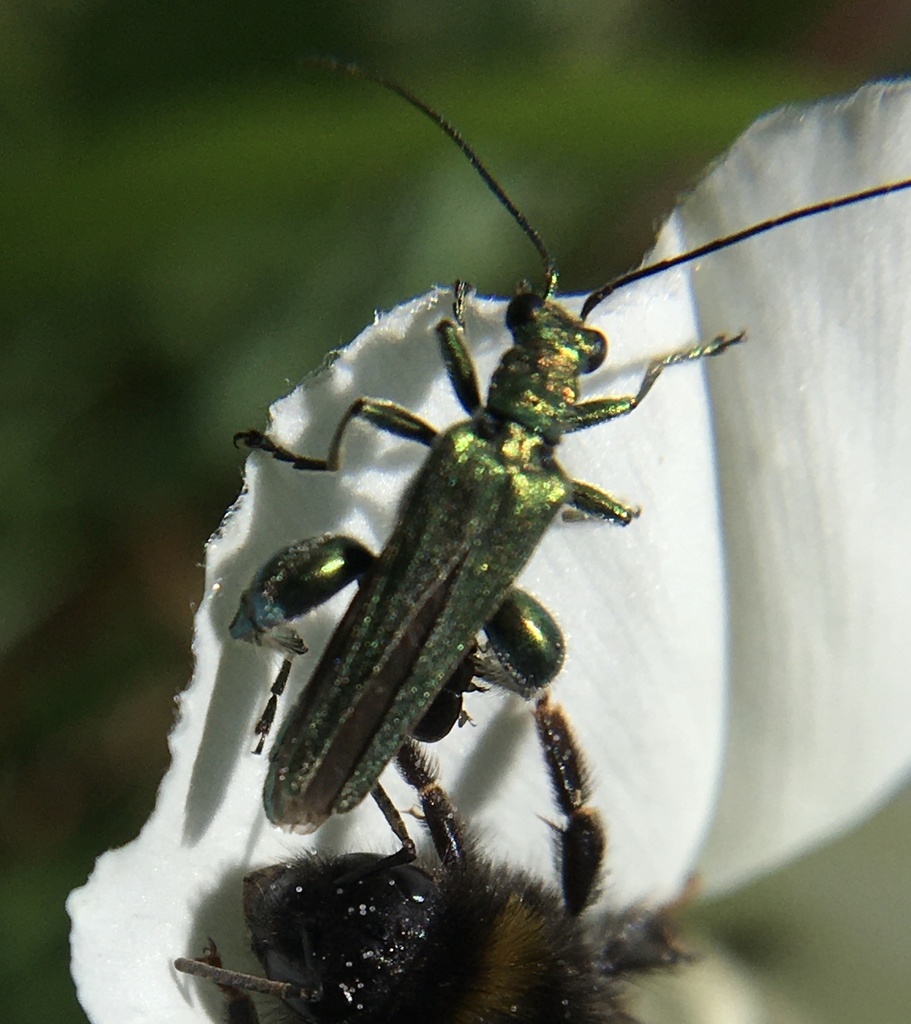
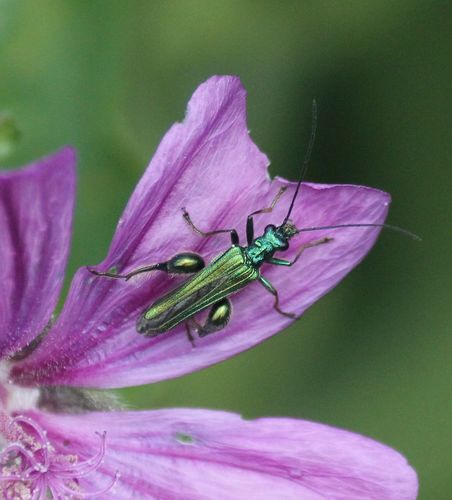
The thick-legged flower beetle is a bright green insect, sometimes showing golden, copper, blue or violet tones. Males have very swollen hind femora while females have thin ones, and the wing covers narrow at the tips.
Source: Wikipedia
How to recognize it
Bright green colour, often with a golden or coppery shine; some are blue or violet. Males have very swollen hind femora; females have thin femora; elytra narrow toward the tip and do not hide the hind wings.
Source: Wikipedia
What it eats
Adults feed on pollen and nectar of many plant families including Asteraceae, Rosaceae, Apiaceae and others.
Source: Wikipedia
Life cycle
Adults are abundant in spring on various flower species. Males are especially noticeable because of their swollen femora and bright green colour.
Source: Wikipedia
When you see it
Most commonly seen in spring.
Source: Wikipedia
Where it comes from
Common in Mediterranean countries and also occurs in central Europe, from western Germany to Great Britain.
Source: Wikipedia
More photos
Questions people ask
Is it a garden pest?
It feeds on flower pollen and nectar but the evidence does not state it damages plants.
Source: Wikipedia
Same family (Oedemeridae)


Sources
- Wikipedia: https://en.wikipedia.org/wiki/Oedemera_nobilis
Look it up elsewhere: GBIF · iNaturalist · BugGuide · Wikipedia
Text written 2026-10-22 from the sources above and checked sentence by sentence against them. Data fetched 2026-10-22.