 Bug FAQ
Oedemera podagrariae
Oedemera podagrariae · Order: Coleoptera · Family: Oedemeridae
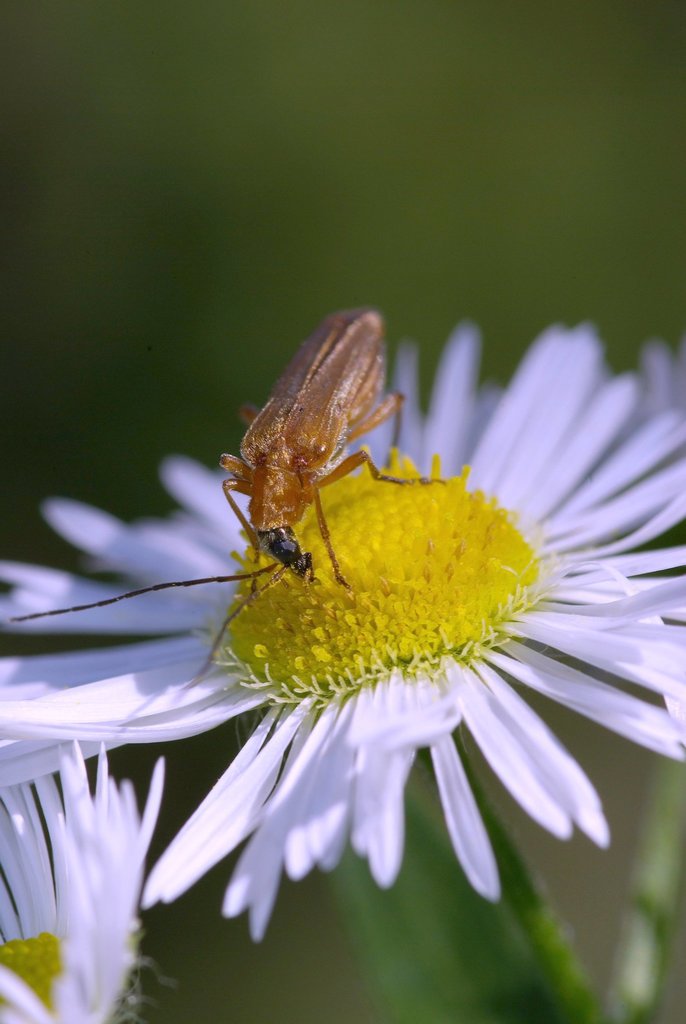
Adult Oedemera podagrariae are small beetles about 7 to 12 mm long and are active from April to August, feeding on pollen and nectar. Males have a black head, black thorax and very swollen hind femora, while females have a black head, yellow thorax and thin femora; both sexes have yellow to light-brown elytra and partly yellow legs.
Source: Wikipedia
How to recognize it
The head is black in both sexes. Males have a black thorax; females have a yellow thorax. Legs are entirely or partly yellow. Males have very swollen hind femora; females have thin femora.
Source: Wikipedia
Size
Adults grow to about 7 to 12 mm (0.28 to 0.47 in) long.
Source: Wikipedia
Where it lives
They are most often seen from April through August while feeding on pollen and nectar.
Source: Wikipedia
What it eats
Adults feed on pollen and nectar.
Source: Wikipedia
Life cycle
Males have swollen hind femora, a trait common to many Oedemera species; females have thin femora.
Source: Wikipedia
When you see it
They are active from April to August.
Source: Wikipedia
Where it comes from
They occur throughout most of Europe and the Near East.
Source: Wikipedia
Same family (Oedemeridae)


Sources
- Wikipedia: https://en.wikipedia.org/wiki/Oedemera_podagrariae
Look it up elsewhere: GBIF · iNaturalist · BugGuide · Wikipedia
Text written 2026-10-22 from the sources above and checked sentence by sentence against them. Data fetched 2026-10-22.