 Bug FAQ
Texas Cave Cricket
Ceuthophilus secretus · Order: Orthoptera · Family: Rhaphidophoridae
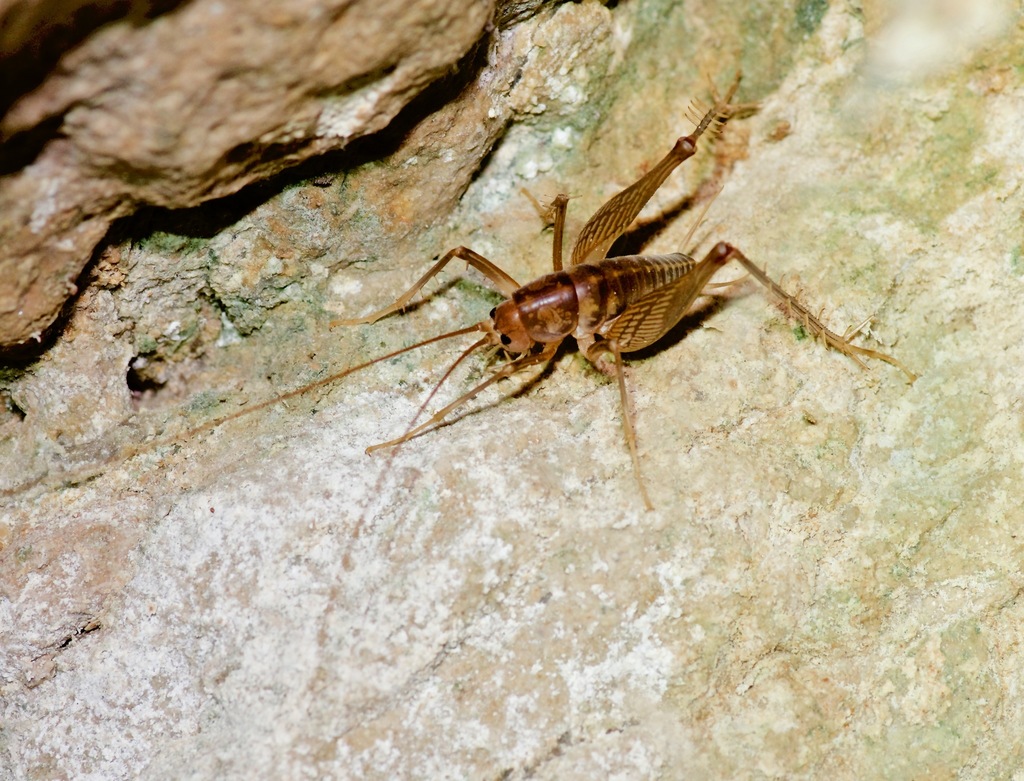
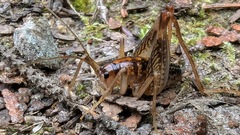
Ceuthophilus secretus is a camel cricket that ranges in color from yellow-gray to dark brown. It is active at night, has no wings, long antennae that exceed its body length, and a hump-backed shape. This species lives mainly in caves throughout North America.
Source: Wikipedia
How to recognize it
Color varies from yellowish gray to dark brown. It is nocturnal, wingless, with antennae longer than its body and a hump-backed appearance.
Source: Wikipedia
Where it lives
It dwells primarily in caves.
Source: Wikipedia
Where it comes from
It is found in North America.
Source: Wikipedia
Where it is found in the US
Recorded in 1 of 51 states and DC. Most records: Texas.
Darker = more records. Counts are museum and citizen-science records, not population size.
Source: GBIF
Months it is reported in the US
Source: GBIF
More photos
Questions people ask
What does Ceuthophilus secretus look like?
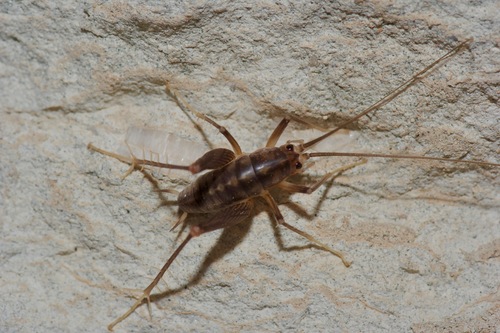
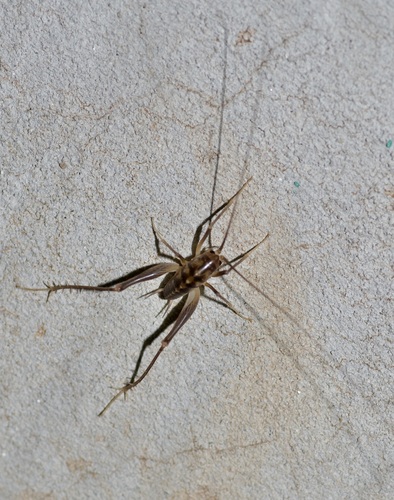
It ranges from yellow-gray to dark brown, is wingless, active at night, has antennae longer than its body, and a hump-backed shape.
Source: Wikipedia
Where does Ceuthophilus secretus live?
It lives mainly in caves and is found across North America.
Source: Wikipedia
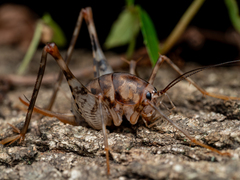
Same family (Rhaphidophoridae)



Sources
- Wikipedia: https://en.wikipedia.org/wiki/Ceuthophilus_secretus
Look it up elsewhere: GBIF · iNaturalist · BugGuide · ITIS · Wikipedia
Text written 2026-10-25 from the sources above and checked sentence by sentence against them. Data fetched 2026-10-25.