 Bug FAQ
Texas Bush Katydid
Scudderia texensis · Order: Orthoptera · Family: Tettigoniidae
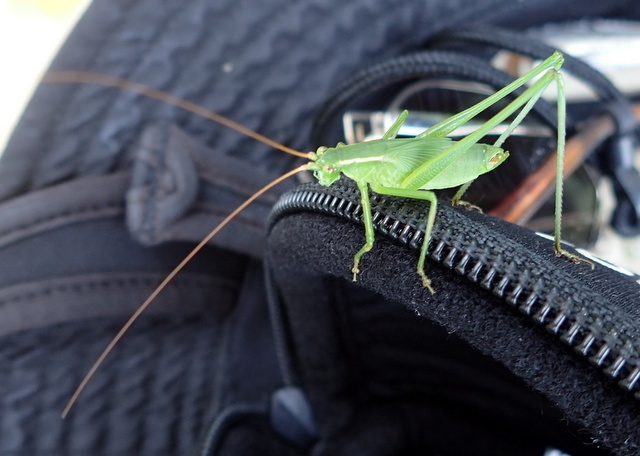
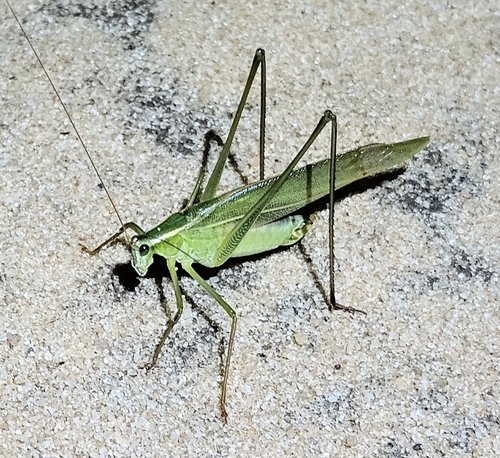
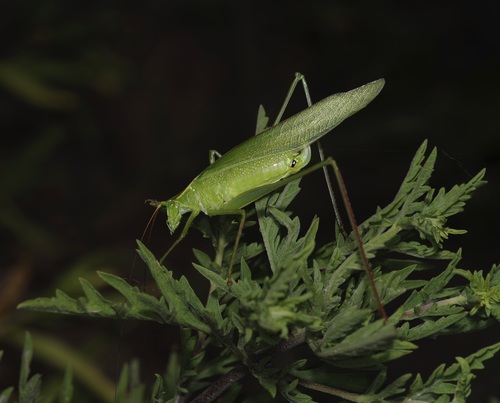
Texas bush katydids are 40 to 56 mm long, with an average length of about 44 mm. They live across the eastern United States and extend into adjacent parts of Canada west to the Great Plains. Adults appear in large numbers from late spring through autumn and can survive until the first hard freeze.
Source: Wikipedia
How to recognize it
Female Texas bush katydids have a right-angled bend between the basal and terminal parts of the ovipositor.
Source: Wikipedia
Size
The species ranges from 40 to 56 mm in length. Typical individuals measure about 44 mm.
Source: Wikipedia
Where it lives
They are found in grasslands, deciduous forests and shrublands. They are especially common in weedy old fields and along roadsides.
Source: Wikipedia
Life cycle
In southern parts of its range, two generations are produced each year. In northern areas, only one generation develops, maturing in late summer.
Source: Wikipedia
Where it is found in the US
Recorded in 31 of 51 states and DC. Most records: Florida, Illinois, Texas, Maryland, Alabama, Ohio, Vermont, North Carolina.
Darker = more records. Counts are museum and citizen-science records, not population size.
Source: GBIF
Status: native in North America; native in Canada. Source: iNaturalist
Months it is reported in the US
Source: GBIF
More photos
Questions people ask
When are Texas bush katydids most common?
Adults peak from late spring through autumn and can persist until the first hard freeze.
Source: Wikipedia
Same family (Tettigoniidae)
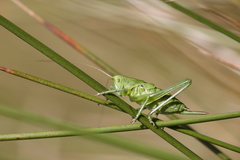 Great Green Bush-cricketTettigonia viridissimaCan bite
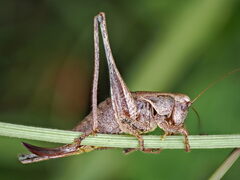 Dark Bush-cricketPholidoptera griseoaptera
 Mediterranean KatydidPhaneroptera nanaDamages trees, gardens or crops
 Fork-tailed Bush KatydidScudderia furcataDamages trees, gardens or crops
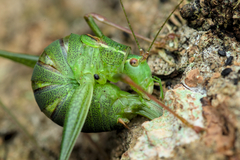 Speckled Bush-cricketLeptophyes punctatissima
 Roesel's Bush-cricketRoeseliana roeselii
Sources
- Wikipedia: https://en.wikipedia.org/wiki/Scudderia_texensis
Look it up elsewhere: GBIF · iNaturalist · BugGuide · ITIS · Wikipedia
Text written 2026-10-26 from the sources above and checked sentence by sentence against them. Data fetched 2026-10-26.