 Bug FAQ
Tetrio Sphinx
Pseudosphinx tetrio · Order: Lepidoptera · Family: Sphingidae
Also called: giant gray sphinx, Plumeria Caterpillar, Tetrio Sphinx Moth, frangipani hornworm
Source: Wikipedia
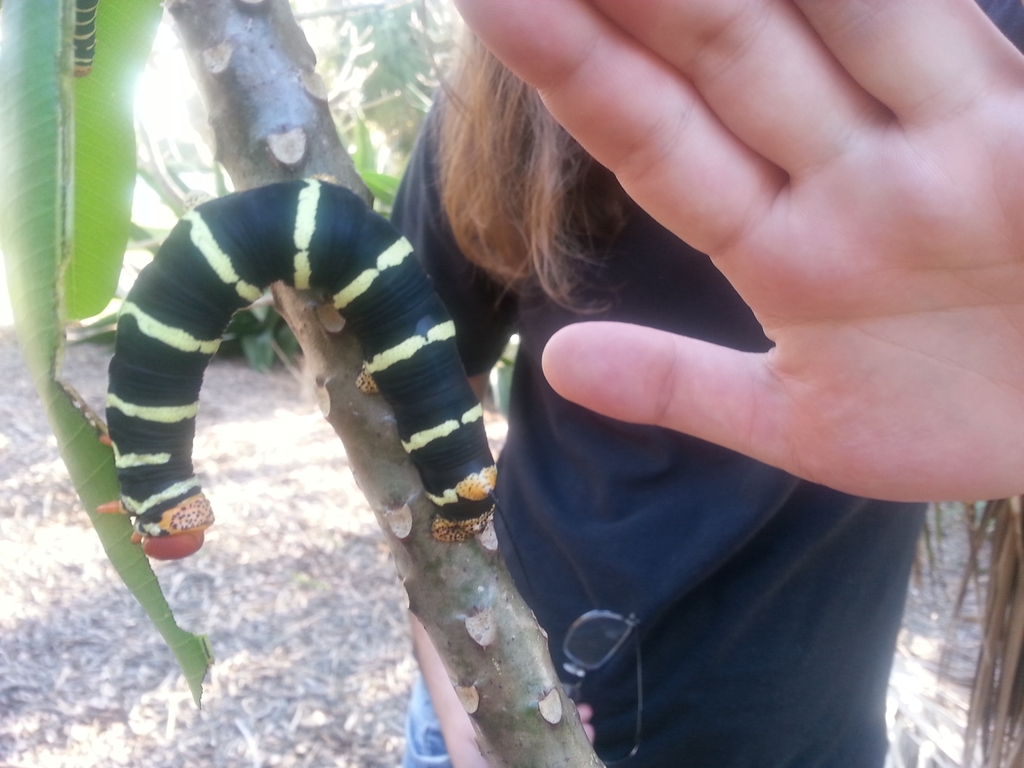
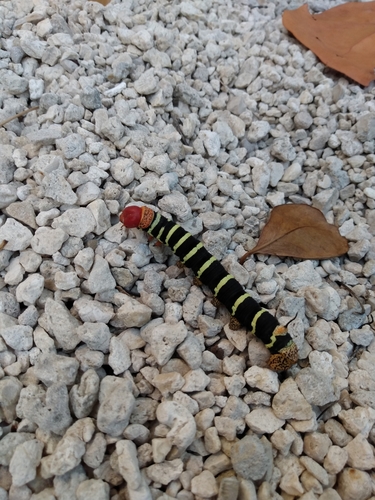
The adult moth has a 12.7 to 14 cm wingspan, females are slightly larger, and the caterpillar can grow over 15 cm long. It is native to tropical and subtropical Americas from the southern US to Brazil, occasionally reaching the northeastern US. Caterpillars feed on Apocynaceae plants and adults sip nectar; the larvae can defoliate plants such as Plumeria.
Source: Wikipedia
Size
Wingspan ranges from 12.7 to 14 cm, with females a bit larger than males. The caterpillar can exceed 15 cm in length.
Source: Wikipedia
Is it a pest in the house?
The species can damage and completely defoliate Plumeria plants. Caterpillars are large and easy to see, and they can be removed by hand-picking.
Source: Wikipedia
Does it bite or sting?
The caterpillar is covered with barbed urticating hairs that embed deeply in skin and cause irritation. If handled, the caterpillar may also bite.
Source: Wikipedia
How to get rid of it
The easiest control method is to pluck the caterpillars off the host tree.
Source: Wikipedia
What it eats
Caterpillars eat plants in the Apocynaceae family, neutralizing the poisonous latex those plants contain. Adult moths feed on flower nectar.
Source: Wikipedia
Life cycle
Pupation occurs in leaf litter or just under the soil.
Source: Wikipedia
Where it is found in the US
Recorded in 6 of 51 states and DC. Most records: Florida, Texas, Arizona, Georgia, Louisiana, Ohio.
Darker = more records. Counts are museum and citizen-science records, not population size.
Source: GBIF
Months it is reported in the US
Source: GBIF
More photos
Questions people ask
Do they bite?
Yes, the caterpillars can bite and their urticating hairs irritate the skin.
Source: Wikipedia
Are they harmful to plants?
They can defoliate garden plants such as Plumeria, causing noticeable damage.
Source: Wikipedia
Are they dangerous to humans?
They are not venomous, but their hairs can irritate skin if they come into contact.
Source: Wikipedia
Same family (Sphingidae)
 White-lined SphinxHyles lineataDamages trees, gardens or crops
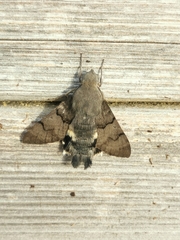 Eurasian Hummingbird HawkmothMacroglossum stellatarum
 Snowberry ClearwingHemaris diffinis
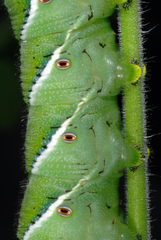 Carolina SphinxManduca sextaDamages trees, gardens or crops
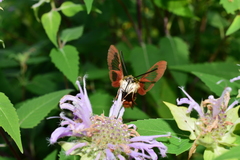 Hummingbird ClearwingHemaris thysbeDamages trees, gardens or crops
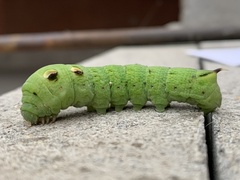 Elephant HawkmothDeilephila elpenor
Sources
- Wikipedia: https://en.wikipedia.org/wiki/Pseudosphinx
Look it up elsewhere: GBIF · iNaturalist · BugGuide · ITIS · Wikipedia
Text written 2026-10-22 from the sources above and checked sentence by sentence against them. Data fetched 2026-10-22.