 Bug FAQ
Tersa Sphinx
Xylophanes tersa · Order: Lepidoptera · Family: Sphingidae
Also called: Tersa Sphinx Moth
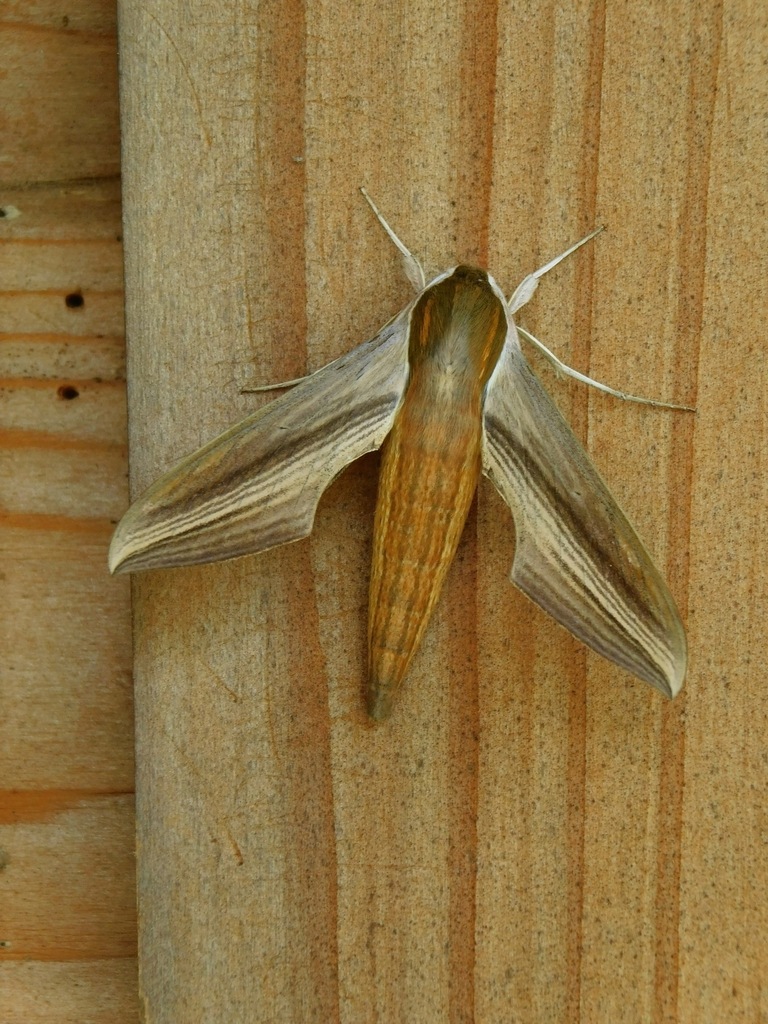
The Tersa Sphinx is a moth in the hawk-moth family (Sphingidae). It lives across the United States from Massachusetts to Florida and Arizona, through Mexico, the Caribbean, Central America, and parts of South America such as Brazil and Argentina. Its caterpillars eat a variety of plants including Borreria, Catalpa, Manettia, Pentas, and several others like Spermacoce glabra and Inga vera.
Source: Wikipedia
How to recognize it
Xylophanes tersa, called the Tersa Sphinx, belongs to the moth family Sphingidae.
Source: Wikipedia
Where it comes from
It is found from the northeastern United States down to southern Florida, west to Arizona, and further south through Mexico, the West Indies, Central America, and into South America.
Source: Wikipedia
Where it is found in the US
Recorded in 38 of 51 states and DC. Most records: Florida, Texas, North Carolina, Georgia, Louisiana, Alabama, South Carolina, Tennessee.
Darker = more records. Counts are museum and citizen-science records, not population size.
Source: GBIF
Status: native in North America; native in United States. Source: iNaturalist
Months it is reported in the US
Source: GBIF
More photos

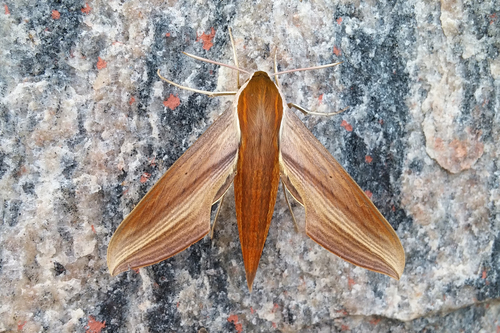
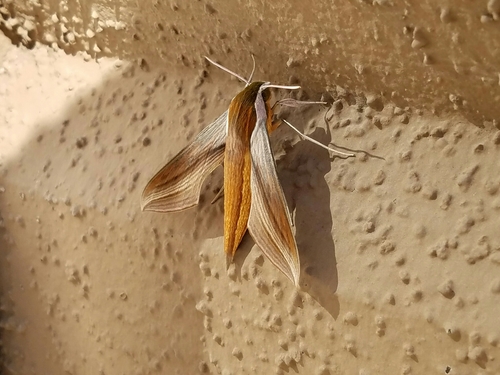
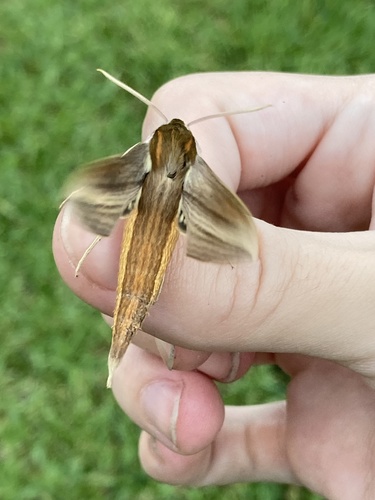
Same family (Sphingidae)
 White-lined SphinxHyles lineataDamages trees, gardens or crops
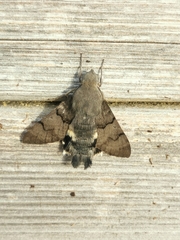 Eurasian Hummingbird HawkmothMacroglossum stellatarum
 Snowberry ClearwingHemaris diffinis
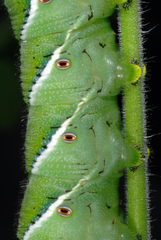 Carolina SphinxManduca sextaDamages trees, gardens or crops
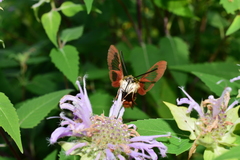 Hummingbird ClearwingHemaris thysbeDamages trees, gardens or crops
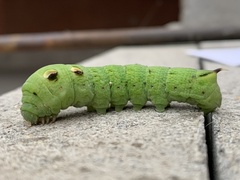 Elephant HawkmothDeilephila elpenor
Sources
- Wikipedia: https://en.wikipedia.org/wiki/Xylophanes_tersa
Look it up elsewhere: GBIF · iNaturalist · BugGuide · ITIS · Wikipedia
Text written 2026-10-22 from the sources above and checked sentence by sentence against them. Data fetched 2026-10-22.