 Bug FAQ
Tasmanian Brown Lacewing
Micromus tasmaniae · Order: Neuroptera · Family: Hemerobiidae
Also called: Tasmanian Lacewing
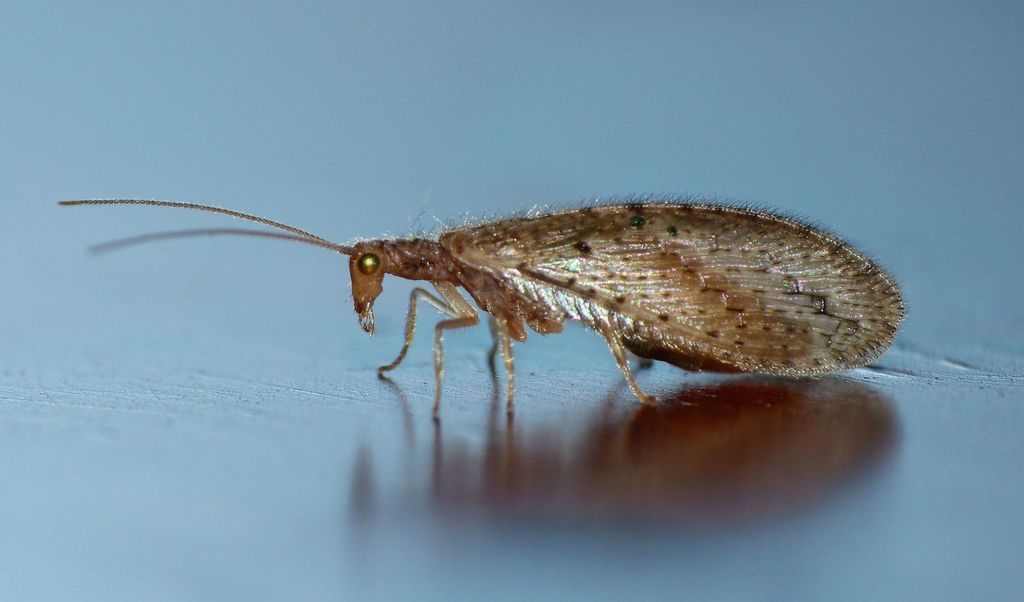
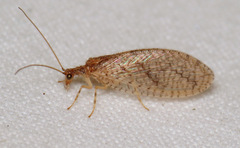
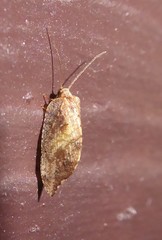
Adult Tasmanian brown lacewings are small, about 7.5 to 10 mm long, with clear wings and a brown body. They are found across Australia, New Zealand and many Pacific islands, living on a wide variety of plants and hiding in foliage during the day. Both adults and larvae feed on nectar and small insects such as aphids and psyllids, and they develop faster at higher temperatures.
Source: Wikipedia
How to recognize it
The species has clear wings and a brown body, with spotted patterns on the front wings that set it apart from similar lacewings.
Source: Wikipedia
Size
Adults measure between 7.5 and 10 mm in length.
Source: Wikipedia
Where it lives
They are associated with many different plants and habitats, unlike some relatives that stick to specific trees. During daylight they hide in foliage, and larvae often stay at the base of plants.
Source: Wikipedia
What it eats
They feed on nectar as well as small sap-sucking insects like aphids and psyllids. They have been observed eating aphids on spruce and are found on alfalfa crops.
Source: Wikipedia
Life cycle
Development speed depends on temperature; warmer conditions shorten the larval stage.
Source: Wikipedia
Where it comes from
Their range includes Australia, New Zealand, New Caledonia, Vanuatu and other Pacific islands.
Source: Wikipedia
Lookalikes
The spotted front-wing pattern distinguishes them from Micromus bifasciatus, which has brown transverse bands on the wings.
Source: Wikipedia
More photos
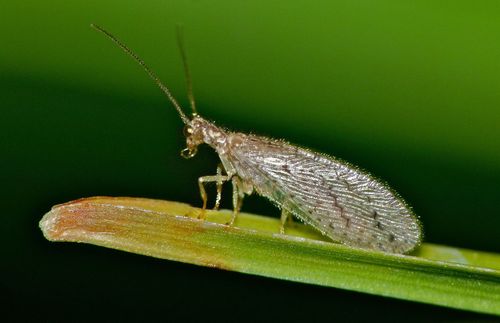
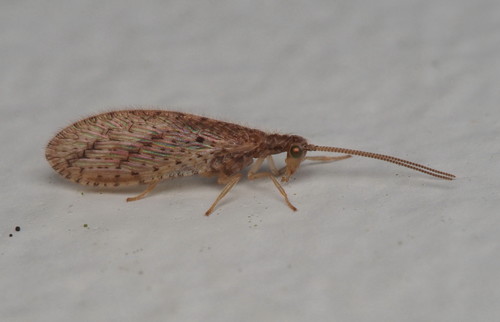
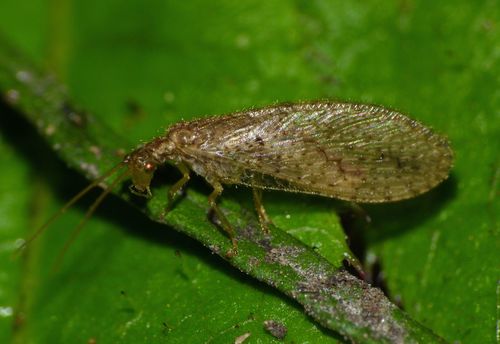
Same family (Hemerobiidae)


Sources
- Wikipedia: https://en.wikipedia.org/wiki/Micromus_tasmaniae
Look it up elsewhere: GBIF · iNaturalist · BugGuide · Wikipedia
Text written 2026-10-22 from the sources above and checked sentence by sentence against them. Data fetched 2026-10-22.