 Bug FAQ
Micromus posticus
Micromus posticus · Order: Neuroptera · Family: Hemerobiidae
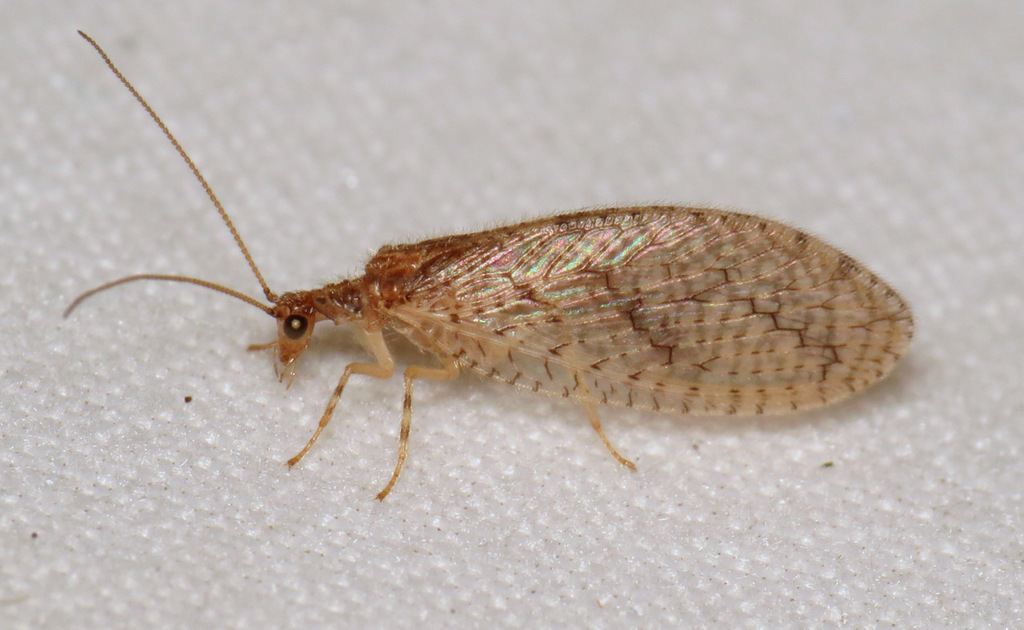
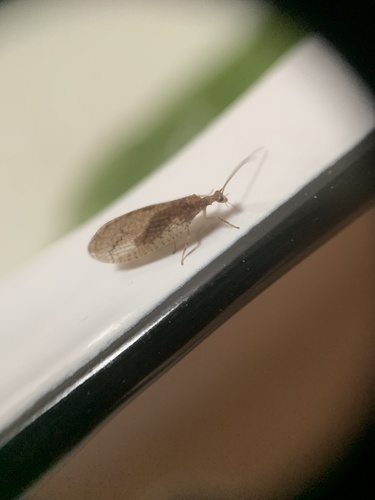
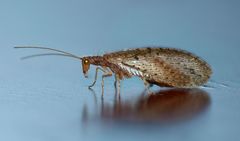
Micromus posticus is a small brown lacewing about 7 to 9.5 mm long and has fully developed wings. It can be recognized by the close-spaced inner veins on its forewings and a plain face without distinct markings.
Source: Wikipedia
How to recognize it
The inner gradate veins on the forewing are spaced at most equal to their length. The face lacks any obvious markings.
Source: Wikipedia
Size
Adults measure between 7 and 9.5 mm from head to wing tip. They have fully developed (macropterous) wings.
Source: Wikipedia
What it eats
Both larvae and adults feed on aphids.
Source: Wikipedia
Where it comes from
Its native range includes the Caribbean, Central America and North America.
Source: Wikipedia
Where it is found in the US
Recorded in 42 of 51 states and DC. Most records: Texas, Virginia, Illinois, Mississippi, North Carolina, Ohio, Maryland, Alabama.
Darker = more records. Counts are museum and citizen-science records, not population size.
Source: GBIF
Status: native in North America; native in Canada. Source: iNaturalist
Months it is reported in the US
Source: GBIF
More photos
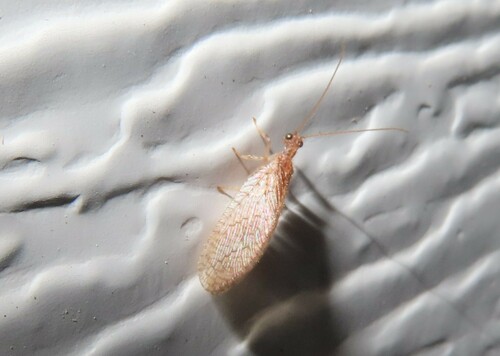
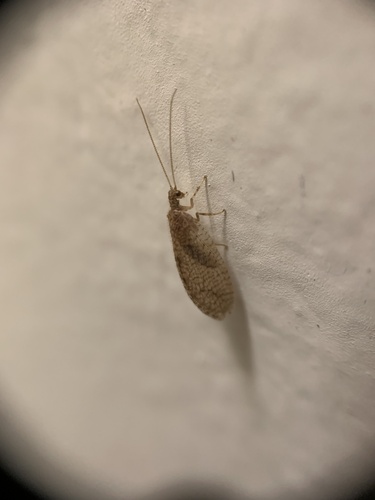
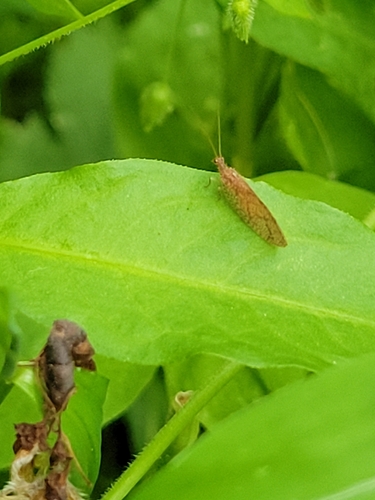
Same family (Hemerobiidae)


Sources
- Wikipedia: https://en.wikipedia.org/wiki/Micromus_posticus
Look it up elsewhere: GBIF · iNaturalist · BugGuide · ITIS · Wikipedia
Text written 2026-10-22 from the sources above and checked sentence by sentence against them. Data fetched 2026-10-22.