 Bug FAQ
Australian Variable Lacewing
Drepanacra binocula · Order: Neuroptera · Family: Hemerobiidae
Also called: Australian Variable Brown Lacewing
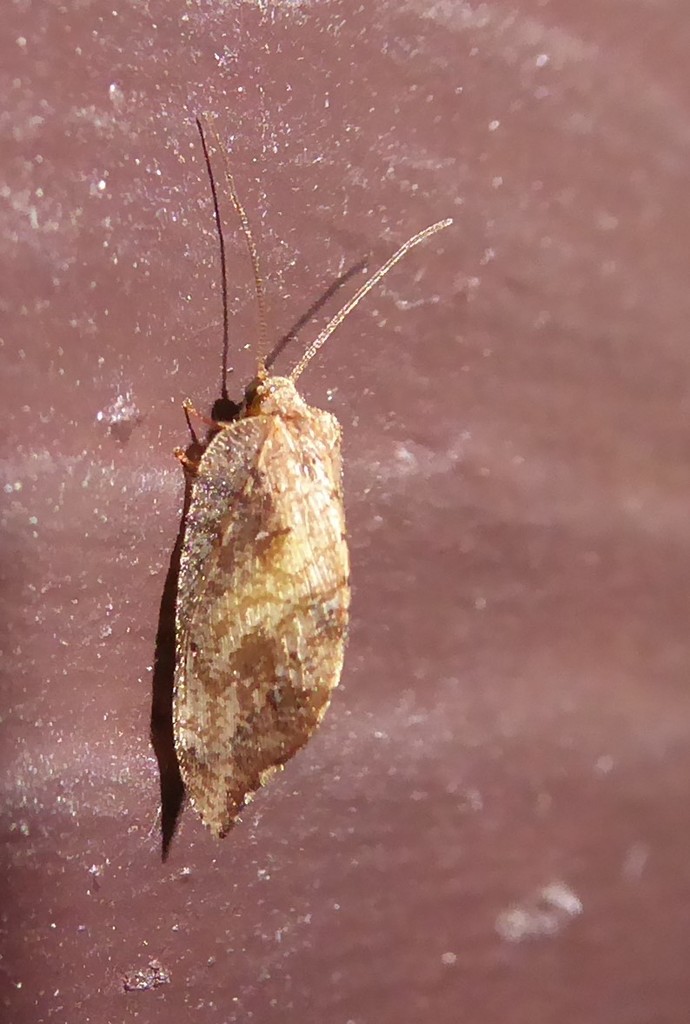
The Australian variable lacewing has brown, uniquely shaped wings that set it apart from other insects. It feeds on a range of small sap-sucking insects such as aphids, whiteflies and psyllids. Adults are usually seen where their prey live, often in groups near colonies of those insects.
Source: Wikipedia
How to recognize it
You can spot it by its brown colour and the distinctive shape of its wings.
Source: Wikipedia
Where it lives
They are commonly found in the same places as the insects they hunt, often near colonies of those prey species.
Source: Wikipedia
Life cycle
The life cycle goes egg → larva → pupa → adult, with three larval stages before the larva spins a cocoon to pupate.
Source: Wikipedia
Lookalikes
It can be parasitised by the lacewing parasitoid wasp Anacharis zealandica.
Source: Wikipedia
Questions people ask
What does the Australian variable lacewing eat?
It feeds on several small sap-sucking insects, including aphids, whiteflies and psyllids.
Source: Wikipedia
Where is this lacewing found?
It lives across Australia and New Zealand and the nearby islands of Lord Howe, Norfolk and the Kermadec group.
Source: Wikipedia
How can I recognize an Australian variable lacewing?
Look for its brown colour and the distinctive shape of its wings.
Source: Wikipedia
What is the life cycle of this lacewing?
It develops from egg to larva (three stages), then pupates in a cocoon before emerging as an adult.
Source: Wikipedia
Same family (Hemerobiidae)


Sources
- Wikipedia: https://en.wikipedia.org/wiki/Drepanacra_binocula
Look it up elsewhere: GBIF · iNaturalist · BugGuide · Wikipedia
Text written 2026-10-23 from the sources above and checked sentence by sentence against them. Data fetched 2026-10-23.