 Bug FAQ
Tan Jumping Spider
Platycryptus undatus · Order: Araneae · Family: Salticidae
Also called: Familiar Jumping Spider, Flat Jumping Spider, Lorax Spider
Source: Wikipedia
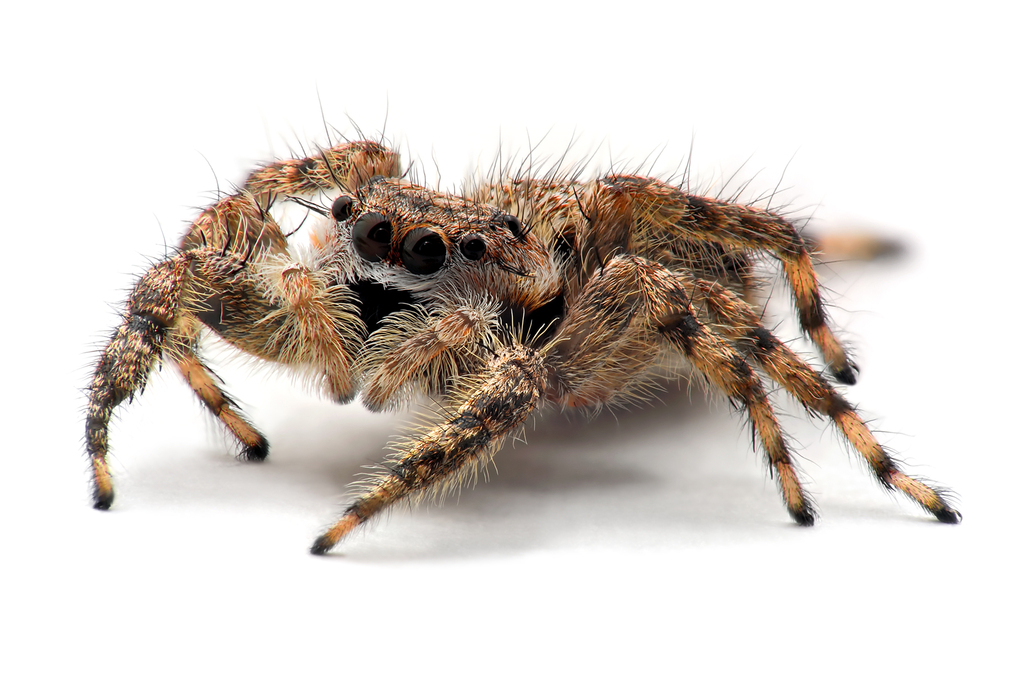
Tan jumping spiders are small (8.5-13 mm) with mottled tan bodies and a chevron pattern on the abdomen. They live on vertical surfaces such as tree trunks and building walls, are native to North America, and hunt without making webs. Eggs hatch in summer and the spiders overwinter in individual silk shelters, sometimes crowded together under bark.
Source: Wikipedia
How to recognize it
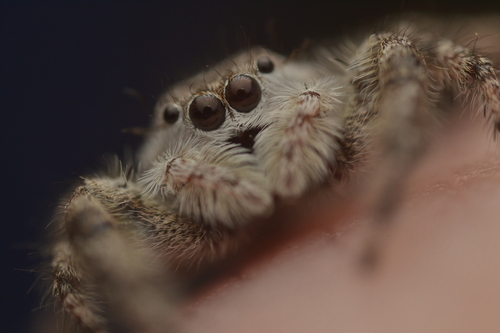
They have a mottled tan color, thin body and a chevron pattern on the abdomen that breaks up their outline.
Source: Wikipedia
Size
Females are 10-13 mm long and males are 8.5-9.5 mm.
Source: Wikipedia
Does it bite or sting?
They are not inclined to bite but will bite defensively if pinched or squeezed.
Source: Wikipedia
Where it lives
They prefer vertical surfaces like tree trunks and building walls.
Source: Wikipedia
Life cycle
Eggs are laid in summer, hatch, and all stages overwinter in silk shelters. Up to fifty spiders may crowd together under loose bark during hibernation.
Source: Wikipedia
Where it comes from
They are native to North America, ranging from the eastern US and Canada to Texas, Wisconsin, and northern Mexico.
Source: Wikipedia
Where it is found in the US
Recorded in 44 of 51 states and DC. Most records: Texas, Ohio, Virginia, Massachusetts, North Carolina, Maryland, New York, Michigan.
Darker = more records. Counts are museum and citizen-science records, not population size.
Source: GBIF
Status: native in North America; native in United States; native in Canada. Source: iNaturalist
Months it is reported in the US
Source: GBIF
More photos
Questions people ask
Do tan jumping spiders bite people?
They rarely bite and only do so when they feel threatened, such as being pinched.
Source: Wikipedia
Where are tan jumping spiders found?
They are common on vertical surfaces like tree trunks and building walls throughout much of North America.
Source: Wikipedia
What do they look like?
They have a mottled tan color, thin body and a chevron pattern on the abdomen that helps them blend into surfaces.
Source: Wikipedia
Same family (Salticidae)


Sources
- Wikipedia: https://en.wikipedia.org/wiki/Platycryptus_undatus
Look it up elsewhere: GBIF · iNaturalist · BugGuide · ITIS · Wikipedia
Text written 2026-10-22 from the sources above and checked sentence by sentence against them. Data fetched 2026-10-22.