 Bug FAQ
Bold Jumping Spider
Phidippus audax · Order: Araneae · Family: Salticidae
Also called: Daring Jumping Spider, Bold Jumper
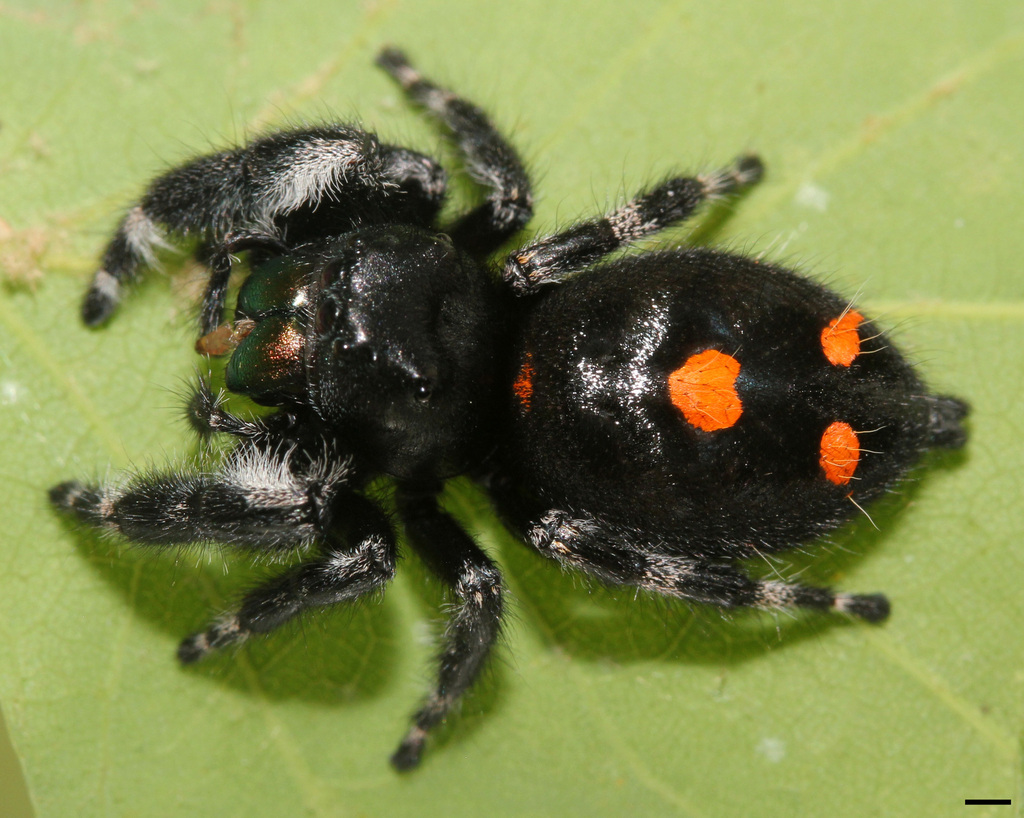
These spiders are common in North America and often live near humans, hunting alone during the day. They eat a variety of insects and other arthropods, helping control garden pests.
Source: Wikipedia
How to recognize it
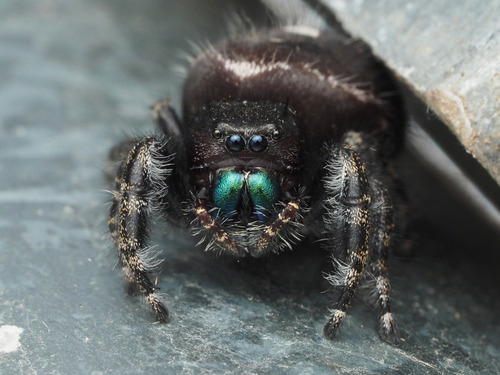
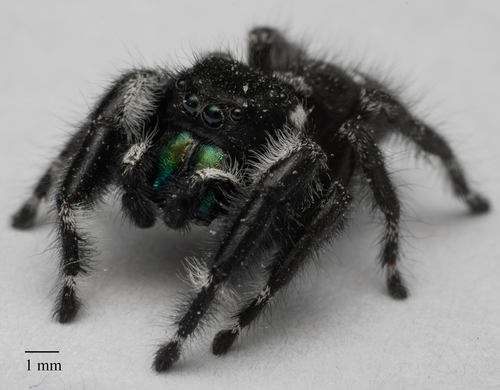
They have a large triangular white spot on the abdomen with two smaller spots below, plus additional white dorsal spots. Their eyes are arranged in three rows: four front eyes with large middle ones, two tiny eyes, then two medium pairs. The abdomen can be metallic-shiny and the carapace is black.
Size
Adult females are 8 to 15 mm long, while males are slightly smaller at 6 to 13 mm.
Source: Wikipedia
Is it a pest in the house?
Spiders are beneficial because they eat pest insects, and those seen out in daylight are unlikely to bite.
Source: UC IPM
Does it bite or sting?
Bites are uncommon and happen only if the spider feels threatened or is trapped, usually resulting in mild itching similar to a bee sting.
How to get rid of it
Control efforts should focus on removing webs and hiding places; pesticides are generally unnecessary.
Source: UC IPM
Where it lives
They live in temperate grasslands, chaparral, open woods and farms, and are often found close to homes.
Source: Wikipedia
What it eats
They hunt insects such as caterpillars, dragonflies, grasshoppers and also other spiders.
Source: Wikipedia
Where it comes from
Native to North America, they have also been introduced to Hawaii, the Nicobar Islands, the Azores and the Netherlands.
Source: Wikipedia
Lookalikes
Phidippus regius looks similar but has more oval posterior spots and lacks the matte black patches seen in P. audax. Spiders may be mistaken for insects, but they are arachnids.
Where it is found in the US
Recorded in 51 of 51 states and DC. Most records: Texas, California, Colorado, Ohio, Oregon, Illinois, Oklahoma, Pennsylvania.
Darker = more records. Counts are museum and citizen-science records, not population size.
Source: GBIF
Status: native in North America; native in Canada; native in United States. Source: iNaturalist
Months it is reported in the US
Source: GBIF
More photos
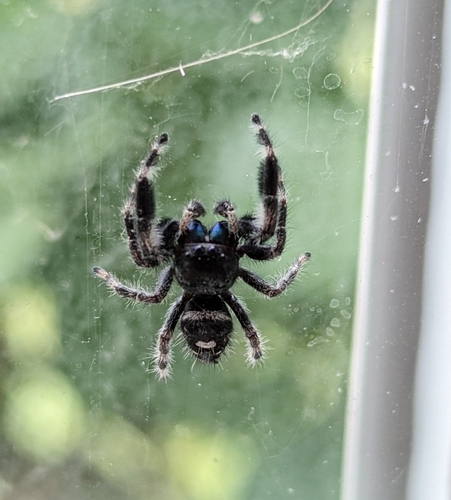
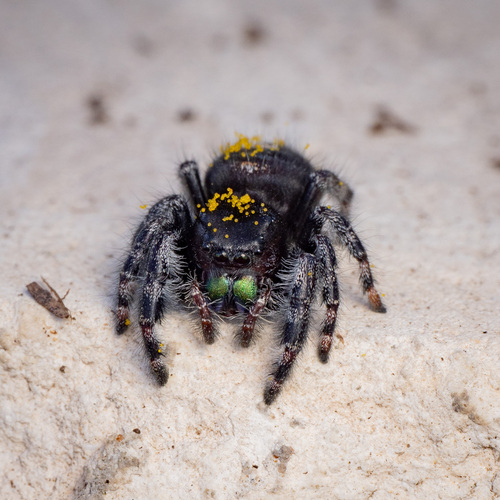
Questions people ask
Same family (Salticidae)



Sources
- Wikipedia: https://en.wikipedia.org/wiki/Phidippus_audax
- UC IPM: https://ipm.ucanr.edu/PMG/PESTNOTES/pn7442.html
Look it up elsewhere: GBIF · iNaturalist · BugGuide · ITIS · Wikipedia
Text written 2026-10-22 from the sources above and checked sentence by sentence against them. Data fetched 2026-10-22.