 Bug FAQ
Superb Jewelwing
Calopteryx amata · Order: Odonata · Family: Calopterygidae
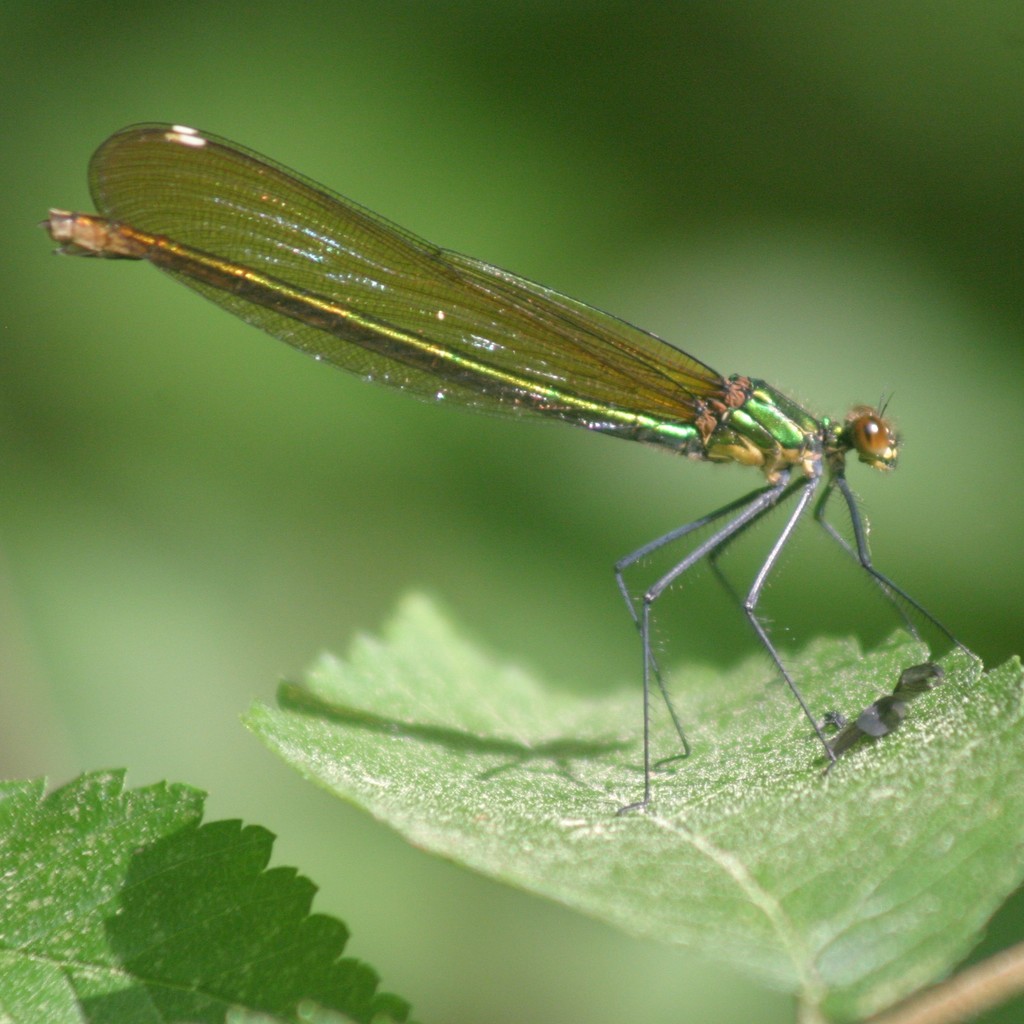
How to recognize it
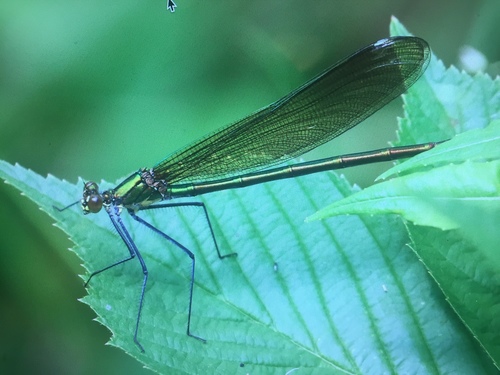
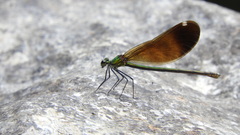
Males are bright metallic green with amber markings on their wings. Females have a bronze tint and greenish wings that end in white.
Source: Wikipedia
Size
They are about two inches long.
Source: Wikipedia
Where it lives
They live along clear rivers and streams that have vegetation nearby. Males defend territories along these waterways.
Source: Wikipedia
What it eats
Both adults and nymphs eat smaller insects.
Source: Wikipedia
Life cycle
Adults are on the wing in June and July.
Source: Wikipedia
When you see it
The adult flight period is limited to June and July.
Source: Wikipedia
Lookalikes
They may be seen together with dragonflies of the genus Ophiogomphus.
Source: Wikipedia
Where it is found in the US
Recorded in 16 of 51 states and DC. Most records: Vermont, West Virginia, New York, Pennsylvania, Maine, New Hampshire, New Jersey, Tennessee.
Darker = more records. Counts are museum and citizen-science records, not population size.
Source: GBIF
Status: native in North America; native in Canada. Source: iNaturalist
Months it is reported in the US
Source: GBIF
More photos
Questions people ask
When can I expect to see adult superb jewelwings?
Adults are active during June and July.
Source: Wikipedia
Same family (Calopterygidae)


Sources
- Wikipedia: https://en.wikipedia.org/wiki/Superb_jewelwing
Look it up elsewhere: GBIF · iNaturalist · BugGuide · ITIS · Wikipedia
Text written 2026-10-24 from the sources above and checked sentence by sentence against them. Data fetched 2026-10-24.