 Bug FAQ
Striped Policeman
Coeliades forestan · Order: Lepidoptera · Family: Hesperiidae
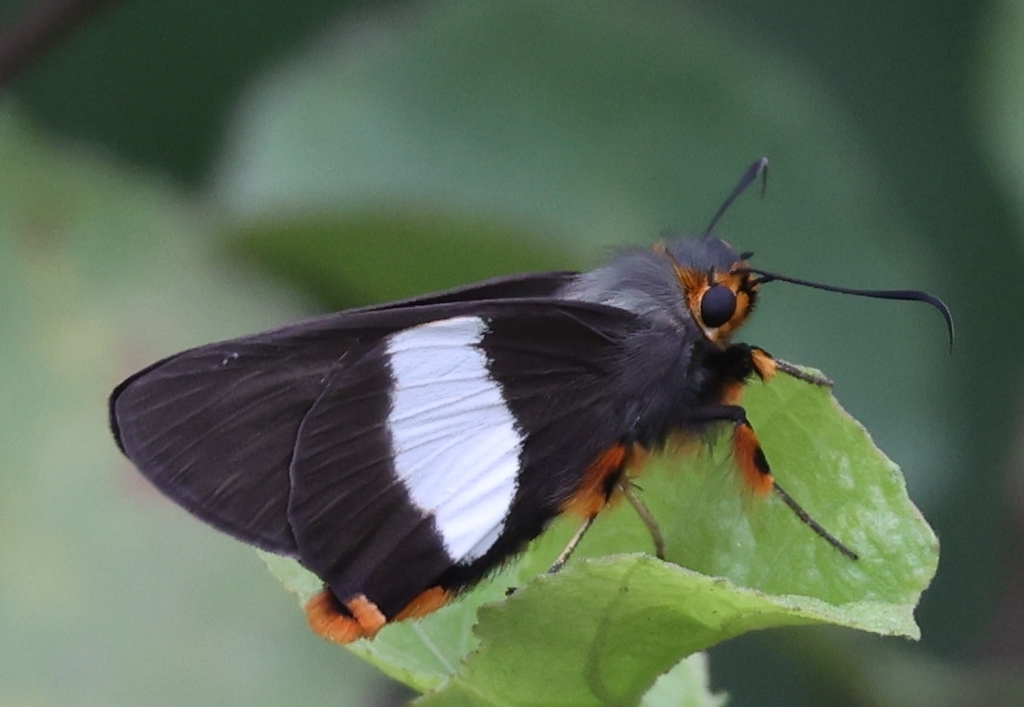
The striped policeman is a skipper butterfly belonging to the Hesperiidae family. Males have a wingspan of about 45 to 55 mm while females are larger, reaching 55 to 64 mm. It lives across southern and eastern Africa, from Transkei through Zimbabwe and Botswana, also in West Africa, Madagascar and Mauritius.
Source: Wikipedia
How to recognize it
Coeliades forestan, called the striped policeman, is a butterfly in the skipper family Hesperiidae.
Source: Wikipedia
Size
Males measure 45 to 55 mm in wingspan; females are larger at 55 to 64 mm.
Source: Wikipedia
Life cycle
Adults can be seen flying throughout the year in warm areas, with numbers peaking from September to April.
Source: Wikipedia
When you see it
In warmer regions the butterfly is on the wing all year, especially from September through April.
Source: Wikipedia
Where it comes from
Its range includes southern, eastern and western parts of Africa plus Madagascar and Mauritius.
Source: Wikipedia
More photos

Questions people ask
What plants do striped policeman caterpillars eat?
The larvae feed on many trees and shrubs, including Parinari, Lonchocarpus, Combretum, Solanum, Millettia, Sphedamnocarpus and Robinia species.
Source: Wikipedia
When can I see adult striped policemen?
Adults are active all year in warm areas, with the highest numbers from September to April.
Source: Wikipedia
Same family (Hesperiidae)




Sources
- Wikipedia: https://en.wikipedia.org/wiki/Coeliades_forestan
Look it up elsewhere: GBIF · iNaturalist · BugGuide · Wikipedia
Text written 2026-10-23 from the sources above and checked sentence by sentence against them. Data fetched 2026-10-23.