 Bug FAQ
Striped Hawkmoth
Hyles livornica · Order: Lepidoptera · Family: Sphingidae
Also called: Striped Hawk-Moth
Source: Wikipedia
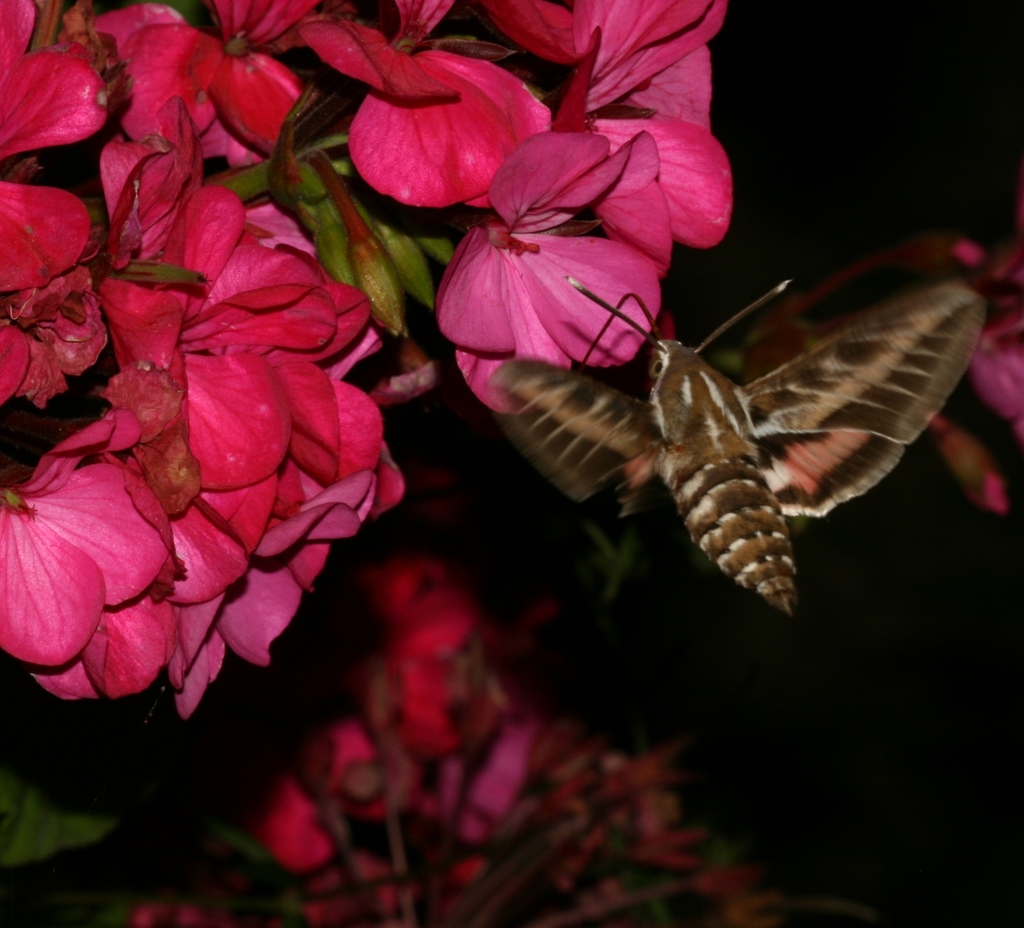
Adults have a wingspan of about 60 to 80 mm and show olive-brown forewings with white stripes and pink hindwings edged in black and white. They occur across Africa, southern Europe, Poland, Australia and central to east Asia and fly from early spring to autumn, often in two generations in Europe. The larvae feed on many plants such as Galium, cotton, grapes, Euphorbia and other garden species, which can make them a garden and crop pest.
Source: Wikipedia
Size
Wingspan ranges from 60 to 80 mm.
Source: Wikipedia
What it eats
Caterpillars feed on many plants, including Galium, cotton, Rumex, grapes, Euphorbia, Linaria, Antirrhinum, Scabiosa, Linum, Fuchsia and Asphodelus.
Source: Wikipedia
Life cycle
Adults are on the wing from February to October, varying by location. In Europe they appear in two generations, April-June and August-September, and may overwinter.
Source: Wikipedia
When you see it
Flight period spans February to October, with European activity in spring and late summer.
Source: Wikipedia
Lookalikes
It belongs to the hawk-moth family Sphingidae.
Source: Wikipedia
Questions people ask
Can they damage my garden?
Yes, the caterpillars feed on many garden and crop plants, so they can cause noticeable damage.
Source: Wikipedia
When are they active?
Adults fly from early spring to autumn, typically April-June and August-September in Europe.
Source: Wikipedia
Same family (Sphingidae)
 White-lined SphinxHyles lineataDamages trees, gardens or crops
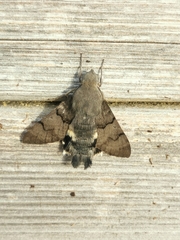 Eurasian Hummingbird HawkmothMacroglossum stellatarum
 Snowberry ClearwingHemaris diffinis
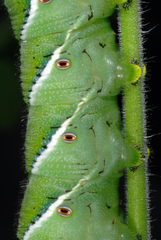 Carolina SphinxManduca sextaDamages trees, gardens or crops
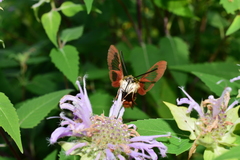 Hummingbird ClearwingHemaris thysbeDamages trees, gardens or crops
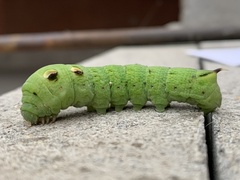 Elephant HawkmothDeilephila elpenor
Sources
- Wikipedia: https://en.wikipedia.org/wiki/Hyles_livornica
Look it up elsewhere: GBIF · iNaturalist · BugGuide · Wikipedia
Text written 2026-10-22 from the sources above and checked sentence by sentence against them. Data fetched 2026-10-22.