 Bug FAQ
Straight-lanced Meadow Katydid
Conocephalus strictus · Order: Orthoptera · Family: Tettigoniidae
Also called: Straight-lanced Katydid, Straight-laced Meadow Grasshopper
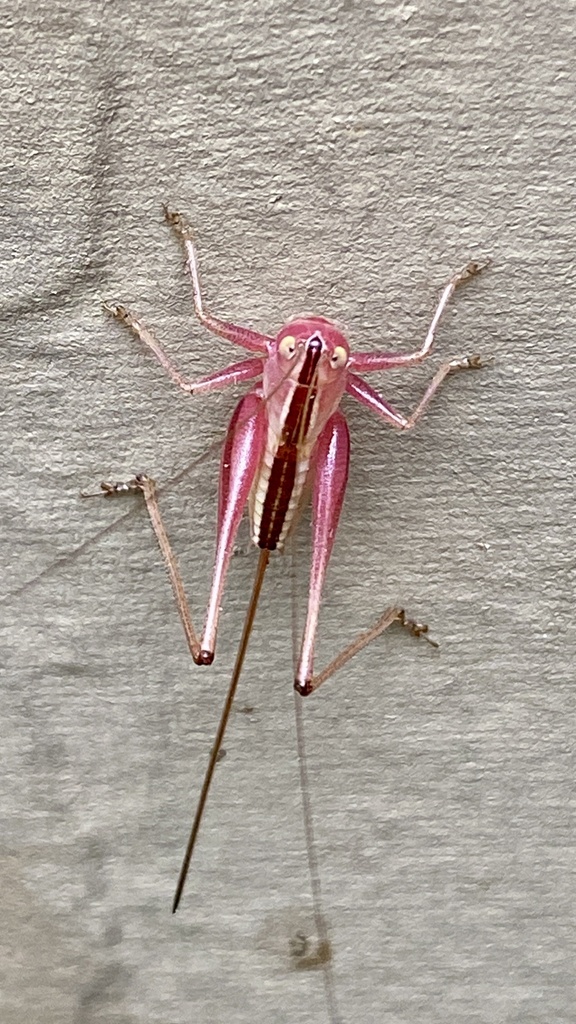
Straight-lanced meadow katydids are large for their genus, ranging from about 13 mm to 30 mm, with short-winged forms at the lower end and long-winged forms at the higher end. They live in open, short-grass areas such as roadsides, pastures, dry grasslands and old fields, often in large clumps. Their range covers much of North America, from central Arizona up to southern Montana and from southern New York down to southern Georgia, plus parts of Mexico and Canada.
Source: Wikipedia
How to recognize it
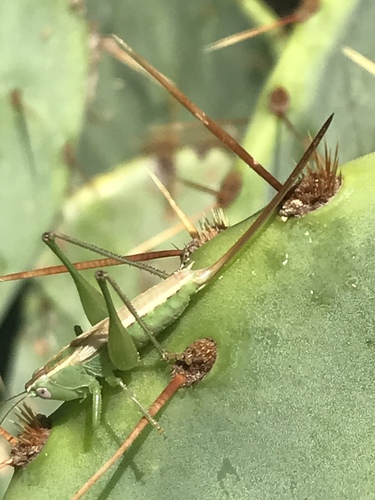
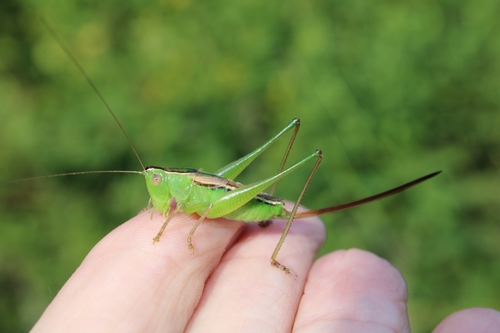
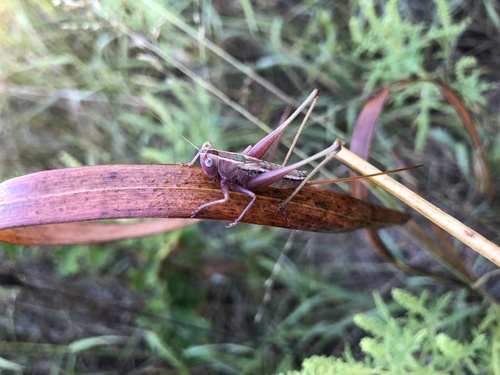
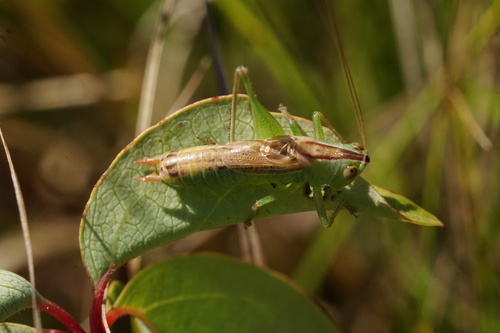
They are green and brown with short forewings, and males have long, tapered cerci that flatten at the tip and can bend their bodies sharply.
Source: Wikipedia
Size
Adults measure between 13 mm and 30 mm; short-winged individuals are 13 to 22 mm and long-winged ones are 21 to 30 mm.
Source: Wikipedia
Where it lives
Preferred habitats are open short-grass sites like roadsides, pastures, dry grasslands and old fields, where they are often found in large groups.
Source: Wikipedia
What it eats
Their diet consists mainly of grasses.
Source: Wikipedia
Life cycle
Adults appear first in late summer but can be found throughout the year.
Source: Wikipedia
When you see it
Adults are present year-round, with the first emergence in late summer.
Source: Wikipedia
Where it comes from
They are native to North America, occurring from central Arizona to southern Montana and from southern New York to southern Georgia, also reaching parts of Mexico and Canada.
Source: Wikipedia
Lookalikes
Similar species that share their habitat include other Conocephalus species such as C. fasciatus and members of the genus Orchelimum like O. vulgare, which have shorter ovipositors and cerci.
Source: Wikipedia
Where it is found in the US
Recorded in 40 of 51 states and DC. Most records: Texas, Illinois, Arizona, Virginia, Massachusetts, Ohio, Maryland, Kansas.
Darker = more records. Counts are museum and citizen-science records, not population size.
Source: GBIF
Status: native in North America; native in Canada. Source: iNaturalist
Months it is reported in the US
Source: GBIF
More photos
Questions people ask
How can I tell a straight-lanced meadow katydid apart from similar bugs?
Look for its green-brown color, short forewings, and the male’s long, tapered cerci that flatten at the tip.
Source: Wikipedia
When are these katydids most likely to be seen?
They first appear in late summer but can be seen any time of year.
Source: Wikipedia
Where should I expect to find them?
In open areas with short grass such as roadsides, pastures, dry grasslands and old fields, often in large groups.
Source: Wikipedia
Same family (Tettigoniidae)
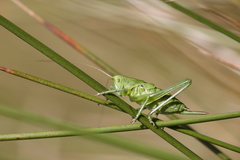 Great Green Bush-cricketTettigonia viridissimaCan bite
 Dark Bush-cricketPholidoptera griseoaptera
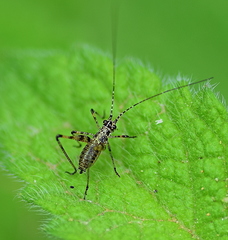 Mediterranean KatydidPhaneroptera nanaDamages trees, gardens or crops
 Fork-tailed Bush KatydidScudderia furcataDamages trees, gardens or crops
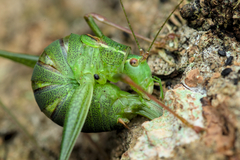 Speckled Bush-cricketLeptophyes punctatissima
 Roesel's Bush-cricketRoeseliana roeselii
Sources
- Wikipedia: https://en.wikipedia.org/wiki/Conocephalus_strictus
Look it up elsewhere: GBIF · iNaturalist · BugGuide · ITIS · Wikipedia
Text written 2026-10-23 from the sources above and checked sentence by sentence against them. Data fetched 2026-10-22.