 Bug FAQ
St. Andrew's Cotton Stainer
Dysdercus andreae · Order: Hemiptera · Family: Pyrrhocoridae
Also called: White Marked Cotton Stainer Bug
Source: Wikipedia
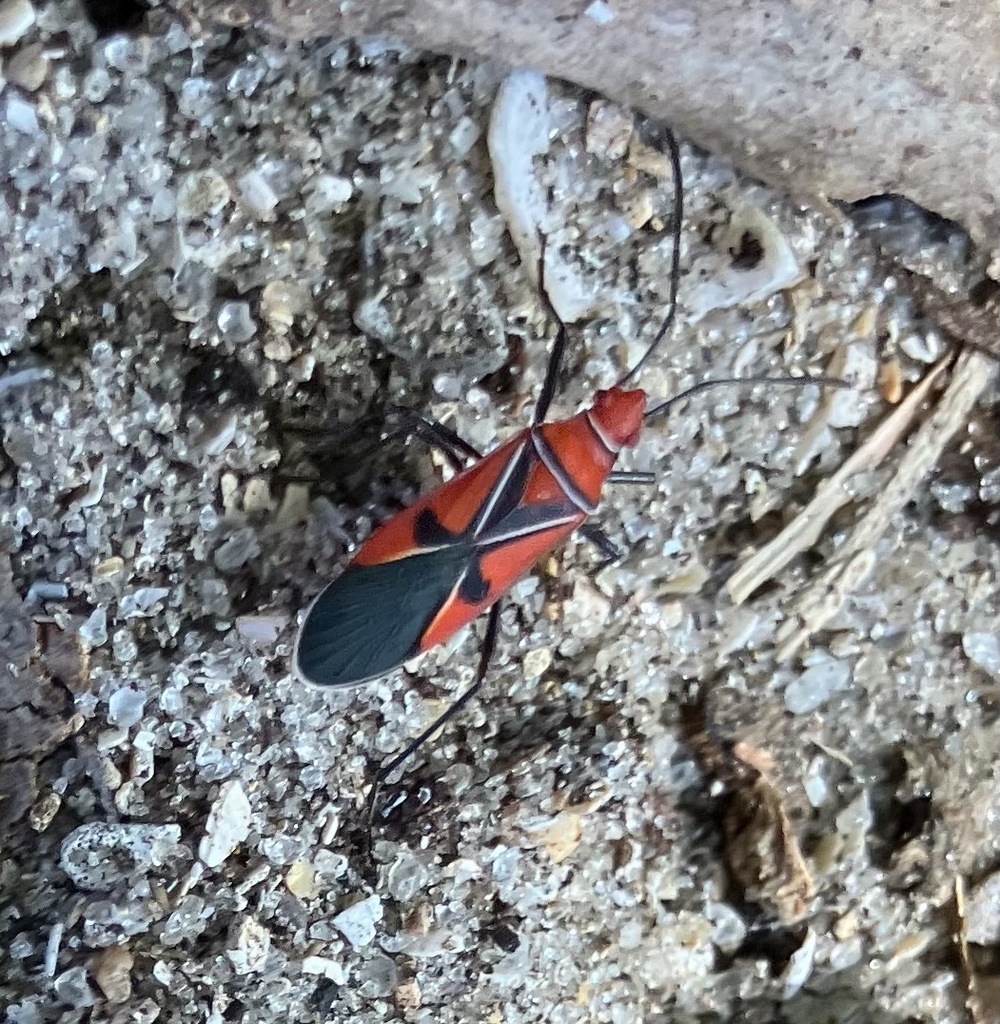
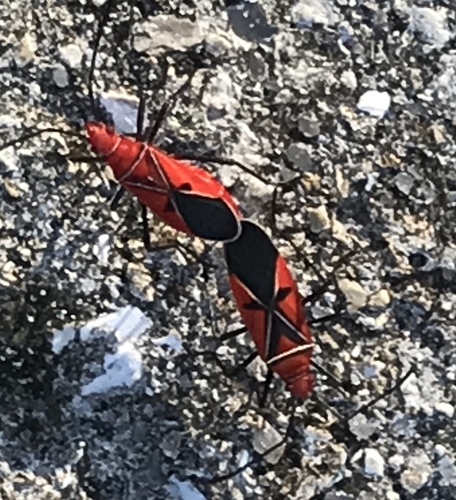
Adults are bright red-orange with black heads, legs and wings, and each abdominal segment shows a yellow-white band that forms a diagonal cross resembling Saint Andrew’s Cross. Females reach 8.6 to 13.6 mm and males 7 to 13 mm in length.
Source: Wikipedia
How to recognize it
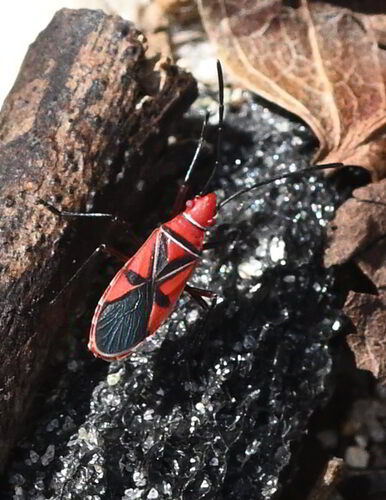
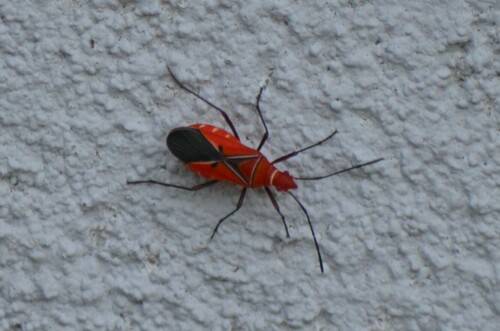
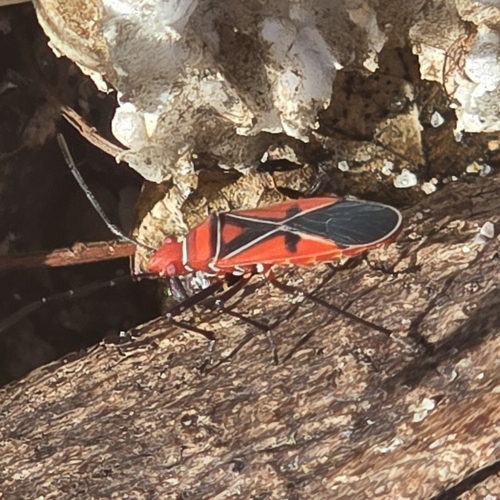
The body is red-orange except for a black or dark brown head, legs and wings. Each abdominal segment has a yellow-white band that creates a diagonal cross pattern.
Source: Wikipedia
Size
Females grow to about 8.6 to 13.6 mm long, while males are about 7 to 13 mm.
Source: Wikipedia
How to get rid of it
- Populations can be reduced by destroying old cotton residues and using traps baited with cotton seeds, checking them daily.
- Adults can also be brushed or picked off cotton plants and placed into a bucket of water or kerosene.
Source: Wikipedia
Where it lives
It occurs on Caribbean islands and in North America.
Source: Wikipedia
What it eats
It feeds on the seeds and fruits of Thespesia populnea (Pacific rosewoods).
Source: Wikipedia
Where it comes from
Its native range includes Caribbean islands and North America.
Source: Wikipedia
Where it is found in the US
Recorded in 1 of 51 states and DC. Most records: Florida.
Darker = more records. Counts are museum and citizen-science records, not population size.
Source: GBIF
Months it is reported in the US
Source: GBIF
More photos
Questions people ask
How can I identify St. Andrew's cotton stainer?
Look for a bright red-orange body with black head, legs and wings, and a diagonal white-yellow cross on each abdominal segment.
Source: Wikipedia
Is this bug a problem for my cotton garden?
Yes, it feeds on cotton seeds and fruits and is reported as a pest in the Caribbean and nearby islands.
Source: Wikipedia
What are effective ways to control it?
Remove old cotton plant debris and set up cotton-seed baited traps, checking them each day; you can also brush the insects off plants into water or kerosene.
Source: Wikipedia
Same family (Pyrrhocoridae)
 European FirebugPyrrhocoris apterus
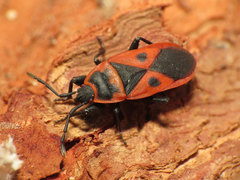 Mediterranean red bugScantius aegyptiusDamages trees, gardens or crops
 Indian Cotton StainerDysdercus cingulatusDamages trees, gardens or crops
 Common Cotton Stainer BugDysdercus suturellusDamages trees, gardens or crops
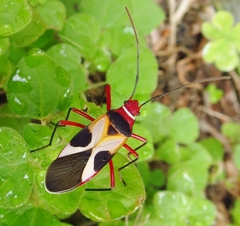 Turk's cap red bugDysdercus concinnus
 Welwitschia BugProbergrothius angolensis
Sources
- Wikipedia: https://en.wikipedia.org/wiki/Dysdercus_andreae
Look it up elsewhere: GBIF · iNaturalist · BugGuide · ITIS · Wikipedia
Text written 2026-10-27 from the sources above and checked sentence by sentence against them. Data fetched 2026-10-27.