 Bug FAQ
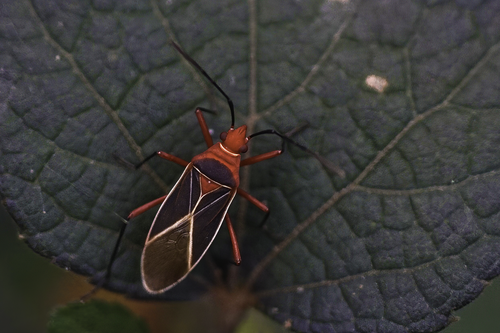
Common Cotton Stainer Bug
Dysdercus suturellus · Order: Hemiptera · Family: Pyrrhocoridae
Also called: Cotton Stainer
Source: Wikipedia
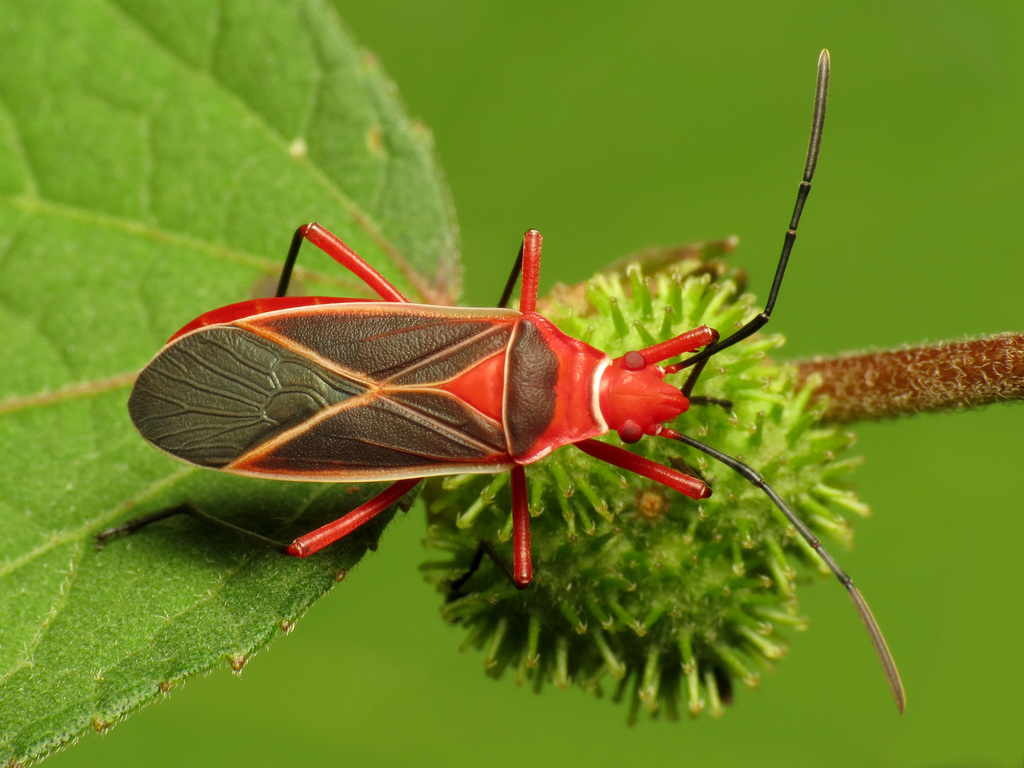
It is native to the southeastern United States, Jamaica and Puerto Rico and feeds on the protein-rich seeds of cotton and other host plants, harming the crops. The insect develops through five nymphal instars over three to five weeks and produces several generations each year.
Source: Wikipedia
Life cycle
It is a true bug that does not undergo metamorphosis. Nymphs pass through five instars over three to five weeks.
Source: Wikipedia
When you see it
Winged adults migrate between plant species as seeds become available at different times of year. There are several generations each year.
Source: Wikipedia
Where it comes from
It is native to the southeastern United States, Jamaica and Puerto Rico.
Source: Wikipedia
Where it is found in the US
Recorded in 3 of 51 states and DC. Most records: Florida, Alabama, Massachusetts.
Darker = more records. Counts are museum and citizen-science records, not population size.
Source: GBIF
Months it is reported in the US
Source: GBIF
More photos
Questions people ask
How does the common cotton stainer bug affect cotton?
It feeds on cotton bolls and seeds, damaging the crop and acting as a pest.
Source: Wikipedia
Same family (Pyrrhocoridae)



Sources
- Wikipedia: https://en.wikipedia.org/wiki/Dysdercus_suturellus
Look it up elsewhere: GBIF · iNaturalist · BugGuide · ITIS · Wikipedia
Text written 2026-10-24 from the sources above and checked sentence by sentence against them. Data fetched 2026-10-24.