 Bug FAQ
Indian Cotton Stainer
Dysdercus cingulatus · Order: Hemiptera · Family: Pyrrhocoridae
Also called: Indian Cotton Stainer Bug
Source: Wikipedia

The Indian cotton stainer is a red true bug with a white collar and black spots on its wings and measures about 12 to 18 mm long. It feeds by sucking fluids from cotton and other host plants, and can also drink nectar and fruit from non-host plants.
Source: Wikipedia
How to recognize it
It is mainly red with a white collar and black spots on the hemelytra.
Source: Wikipedia
Where it lives
When away from their host plants they feed on nectar and fruit of other plants and can survive several days without food.
Source: Wikipedia
What it eats
Like other true bugs, it sucks fluids from its host plants.
Source: Wikipedia
Lookalikes
It resembles Dysdercus koenigii but is slightly larger and its femora have varying amounts of black, whereas D. koenigii has completely red femora.
Source: Wikipedia
Where it is found in the US
Recorded in 1 of 51 states and DC. Most records: Texas.
Darker = more records. Counts are museum and citizen-science records, not population size.
Source: GBIF
More photos


Questions people ask
How does the Indian cotton stainer damage crops?
Adults and older nymphs feed on emerging cotton bolls and seeds, spreading cotton-staining fungi as they feed.
Source: Wikipedia
What does this bug look like?
It is mainly red with a white collar and black spots on its wings, and the femora often show black markings.
Source: Wikipedia
Same family (Pyrrhocoridae)
 European FirebugPyrrhocoris apterus
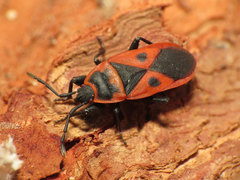 Mediterranean red bugScantius aegyptiusDamages trees, gardens or crops
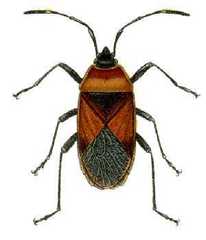 Harlequin Red BugDindymus versicolorDamages trees, gardens or crops
 Indian Red BugProbergrothius sanguinolens
 African Cotton StainerDysdercus nigrofasciatusDamages trees, gardens or crops
 Welwitschia BugProbergrothius angolensis
Sources
- Wikipedia: https://en.wikipedia.org/wiki/Dysdercus_cingulatus
Look it up elsewhere: GBIF · iNaturalist · BugGuide · Wikipedia
Text written 2026-10-23 from the sources above and checked sentence by sentence against them. Data fetched 2026-10-22.