 Bug FAQ
Spiny Bollworm
Earias biplaga · Order: Lepidoptera · Family: Nolidae
Source: Wikipedia
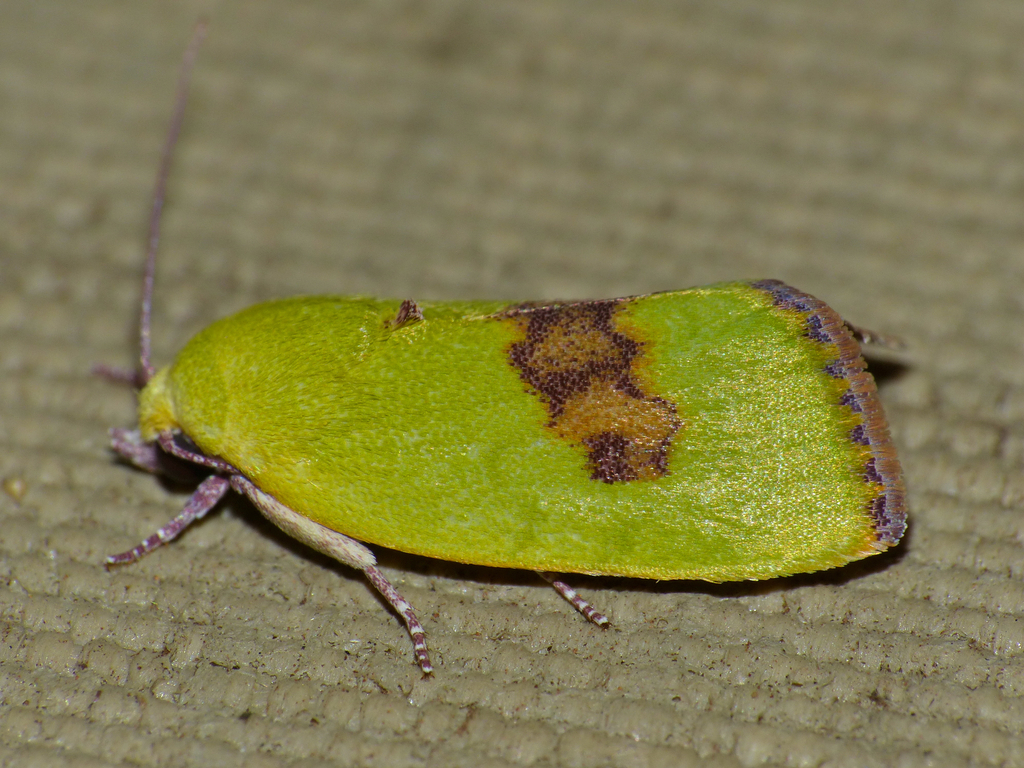
Adults are about 10 to 12 mm long with a wingspan of 18 to 25 mm. The forewing has a dark purplish-brown fringe at the edge, which helps identify it. Its larvae feed on Fabaceae and Malvaceae plants and are considered pests of cotton and cacao.
Source: Wikipedia
Size
Length is roughly 10 to 12 mm and wingspan ranges from 18 to 25 mm.
Source: Wikipedia
Is it a pest in the house?
It is considered a pest of cotton and cacao, affecting agricultural production.
Source: Wikipedia
What it eats
Larvae feed on plants in the Fabaceae and Malvaceae families. It is a known pest of cotton and cacao crops.
Source: Wikipedia
Where it comes from
It occurs throughout subtropical Africa, including islands in the Atlantic and Indian Oceans.
Source: Wikipedia
More photos


Questions people ask
What crops does the spiny bollworm damage?
The larvae feed on and damage cotton and cacao plants.
Source: Wikipedia
How can I identify a spiny bollworm?
Look for a dark purplish-brown fringe on the edge of the forewing.
Source: Wikipedia
How big is a spiny bollworm?
Adults are about 10 to 12 mm long with an 18 to 25 mm wingspan.
Source: Wikipedia
Same family (Nolidae)


Sources
- Wikipedia: https://en.wikipedia.org/wiki/Earias_biplaga
Look it up elsewhere: GBIF · iNaturalist · BugGuide · Wikipedia
Text written 2026-10-23 from the sources above and checked sentence by sentence against them. Data fetched 2026-10-23.